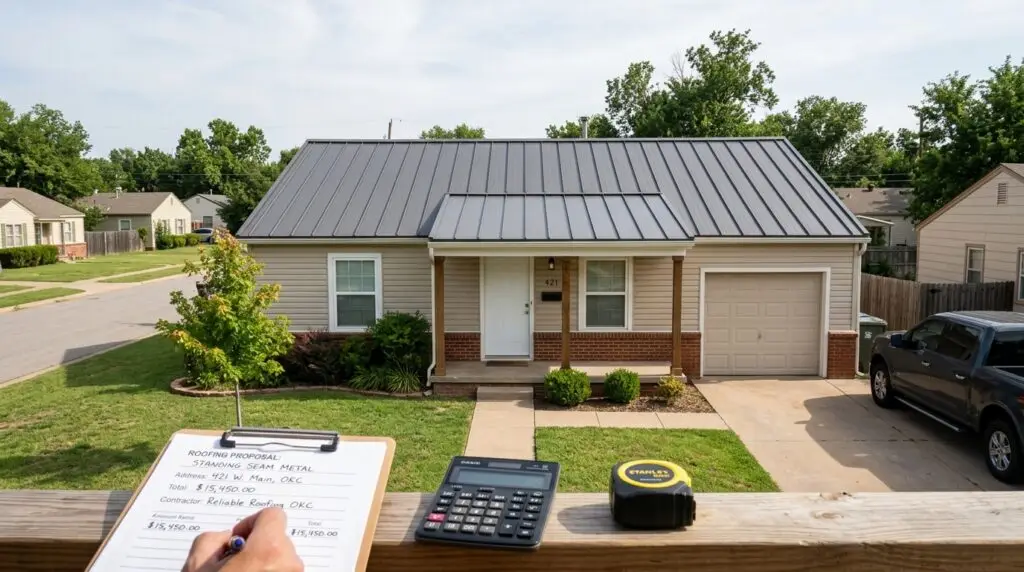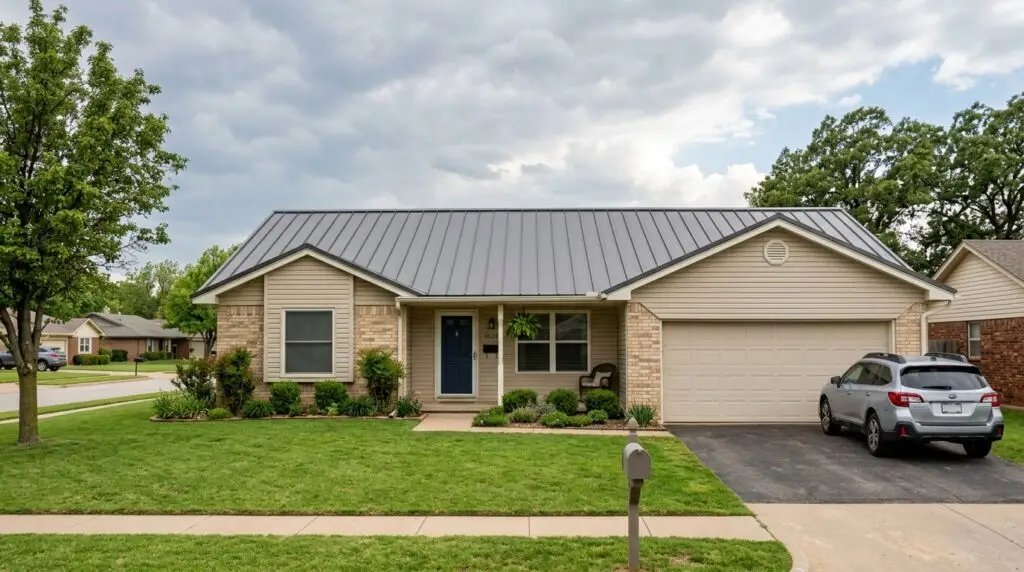
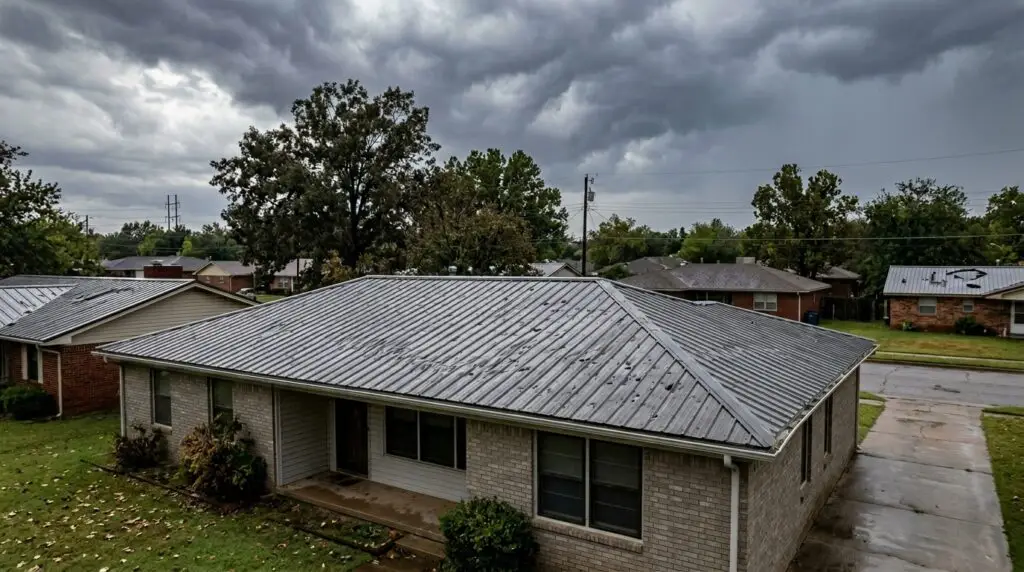
If you live in the Oklahoma City metro area, you already know what storm season feels like. The sky turns green, hail hammers your vehicles, and by the time it’s over, you’re standing in your driveway wondering what just happened to your roof. It’s a scene that plays out hundreds of times a year across communities like Moore, Edmond, Yukon, Mustang, and Norman and the question that follows is always the same: do I need a full metal roof replacement, or will repairs get me through?
The honest answer? It depends on several factors and getting that answer wrong in either direction costs you real money. Patch a roof that needs replacing, and you’ll be dealing with recurring leaks and compounding damage. Replace a roof that only needed targeted repairs, and you’ve spent thousands you didn’t have to. This guide walks you through exactly how to think through that decision, what to look for, and why Oklahoma City’s storm environment makes this more urgent than it is almost anywhere else in the country.
Why Oklahoma City Homeowners Face This Decision More Than Most
Here’s a fact that surprises a lot of people: Oklahoma City has recorded hail events on over 244 documented occasions according to Doppler radar tracking and the frequency is increasing. The state recorded 269 hailstorms in 2023 alone, up from 214 the year before. Oklahoma ranks third nationally for hail damage losses per capita. This is not a place where you get a roof and forget about it.
Oklahoma City Sits in One of the Most Storm-Active Corridors in America
Central Oklahoma is where warm, humid Gulf air collides directly with cold upper-level atmospheric currents. That clash creates powerful updrafts that launch hailstones at steep, wind-driven angles meaning even quarter-sized hail strikes with significantly more force than its size suggests. Peak storm season runs April through June, but severe weather can hit well outside those months. Anyone who was in the metro area on April 19, 2023 doesn’t need to be told how fast things can escalate.
What makes Oklahoma storms particularly destructive to roofs isn’t just hail size it’s the combination. Straight-line winds in OKC storms routinely clock in at 60 to 80 mph. When you pair that with 2-inch hailstones hitting at a 45-degree angle, you get damage patterns that are unlike anything contractors in less storm-prone states routinely deal with. It’s also common for a single storm to cause both hail damage and wind damage simultaneously, which creates complications for insurance documentation that we’ll get into later.
Repair vs. Replacement The Decision Framework Every OKC Homeowner Needs
In our experience, the repair-versus-replacement decision almost always comes down to two variables: how much of the roof is damaged, and how old the existing roof is. Everything else flows from there.
The 25–30% Rule
Roofing contractors and insurance adjusters generally use a working benchmark: if storm damage affects more than roughly 25 to 30 percent of the total roof surface, a full replacement is typically more cost-effective than attempting patchwork repairs. The reason is straightforward. When damage is that widespread, the overall integrity of the roofing system is compromised. You can repair the most visible sections, but the underlying structure and adjacent materials have still taken a beating and the next storm will expose that quickly.
Roof Age Changes the Entire Equation
Most homeowners don’t realize how much their existing roof’s age affects this calculation. An asphalt shingle roof that’s 15 or more years old is generally a poor candidate for repair-only treatment after a major storm event. Even if the damage looks repairable, you’re investing money into a system that’s already approaching end-of-life. New leaks tend to develop in other areas shortly after repairs are made, and you end up spending nearly as much over two or three years as a replacement would have cost upfront.
Metal roofing is a different conversation entirely. With a lifespan of 40 to 70 years, storm damage on a relatively newer metal roof is often genuinely repairable at the panel or fastener level without compromising the rest of the system. That’s one of the reasons metal roofing makes so much sense in a market like Oklahoma City when damage does occur, the repair math is more favorable over the long haul.
The 7 Signs Your OKC Home Needs Full Roof Replacement After a Storm
Some of these you’ll see from the ground. Others only a professional inspection will catch. Either way, if you’re seeing more than one or two of these, you’re likely looking at replacement territory.
1. Structural sagging or soft spots. This is the clearest replacement trigger there is. Sagging visible from the exterior or soft areas detected from inside the attic means the decking or underlying structural components have been compromised. There’s no repairing your way around this the foundation of the roofing system itself has failed.
2. Missing shingles across multiple sections. A few shingles blown off one area? Possibly repairable. Missing shingles across multiple slopes wind-facing and non-wind-facing sides both signals systemic failure.
3. Hail bruising on more than one roof slope. When granule loss appears on all sides of the roof, not just the side that faced the storm, the damage is widespread enough to warrant replacement. Hail bruising on a single slope can sometimes indicate a repair candidate. All slopes? That’s a different picture.
4. Daylight visible through the attic. If you can see light coming through during a daytime attic inspection, you have a structural breach. This is not a repair situation.
5. Multiple active leak points after a single storm. One leak can often be traced to a specific failure point. Three or more leak points after the same storm event tells you the system has failed at multiple locations which means the system has failed.
6. Severely compromised or missing flashing throughout. Flashing damage at the ridgeline, valleys, and penetrations combined with shingle damage multiplies your water intrusion risk. Flashing is what keeps water out at the vulnerable transition points. When it goes, water finds every weakness in the system.
7. The roof has already been patched once or more. Repeated patchwork on an aging system is a warning sign, not a solution. Every patch is an indication the system is working against you. At some point usually after a major storm event the honest answer is to start fresh.
How Hail and Wind Damage Roofs Differently And Why It Matters
Most homeowners treat storm damage as one category. Contractors and insurance adjusters don’t and understanding the distinction can save you from a denied claim.
What Hail Does That You Often Can’t See From the Ground
Hail doesn’t just crack shingles. It bruises the mat beneath the surface granules often without creating any visible surface fracture. Those displaced granules accumulate in your gutters and at your downspouts. When the granule layer is gone, the shingle mat is exposed directly to UV radiation, which accelerates cracking and shortens the remaining lifespan of the material dramatically.
Here’s the thing: hail damage may not produce a visible leak for months after the storm. But the damage is real, and it’s progressing. This is exactly why Oklahoma law now sets a firm deadline wind and hail damage claims where the damage isn’t immediately visible without inspection must be filed no later than 24 months from the date of loss. Waiting until you have a visible leak to investigate often means you’re already outside the window.
Practical tip: After any hail event in the OKC metro, check your gutters. A significant accumulation of granules is a reliable indicator that your shingles took a hit even if nothing looks wrong from the ground.
What Wind Does That Hail Doesn’t
Wind damage is more structural and more directional. High winds especially the 60 to 80 mph straight-line winds common in OKC storm events lift and crease shingles rather than bruising them. A creased shingle is one that has been bent backward against the wind, snapping its factory-installed adhesive seal. The shingle physically stays in place on the roof, but it’s no longer waterproof. The next rain event turns it into a leak point.
Wind damage is also highly localized to the storm-facing slope. This can work against homeowners when insurance adjusters argue the damage is “isolated” or “not widespread enough” to justify a full claim. It’s worth having a contractor document the full extent of wind-related damage including creased shingles that aren’t obviously missing before the adjuster arrives.
When Hail and Wind Hit at the Same Time
This is the OKC reality. Most major storm events here bring both simultaneously. That creates two documentation challenges in one claim. Insurance companies evaluate hail damage and wind damage under different criteria. A claim that bundles them without distinguishing between the two types can face partial denial. A thorough contractor inspection that documents both damage types separately with photographs and written assessment gives you the strongest foundation for a complete claim.
Why Metal Roofing Is the Smarter Replacement Choice After Storm Damage in Oklahoma City
Once you’ve determined that replacement is necessary, you have a choice to make about what goes on next. And in an OKC storm environment, that choice matters more than it does in most parts of the country.
Metal Roofs Are Built for Oklahoma Weather
Standing seam and metal panel systems resist wind uplift at levels that standard asphalt shingles simply cannot match. Class 4 impact-resistant metal roofing the highest rating under UL 2218 testing is engineered to withstand hailstones up to 2 inches in diameter in controlled impact testing. In practical terms, that’s the difference between a roof that survives OKC’s spring storm season intact and one that needs another insurance claim in three years.
Unlike asphalt shingles, metal roofing doesn’t lose protective granules when hail strikes. A metal panel may show a cosmetic dent from a large hailstone, but in most cases, that dent doesn’t compromise the panel’s waterproofing integrity. That’s a significant difference when you’re trying to break the cycle of storm damage followed by repair followed by storm damage again.
Many Oklahoma City insurance carriers also offer premium reductions for homes with Class 4 impact-rated roofing. Before you decide on replacement material, it’s worth a conversation with your insurance agent the premium savings over several years can meaningfully offset the cost difference between asphalt and metal.
The Long-Term Cost Comparison
Between you and me, the upfront cost of metal roofing is the number that stops most OKC homeowners from making the switch. But here’s the context that changes the calculation: in a market where major storm events are a near-annual reality, you’re not comparing a one-time cost. You’re comparing a 40-to-70-year material to one that will likely need replacement again within 15 to 20 years and will almost certainly sustain additional storm damage in that window. When you factor in the full lifetime cost, including repeated repairs, potential future replacements, and insurance claim deductibles, metal roofing in a storm-active market like OKC often comes out ahead.
The Post-Storm Inspection Process What to Demand From Your Contractor
A professional storm inspection is not a 10-minute walk around your yard. Here’s what a thorough inspection actually covers and what you should expect before signing anything.
What a Real Inspection Covers
- Close-proximity shingle inspection, not just a ground-level survey
- Gutter and downspout examination for granule accumulation
- Attic inspection for daylight, moisture staining, or compromised decking
- Flashing condition at ridges, valleys, skylights, and all penetrations
- Photographic documentation of all damage points with written assessment notes
The documentation quality matters as much as the inspection itself. Insurance adjusters rely on what’s in the report. A vague or photo-light damage report weakens your claim before it even reaches the adjuster’s desk.
Red Flags When Hiring a Post-Storm Contractor in OKC
Storm events bring out legitimate local roofing contractors and they also bring out storm chasers. Storm chasers are out-of-state contractors who follow severe weather events and canvass neighborhoods door-to-door in the hours and days after a major storm.
Watch for these warning signs:
- Out-of-state license plates on work vehicles
- Pressure to sign paperwork before your insurance adjuster has completed their inspection
- No verifiable Oklahoma contractor license or local physical address
- Same-day decision pressure with limited-time pricing offers
- Reluctance to provide a written, itemized estimate before work begins
A reputable local contractor will give you time, written documentation, and a clear process. If any of those feel rushed or vague, that’s your signal to look elsewhere.
Navigating Your Homeowners Insurance Claim for Storm Damage in Oklahoma
Oklahoma’s Insurance Claim Window Don’t Miss It
Oklahoma’s Unfair Claims Settlement Practices Act sets a firm deadline for wind and hail damage claims: if the damage is not immediately visible without inspection, homeowners must file no later than 24 months from the date of loss. This is an important protection, but it only works if you use it. Many OKC homeowners don’t discover hail or wind damage until a visible leak develops often six months to a year after the actual storm event. By then, the window may be closing. Getting a professional inspection shortly after any significant storm event protects your ability to file.
What Insurance Adjusters Look For (And What They Often Miss)
Adjusters are thorough, but they’re also working through high claim volumes after major OKC storm events. Adjusters may document the most obvious and visible damage without catching creased shingles on non-facing slopes, subtle hail bruising, or partial flashing damage. Having a contractor’s written damage report in hand before or during the adjuster visit ensures nothing gets overlooked.
Can You Upgrade to Metal During an Insurance Claim?
Yes and more OKC homeowners are doing this. If your existing roof is being replaced due to storm damage, you can generally upgrade to a better material and pay the difference between the insurer’s like-for-like replacement value and the actual cost of the metal installation. Discuss this with your insurance agent before the adjuster visit. Get the insurer’s estimated replacement value in writing, then get a metal roofing estimate from your contractor. The gap is often more manageable than homeowners expect especially when premium savings are factored in.
Common Mistakes Oklahoma City Homeowners Make After Storm Damage
- Waiting because “it’s not leaking yet.” Hidden hail and wind damage progresses silently. Every rain event after undetected damage is another opportunity for water intrusion to deepen.
- Accepting the first insurance offer without an independent contractor assessment. The initial offer may not reflect the full scope of damage. A thorough contractor report can support a supplemental claim.
- Re-roofing over existing damaged shingles. Layering new shingles over storm-damaged ones traps moisture, accelerates deck deterioration, and masks the underlying problem without solving it.
- Choosing the lowest bid from an unknown contractor. After major OKC storms, out-of-state contractors flood the market with low bids. Local, licensed, established contractors have a reputation to protect and they’ll be there if something goes wrong.
- Not asking whether a metal roof qualifies for an insurance discount before choosing replacement material. This is a five-minute conversation that could change your material decision entirely.
What to Do in the First 48 Hours After a Storm An OKC Action Plan
- Do a safe ground-level visual inspection. Look for missing shingles, damaged gutters, and granule accumulation on the ground or in downspout splash areas. Do not climb on the roof.
- Document with photos and video immediately. Date-stamp everything. This becomes part of your insurance record.
- Check your attic from inside. Daylight coming through or fresh moisture staining on the decking are urgent red flags.
- Contact a local, licensed OKC roofing contractor for a professional inspection ideally within three to five days of the storm event.
- Notify your insurance provider that you may have storm damage. This starts the claim clock and establishes the date of notification.
- Request emergency tarping if needed. If there are active penetrations or missing sections, temporary tarping prevents interior water damage while the full inspection and claim process plays out.
- Get everything in writing. Inspection reports, estimates, and insurance correspondence should all be documented before any work begins.
Frequently Asked Questions
How do I know if my roof needs to be replaced after a storm or just repaired?
If storm damage covers more than roughly 25 to 30 percent of your roof surface, involves structural deck damage, or your existing roof is already 15 or more years old, full replacement is typically the more cost-effective solution. A professional inspection is the only reliable way to assess the actual extent of damage.
Will homeowners insurance cover roof replacement after a storm in Oklahoma City?
Most standard homeowners policies cover wind and hail damage, subject to your deductible and specific policy terms. Oklahoma law allows claims to be filed up to 24 months after the damage date when the damage is not immediately visible. Always have a licensed contractor document damage before the insurance adjuster visit.
How long does a storm damage roof replacement take in OKC?
Most residential roof replacements are completed in one to three days depending on the size, pitch, and complexity of the roof. Metal roofing installations may take slightly longer due to panel fabrication and ordering lead times.
Is a metal roof worth it after storm damage in Oklahoma?
For OKC homeowners experiencing repeated storm damage cycles, metal roofing offers significantly better resistance to both hail and wind compared to asphalt shingles. The higher upfront cost is frequently offset over time by longer lifespan, reduced maintenance, and potential insurance premium discounts for Class 4 rated systems.
Can I file a roof insurance claim years after a storm in Oklahoma?
Oklahoma law sets a firm deadline: wind and hail damage claims where damage is not visible without inspection must be filed no later than 24 months from the date of loss. After that window closes, the claim is generally ineligible regardless of the actual damage present.
What are storm chasers and why should OKC homeowners avoid them?
Storm chasers are out-of-state roofing contractors who follow severe weather events and solicit work door-to-door immediately after storms. They often pressure homeowners into quick decisions, may not hold valid Oklahoma contractor licenses, and frequently move on before honoring warranties. Always verify local licensure and look for an established physical presence in the OKC area.
Does hail always damage a metal roof?
Large hailstones can leave cosmetic dents on metal panels, but Class 4 impact-rated metal roofing is specifically engineered to resist penetration even in severe hail events. Unlike asphalt shingles, dented metal panels generally maintain their waterproofing integrity which is why metal is increasingly the preferred replacement choice in high-hail markets like Oklahoma City.
Looking for a professional metal roof inspection or storm damage assessment in the Oklahoma City area? Our team serves OKC, Edmond, Moore, Norman, Yukon, Mustang, and surrounding communities. Contact us to schedule your inspection and get the documentation you need before storm season puts your roof to the test again.