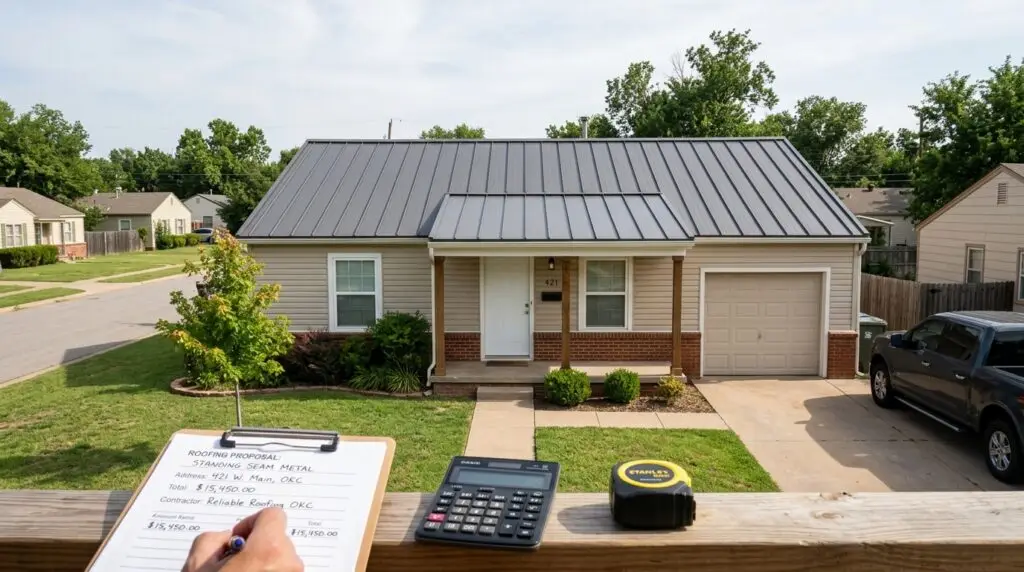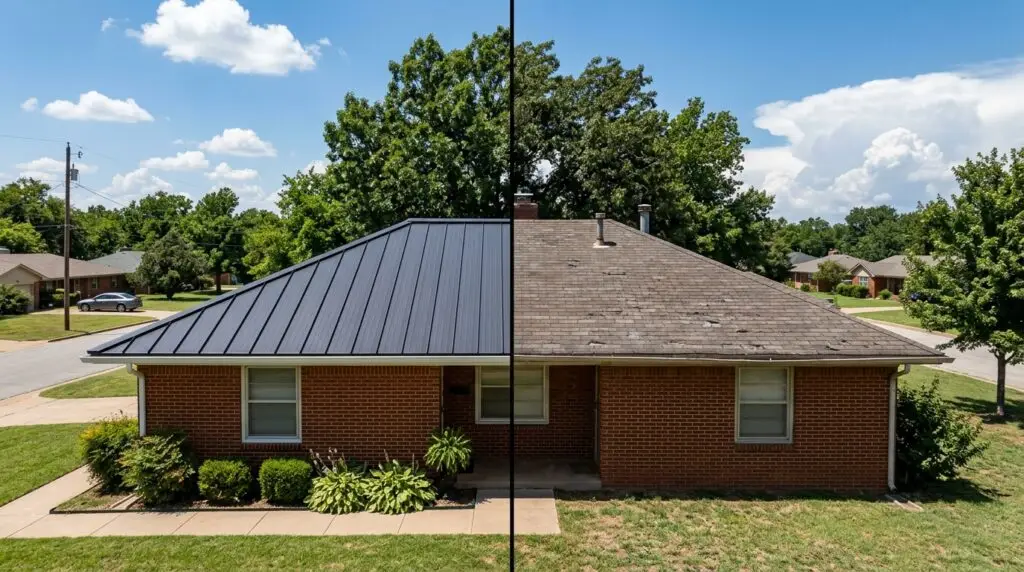
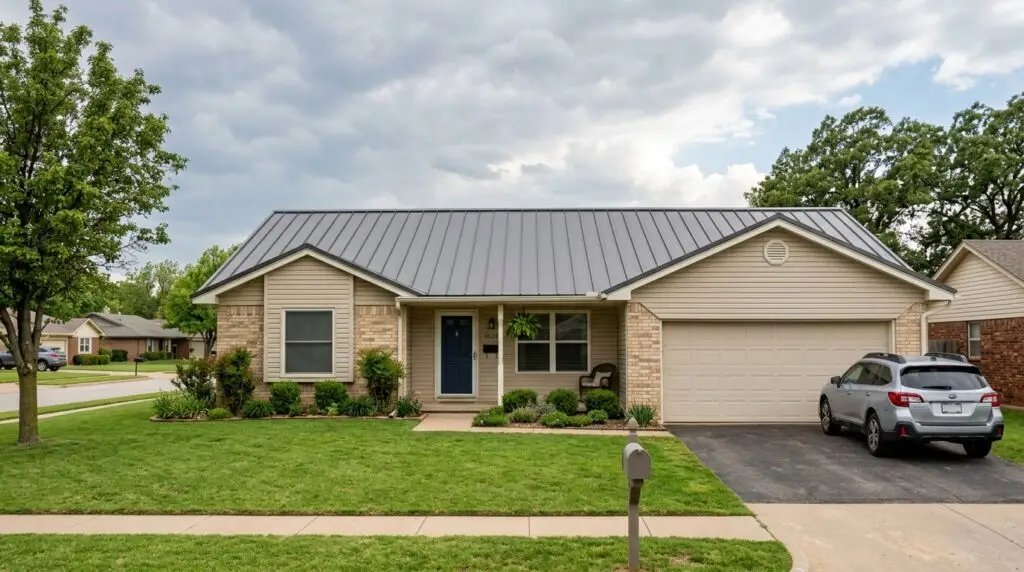
Yes, for most Oklahoma City homeowners, metal roofing is absolutely worth it. The combination of hail exposure, extreme heat, brutal wind events, and unpredictable winter ice makes Oklahoma one of the toughest environments for roofing materials in the entire country. Metal roofing when properly installed handles all of it better than any other residential option available today.
But here’s the thing: not every homeowner is in the same situation. “Worth it” depends on several factors specific to your home, your plans, and your budget. This guide breaks all of it down the real costs, the storm performance realities, the honest trade-offs so you can make the right call for your family.
If you’ve already survived a bad hail season on an asphalt shingle roof, you already know what’s at stake.
What Oklahoma City Weather Actually Does to Your Roof
Oklahoma doesn’t just have bad weather. It has some of the most punishing roofing conditions in North America and that’s not an exaggeration. Central Oklahoma sits at the intersection of four distinct threats that most other states deal with individually. Here, you get all of them at once.
The Four Roofing Threats Unique to Central Oklahoma
- Hail. Oklahoma City lies in the heart of the U.S. hail belt. Severe hail events capable of causing real roof damage aren’t rare they’re part of life in the metro. Communities like Moore, Edmond, Midwest City, and Norman have all experienced repeated hail events that strip granules from asphalt shingles, crack ridge caps, and accelerate roofing failure years ahead of schedule.
- Straight-line winds and tornadoes. The wind uplift forces generated during Oklahoma severe weather events are significant. Roofing materials must meet specific wind resistance ratings to hold up and not all of them do. Proper installation matters just as much as material selection when wind is the threat.
- Thermal shock. Oklahoma summers regularly push surface temperatures above 150 degrees Fahrenheit on dark asphalt roofs. Then winter drops below freezing. That constant expansion and contraction cycle repeated year after year degrades asphalt shingles faster than in temperate climates. Most homeowners don’t realize their roof is aging faster simply because of where they live.
- Ice dams and freeze-thaw cycles. Unlike northern states where ice dam risk persists all winter, Oklahoma’s freeze-thaw pattern is more erratic and sometimes more damaging. A rapid freeze after heavy rain, followed by a warm week, creates conditions that can force water under compromised shingle edges.
Why Asphalt Shingles Struggle in Oklahoma’s Climate
Standard architectural asphalt shingles are designed for moderate climates. In our experience, they routinely underperform in Oklahoma’s environment. Granule loss accelerates under UV intensity. Thermal cracking begins earlier than manufacturer warranties suggest in this climate. And once an asphalt roof takes a serious hail hit, it almost never fully recovers its original performance even after insurance-funded repairs.
The result? Many OKC homeowners find themselves filing hail claims every few years, watching premiums rise, and eventually replacing the same roof they just paid to repair. That pattern is exactly what drives the question of whether metal roofing is worth it in Oklahoma weather.
How Metal Roofing Performs Against Oklahoma’s Worst Storms
This is where metal separates itself from every other residential roofing material. Let’s go through the actual performance differences across each threat Oklahoma homeowners face.
Hail Resistance: What Impact Ratings Actually Mean
Roofing materials are tested and rated using the UL 2218 impact resistance standard. Ratings go from Class 1 (minimal protection) to Class 4 the maximum hail resistance rating available for residential materials. Most standard asphalt shingles earn a Class 3 rating at best. Quality metal roofing panels particularly standing seam and premium metal shingles consistently earn Class 4 ratings.
What does that mean practically? A Class 4 rated metal roof can withstand impact forces that simulate serious hailstone strikes without cracking, splitting, or penetrating. When a real hailstorm hits an OKC neighborhood, the difference shows clearly: asphalt roofs show granule loss, cracked tabs, and eventual leaks. Metal roofs may show minor cosmetic denting on some alloys, but they maintain their waterproofing integrity completely.
Insurance implication: Many Oklahoma insurance carriers offer meaningful discounts for Class 4 impact-rated roofing materials. Before installing any new roof, call your carrier and ask directly about their policy for Class 4 materials. The savings can offset a significant portion of the upfront cost difference over time.
Wind Resistance and Uplift Performance
Standing seam metal roofing performs exceptionally well in high-wind events. Because the panels are mechanically locked together and attach to the deck through hidden clips rather than exposed fasteners, there are no screw heads for wind to grab. The system can flex under load rather than fracture.
Exposed fastener metal panels common on agricultural buildings around the OKC metro are a different situation. They perform adequately in moderate wind, but fasteners are subject to thermal movement and can loosen over Oklahoma’s temperature extremes. If wind resistance is your primary concern, standing seam is the right choice.
Heat Reflection and Summer Energy Efficiency
Dark asphalt shingles absorb solar heat aggressively. On a 95-degree Oklahoma summer day, the surface of a dark asphalt roof can reach 160 degrees Fahrenheit or higher. That heat transfers into your attic and forces your HVAC system to work harder through the afternoon and evening.
Metal roofing with reflective coatings particularly Kynar 500-coated panels with Energy Star certification reflects a significant portion of that solar radiation rather than absorbing it. Attic temperatures drop. Your HVAC cycles less frequently. The difference shows up on utility bills during Oklahoma’s long, hot summers. It won’t eliminate cooling costs, but most homeowners notice real reduction.
The Real Cost of Metal Roofing in Oklahoma City
Let’s talk money honestly because this is where a lot of conversations stall. Metal roofing costs more upfront than asphalt shingles. That’s simply true. But “more expensive” and “not worth it” aren’t the same thing, and the math changes significantly when you examine the full picture.
Upfront Installation Costs
Metal roofing costs vary based on panel type, roof complexity, pitch, decking condition, and tear-off requirements. Cost ranges in the OKC market reflect the quality of materials and the skill required for proper installation:
- Standing seam metal: Highest upfront investment, reflecting system quality and the certified installation skill required
- Metal shingles and stone-coated steel: Mid-range option, often comparable to premium architectural asphalt or tile
- Exposed fastener corrugated panels: Lowest cost, but with trade-offs in long-term residential weather performance
Get at least two quotes from established local contractors and verify their credentials before inviting either of them onto your roof.
Lifetime Cost Comparison: Metal vs. Asphalt in Oklahoma
| Cost Factor | Metal Roofing | Asphalt Shingles (OKC Climate) |
| Typical Lifespan | 40-70 years | 15-20 years |
| Replacements (50 yrs) | 0-1 | 2-3 |
| Hail Repair Frequency | Rare – denting only | Common – granule loss, leaks |
| Insurance Premiums | Often reduced (Class 4) | Standard or rising |
| Summer Energy Impact | Lower (reflective coating) | Higher (heat-absorbing) |
| Resale Value Signal | Positive for buyers | Neutral if aging |
When you run the numbers across a 40-50 year homeownership horizon, metal often competes favorably or wins outright especially when you factor in reduced insurance costs, energy savings, and avoided replacement cycles.
Oklahoma Insurance Considerations
The insurance angle is one most people overlook when evaluating whether metal roofing is worth it in Oklahoma weather and it’s genuinely important. Oklahoma has one of the most active homeowner’s insurance markets in the country because of storm frequency. Carriers are paying close attention to material choices.
A Class 4 impact-rated metal roof can qualify for premium discounts with many carriers. Before you sign any roofing contract, call your insurance agent and ask two specific questions: Do you offer a discount for Class 4 impact-rated materials? And does my current policy cover cosmetic hail damage on metal panels?
| Learn more about our Metal Roof Inspection services and Storm Damage assessment process for OKC homeowners. |
Which Type of Metal Roof Is Best for Oklahoma Homes?
Metal roofing isn’t one product it’s a category. Choosing the right type matters for both performance and aesthetics, particularly in Oklahoma City’s established residential neighborhoods.
Standing Seam Metal Roofing
Standing seam is the gold standard for residential metal roofing performance. Panels run vertically from ridge to eave with raised, interlocking seams that conceal all fasteners from weather exposure. This design gives standing seam its superior wind and water resistance and it’s why you see it increasingly on higher-end new construction around the OKC metro.
It’s the right choice for homeowners who want maximum storm protection and a roof they genuinely won’t think about again for decades. It demands a skilled, certified installation crew. A standing seam roof installed poorly performs worse than a simpler system installed correctly contractor selection matters enormously here.
Metal Shingles and Tiles
Metal shingles are designed to mimic traditional asphalt shingles, cedar shake, or tile but with metal’s durability underneath. They’re a popular choice in OKC neighborhoods with HOA requirements or where homeowners want a traditional residential aesthetic.
Most quality metal shingles carry Class 4 impact ratings and strong wind resistance certifications. They’re an excellent middle-ground option: better long-term performance than asphalt, more aesthetically flexible than standing seam, and typically at a lower cost than a full standing seam system.
Corrugated and Exposed Fastener Panels
You’ll see these on agricultural buildings, rural properties, and some commercial structures around Yukon, El Reno, and Choctaw in the broader OKC metro. For primary residences in established neighborhoods, they’re generally not the right fit. Exposed fasteners require periodic maintenance and don’t offer the same wind uplift resistance as concealed fastener systems.
They make sense for outbuildings, covered porches, and budget renovations on investment properties. For a primary home where storm performance matters, standing seam or metal shingles are the stronger choices.
What Oklahoma Homeowners Should Know Before Installation Day
Getting the right roof is about more than picking the right material. The installation process, the contractor you hire, and the prep work underneath the panels all determine how your roof actually performs when Oklahoma’s weather tests it.
Choosing the Right Oklahoma Metal Roofing Contractor
Here’s something that plays out in the OKC metro after every major hail event: storm-chaser contractors show up from out of state, offer quick low bids, and disappear before the first leak shows up. This is a real and recurring problem in Oklahoma, and it’s cost homeowners a lot of money and frustration.
What to verify before hiring any contractor for metal roof installation in Oklahoma City:
- Valid Oklahoma roofing contractor license verify through the Oklahoma Construction Industries Board
- General liability insurance with adequate coverage request the certificate of insurance directly, not just their word
- Manufacturer certification for the specific panel system being installed required for most material warranties
- Local references from completed metal roofing jobs in the OKC metro area ask to see them
- A physical local address, not just a phone number and a truck
Between you and me the fastest way to spot a problem contractor is to ask where their last three metal roofing jobs are in Oklahoma City. A legitimate local company answers that question immediately and confidently.
Decking, Underlayment, and Ventilation in Oklahoma’s Climate
What goes under the metal matters as much as the metal itself. In Oklahoma’s climate, proper underlayment selection is critical. The freeze-thaw cycles we experience particularly sudden hard freezes following warm, wet weather require an underlayment that maintains its integrity across a wide temperature range.
Ventilation matters too. Metal heats and cools faster than asphalt. Without adequate attic ventilation, that can actually work against you in summer, trapping heat in an under-ventilated space. A thorough contractor assesses your ventilation situation before installation begins, not as an afterthought.
Permits and HOA Approval in OKC
Oklahoma City requires building permits for re-roofing projects above a certain scope. A legitimate contractor pulls the permit that’s not optional, and it’s not something to skip to save a day or two. The permit inspection protects you as the property owner.
If you live in a community with HOA oversight, verify the specific architectural guidelines before selecting a panel style. Metal shingles are typically approved in communities where standing seam or corrugated panels might face restrictions. Get HOA approval in writing before any work begins.
Metal Roof Maintenance in Oklahoma: What’s Required (And What Isn’t)
One of the most oversold selling points for metal roofing is that it’s “maintenance free.” That’s not quite accurate. The better way to put it: metal roofing requires far less maintenance than asphalt shingles, and what it does need is simpler and far less costly. Here’s what you should actually plan for.
Annual Inspection Checklist for OKC Metal Roofs
- After any significant hail event: visually inspect your gutters, downspouts, and any visible panel surfaces. If your gutters show denting, your roof deserves a professional look too. Schedule a metal roof inspection after storm damage rather than assuming everything is fine.
- Fastener check on exposed fastener systems: Oklahoma’s temperature extremes create thermal movement that can work fasteners loose over time. Plan to check and re-torque every few years.
- Valley and gutter inspection: Oklahoma thunderstorms deliver intense rainfall in short windows. Debris accumulation in roof valleys and gutters can cause localized water backup.
- Flashing and sealant at penetrations: chimney flashings, plumbing vents, and HVAC penetrations are the most common leak points on any roof. Inspect sealant annually and recaulk wherever cracking or shrinkage is visible.
Common Metal Roof Issues to Watch For
Oil-canning: The slight waviness visible in flat metal panels is a cosmetic characteristic called oil-canning. It’s almost always a visual issue rather than a structural one worth understanding before installation so it doesn’t alarm you afterward.
Galvanic corrosion: Occurs when dissimilar metals contact each other without a proper barrier copper flashing against an aluminum panel, for example. A competent contractor avoids this by design and material selection.
Paint fading: Oklahoma’s UV intensity is real and consistent. Kynar 500 coatings offer the best long-term color retention in high-UV environments. When comparing panel quotes, ask specifically what coating system is included.
7 Mistakes Oklahoma Homeowners Make When Choosing a Metal Roof
After working with homeowners across the OKC metro from Nichols Hills to Norman to Yukon we see the same mistakes come up consistently. Here’s what to avoid.
- Choosing on price alone. The lowest metal roofing quote almost always reflects compromises in panel quality, installer certification, or the underlayment system. Total cost of ownership over 40 years matters more than the number on the initial proposal.
- Hiring a storm-chaser crew. After major OKC hail events, out-of-state crews flood the metro with competitive bids. Some do decent work. Many don’t and when a problem surfaces six months later, they’re not answering the phone.
- Not confirming the impact rating. Not all metal roofs are Class 4. The panel composition, thickness, and coating all affect the rating. Always confirm UL 2218 Class 4 certification in writing before signing a contract.
- Ignoring ventilation. Metal conducts heat differently than asphalt. Without proper attic ventilation, you can actually worsen your summer cooling situation. Ask your contractor about ventilation assessment before installation.
- Skipping manufacturer certification verification. Most metal roofing warranties require installation by a contractor certified by the manufacturer. If your installer isn’t certified, your warranty may be void on day one.
- Not notifying your insurance carrier before installation. Some Oklahoma carriers require advance notification to maintain continuous coverage through a re-roofing project. Review your policy terms before work begins.
- Assuming all metal looks the same. Standing seam, metal shingles, and stone-coated steel have very different aesthetic profiles. For homes in HOA communities around Edmond or Nichols Hills, panel style selection can be as important as material selection.
Is Metal Roofing the Right Choice for Your Oklahoma Home?
Honestly? It depends on several factors. Here’s a straightforward way to think through your specific situation.
Metal Roofing Makes the Most Sense When…
- You plan to stay in your Oklahoma City home for 10 or more years
- You’ve filed multiple hail damage claims in recent years and your premiums are climbing
- Your current asphalt roof is 15 or more years old and approaching the end of its effective life in Oklahoma’s climate
- Your summer energy bills are high and you want a roof that works with your HVAC rather than against it
- You’re in a high-exposure area communities like Moore, Edmond, Norman, and Yukon sit directly in Oklahoma’s most active severe weather corridors
- You want to break the cycle of storm claims, patch repairs, and repeat assessments
When Asphalt May Still Make More Sense
We believe in honest answers rather than just selling the highest-ticket option. Asphalt may be the more practical choice if:
- You’re planning to sell within the next 5 years and the return on investment timeline doesn’t work in your situation
- You’re facing severe budget constraints with no access to long-term financing
- Your HOA has specific material restrictions that effectively prohibit metal roofing
In our experience, the homeowners who regret choosing asphalt over metal far outnumber the ones who regret going metal. But the choice should fit your actual situation not a sales pitch.
| Explore our Metal Roof Installation services and Service Areas across Oklahoma City, Del City, Bethany, Nichols Hills, The Village, and Warr Acres. |
Metal Roofing Trends in the Oklahoma City Metro Area
The OKC metro has seen clear growth in metal roofing adoption, and the trend isn’t slowing. Several forces are driving it simultaneously.
Repeat hail seasons have shifted how homeowners think about roofing from a routine replacement decision to a genuine long-term investment. When a family goes through two or three hail claims on the same asphalt roof, the question of whether metal roofing is worth it in Oklahoma weather gets very practical, very fast.
Suburban communities including Edmond, Moore, Norman, Yukon, Del City, and Midwest City are all seeing increased metal roofing installations. In some newer OKC metro subdivisions, standing seam is becoming the standard for higher-end new construction rather than an upgrade option.
Insurance market dynamics are accelerating the shift too. As carriers have raised premiums and tightened claim processes in high-frequency hail areas, homeowners who secure Class 4 material discounts are seeing real annual savings and that word spreads through neighborhoods quickly.
Metal roofing is no longer a niche product in Oklahoma City. It’s becoming the smart standard for homeowners who are thinking past the next storm season.
Frequently Asked Questions About Metal Roofing in Oklahoma
Q: Is metal roofing worth it in Oklahoma weather?
Yes. Oklahoma’s combination of hail frequency, high winds, extreme heat, and freeze-thaw cycles makes metal roofing one of the most defensible long-term investments for OKC homeowners. The upfront cost is higher than asphalt, but the total cost of ownership over 40-50 years factoring in fewer replacements, lower insurance premiums, and energy savings typically makes it the stronger financial choice.
Q: Does metal roofing hold up in Oklahoma hailstorms?
Quality metal roofing panels rated Class 4 under the UL 2218 impact resistance standard offer the maximum hail protection available for residential roofing. In Oklahoma hailstorms, metal roofs may show minor cosmetic denting from severe events, but they maintain waterproofing integrity completely unlike asphalt shingles, which lose protective granules and can develop leaks after significant hail exposure.
Q: How long does a metal roof last in Oklahoma?
Quality metal roofing systems typically last 40-70 years. Standard asphalt shingles in Oklahoma’s high-UV, high-hail environment often reach end of effective life in 15-20 years and may require significant repairs well before that.
Q: Will a metal roof make my Oklahoma home hotter in summer?
No the opposite is generally true. Metal roofing with reflective Kynar 500 coatings and Energy Star certification reflects solar radiation rather than absorbing it. Attic temperatures under a properly installed reflective metal roof are significantly lower than under dark asphalt shingles, reducing the load on your HVAC system during Oklahoma’s long, hot summers.
Q: Do Oklahoma insurance companies give discounts for metal roofs?
Many Oklahoma carriers offer premium discounts for Class 4 impact-rated roofing materials. Discount amounts and eligibility vary by carrier and policy, so call your insurance agent directly before installation. Ask specifically about Class 4 material incentives don’t assume; ask.
Q: What type of metal roof is best for Oklahoma wind?
Standing seam metal roofing generally offers the best wind resistance for residential applications. Its concealed fastener design eliminates the most common point of wind-driven failure. If maximum wind resistance is your priority particularly in exposed locations around Oklahoma City standing seam is the right system.
Q: How much does metal roofing cost in Oklahoma City?
Costs vary based on panel type, roof complexity, pitch, decking condition, and tear-off scope. Standing seam carries the highest investment; metal shingles offer a mid-range alternative; corrugated exposed-fastener panels are the most affordable. Get a professional on-site estimate for your specific home the variables are significant enough that general ranges without context can be misleading.
Ready to Find Out If Metal Roofing Is Right for Your Oklahoma Home?
The best way to answer the question for your specific situation is a professional assessment by a local OKC metal roofing contractor who actually knows Oklahoma’s weather not a national call center, not a storm-chaser with a temporary number.
We serve Oklahoma City, Edmond, Moore, Norman, Yukon, Midwest City, Del City, and surrounding communities across the metro. Schedule a free consultation and we’ll give you a straight answer about what your home actually needs.
Related services: Metal Roof Installation OKC | Metal Roof Repair | Metal Roof Inspection | Storm Damage Assessment | Hail Damage Inspection | Service Areas