If you’ve ever stood in your backyard after a storm, staring up at your metal roof and wondering whether you should climb up there and take a look yourself, you’re not alone. It’s one of the most common questions we hear from homeowners across the Oklahoma City metro, especially after a spring hailstorm rolls through.
Quick answer: Yes, you can walk on a metal roof, but only under the right conditions. It depends on the panel type, the roof’s slope, the weather, and how you position your feet. Done carelessly, walking on a metal roof can dent panels, damage seams, or send you sliding off the edge. Done correctly, light foot traffic for inspections or cleaning is generally safe.
That’s the short version. Here’s the longer, more useful version, the one that actually helps you make a smart decision instead of guessing.
Does Walking on a Metal Roof Damage It?
Here’s the thing: metal roofing is durable, but it isn’t indestructible under your feet. The panels are designed to shed water and withstand wind and hail, not necessarily to support concentrated foot pressure in the wrong spot.
Denting and Oil-Canning, Explained Simply
When you step on an unsupported section of a metal panel, you can create a visible dent or a wavy distortion known as oil-canning. It happens because the panel flexes under weight where there’s no solid backing beneath it. Most homeowners don’t realize that oil-canning isn’t just cosmetic, it can also stress the panel’s finish and, over time, create small stress points where corrosion or seam failure starts.
Why Panel Gauge Matters
Panel gauge refers to the thickness of the metal. Thinner-gauge panels are lighter and more affordable, but they’re also more prone to denting under foot traffic. Thicker-gauge panels handle occasional walking much better. If you’re not sure what gauge your roof uses, that’s a good question to ask during your next inspection.
Standing Seam vs. Exposed-Fastener vs. Corrugated
Not all metal roofs behave the same way underfoot.
- Standing seam panels have raised, interlocking seams and hidden fasteners. They look clean and modern, but the flat pan between seams can be more susceptible to denting if you step in the wrong place.
- Exposed-fastener panels (common on many OKC outbuildings, barns, and older ranch-style homes) have visible screw lines that mark exactly where the purlins sit underneath, which actually makes them a little easier to walk safely, once you know what you’re looking at.
- Corrugated panels have a wavy profile that distributes weight differently across ribs and valleys, and technique matters just as much as panel type here.
Signs a Roof Was Already Damaged by Foot Traffic
If you’re buying a home with an existing metal roof, or you’re not sure whether a previous contractor walked it correctly, look for small dents in a repeating pattern (not hail-related, which tends to be scattered and random), slightly raised or popped fastener heads, and faint scuff marks along seams. These are subtle signs worth mentioning to a roofing professional during an inspection.
The Real Danger Isn’t the Roof — It’s You Slipping
In our experience, homeowners worry about denting the roof. The bigger risk is actually falling off of it. Metal is one of the most deceptively slick roofing surfaces there is, and that catches people off guard constantly.
Why Metal Looks Dry But Isn’t
A metal roof can look completely dry and still be dangerously slick. Morning dew, pollen film, a thin layer of dust, or even oil residue from manufacturing can reduce traction dramatically. Between you and me, this is the number one thing people underestimate, they check for obvious rain or snow and skip everything else.
Slope and When Foot Traffic Becomes Unsafe
Low-slope metal roofs are generally more manageable to walk on. As the pitch increases, your margin for error shrinks fast. Once you’re dealing with a steep slope, no amount of careful footwork replaces proper fall protection, at that point, it’s simply not a DIY task.
The Oklahoma Heat Factor
Summer in Oklahoma City brings long stretches of intense sun, and metal roof surfaces can get hot enough to soften certain sealants and coatings. That softened surface can behave differently underfoot than a cool, fully cured panel. It’s a small detail most guides skip entirely, but it’s worth knowing if you’re planning any roof access in July or August.
How to Walk on a Metal Roof Safely — If You Must
If you genuinely need to get up there for a quick, light-duty task, technique matters more than almost anything else.
Step on the Purlins, Not the Open Panel
Purlins (or rafters, depending on your roof structure) are the structural supports underneath the metal. Stepping directly above them, often marked by a line of screws on exposed-fastener roofs, gives you solid footing and avoids stressing unsupported panel spans.
Avoid Raised Seams and Screw Heads
Never plant your full weight directly on a standing seam or a screw head. Seams can be damaged or loosened, and screw heads are an unstable, rounded surface that can roll your foot right out from under you.
Walk Sideways, Not Straight Up and Down
Move parallel to the roof edge and shift your weight gradually as you cross the slope. Walking straight up or down increases your chances of sliding, especially on anything above a low pitch.
Footwear That Actually Works
Soft-soled shoes with good rubber traction are the baseline. Hard-lugged work boots might feel protective, but on smooth metal they often provide less grip than a simple pair of clean-soled sneakers. Whatever you wear, make sure the soles are free of dirt, oil, or debris before you climb up.
When You Should Never Walk on Your Metal Roof
Some situations just aren’t worth the risk, no matter how careful you are. Skip the roof entirely if any of these apply:
- The surface is wet, frosted, or covered in morning dew
- It’s a high-wind day, a common spring pattern here in Oklahoma City
- The roof has a steep pitch and you don’t have proper fall protection set up
- You suspect storm damage but haven’t had it professionally assessed yet
- It’s an older metal-over-shingle retrofit and you’re unsure of the deck support underneath
If two or more of these apply, it’s best to call a professional rather than test your luck.
Metal Roofs After an Oklahoma Hailstorm — A Special Case
This is where a lot of general roofing advice falls short, and it’s genuinely important for anyone living in the OKC metro.
Why Post-Storm Roof Walks Are Tempting — and Risky
After a hailstorm moves through, it’s natural to want to climb up and check the damage yourself. Understandable, but walking a roof before you know its condition is one of the riskiest times to be up there. Hail can create hidden bruising, loosened fasteners, or weakened panel sections that aren’t obvious from a quick glance.
Walking on Hail Damage Can Make It Worse
Here’s the part most homeowners don’t think about: if a panel already has hidden hail damage, stepping on it can turn a minor issue into a real problem, deepening a dent, cracking a stressed seam, or dislodging a fastener that was already loosened by impact.
Insurance and Documentation Considerations
If you’re planning to file an insurance claim, it’s worth having a professional inspection done before any foot traffic occurs. Adjusters and roofing professionals are trained to document damage in a way that supports your claim, and premature walking can sometimes complicate that process. This isn’t about avoiding the roof forever, it’s about sequencing things correctly.
Wind Uplift and Loosened Panels
Oklahoma’s wind events don’t get the same attention as hail, but wind uplift can loosen panel edges and fasteners just as easily. A quick visual check from the ground, looking for lifted edges, gaps, or shifted panels, is a smart first step before anyone climbs up.
Metal Roof Types Common in OKC Homes — Does Walking Differ?
The OKC metro has a real mix of roofing styles, and it does affect how you should approach foot traffic.
Standing Seam on Newer Builds
Newer developments around Edmond, Yukon, and Norman often feature standing seam metal roofing for its clean look and long-term performance. These roofs require extra care with foot placement, since the flat pan sections between seams are where denting risk concentrates.
Exposed-Fastener Panels on Older Ranch Homes and Outbuildings
Many older ranch-style homes and outbuildings across central Oklahoma use exposed-fastener panels. The visible screw lines actually make it easier to identify safe stepping zones, which is one advantage of this style.
Metal-Over-Shingle Retrofits
It’s common to see metal installed directly over existing shingles in older neighborhoods. These roofs deserve extra caution, since the support structure underneath isn’t always as straightforward, and it’s harder to judge from the surface alone whether a section is well-supported.
Common Mistakes Homeowners Make Walking on Metal Roofs
- Wearing hard-soled work boots instead of soft, clean rubber soles
- Walking straight up and down the slope instead of sideways
- Dragging ladders, tools, or equipment across panels
- Skipping a ground-level visual inspection before climbing up
- Assuming their warranty automatically covers any damage from foot traffic, many don’t
Do You Need a Harness or Fall Protection?
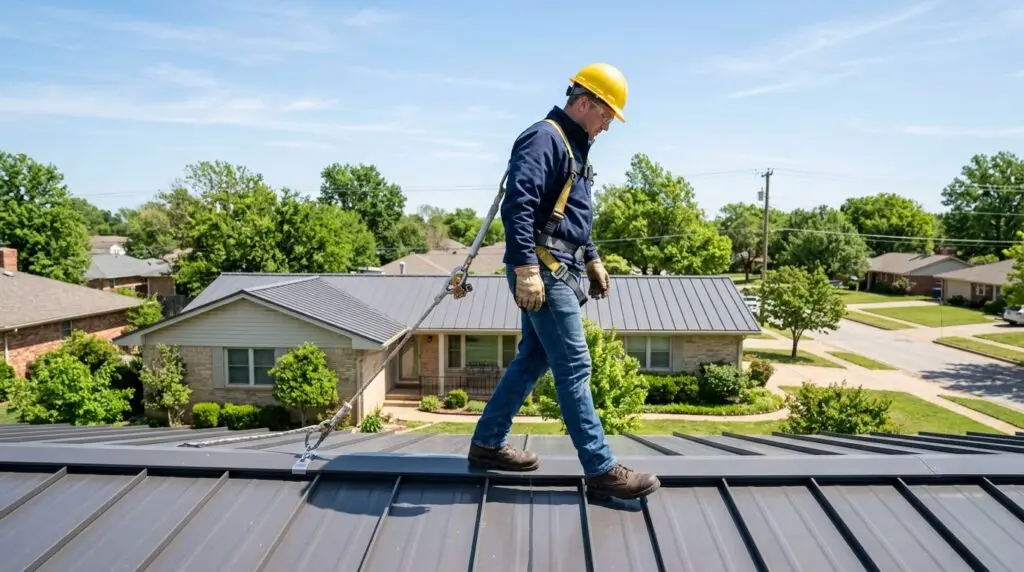
It depends on several factors, pitch, roof height, and how comfortable you genuinely are with heights. As a general guideline, steeper roofs and anything beyond a single story call for proper fall protection, not just careful footwork. Setting up a secure anchor point and using a stable, well-positioned ladder are the basics, but honestly, for most homeowners, this is exactly the point where it makes more sense to call in a professional than to invest in gear you’ll rarely use.
When to Call a Professional Instead of Walking Your Own Roof
There are a handful of situations where climbing up yourself just isn’t the smart move:
- Storm damage inspections, professionals document damage properly for insurance purposes and know what to look for that isn’t obvious to the untrained eye
- Steep pitch or multi-story homes, which are increasingly common in newer OKC-area developments
- Warranty-sensitive roofs, where improper DIY foot traffic could create complications with manufacturer coverage
- Any roof where you’re not confident about the support structure underneath
How Walking on the Roof Affects Long-Term Lifespan and Warranty
What Warranties Typically Exclude
Many manufacturer warranties include language limiting coverage for damage caused by improper foot traffic or unauthorized modifications. The specifics vary by manufacturer, so it’s worth pulling out your paperwork and checking before you make a habit of climbing up for routine tasks.
Repeated Foot Traffic Adds Up
A single careful walk across your roof for an inspection is unlikely to cause lasting harm. But repeated, improper foot traffic, especially in the wrong spots, can gradually stress seams and fastener points, shortening the roof’s effective lifespan over time. Think of it less as one risky moment and more as cumulative wear.
Frequently Asked Questions
Can you walk on a metal roof without damaging it?
Yes, if you step on supported areas like purlins or fastener lines, avoid raised seams, and only do it in dry conditions. Risk of denting increases with thinner-gauge panels.
Is it safe to walk on a metal roof after it rains?
No. Wet metal roofs are significantly more slippery than dry ones. Walking on them shortly after rain, dew, or frost is one of the leading causes of falls.
What shoes are best for walking on a metal roof?
Soft, clean rubber-soled shoes provide the best traction. Hard-lugged work boots often reduce grip on smooth metal surfaces.
Can walking on a metal roof void the warranty?
Some manufacturer warranties limit coverage for damage caused by improper foot traffic. Check your specific warranty terms before doing DIY roof access.
Should I walk on my roof after a hailstorm to check for damage?
It’s safer to inspect visually from the ground first and have a professional evaluate hail damage before walking the roof. Hidden bruising or loosened panels can worsen underfoot.
How steep can a metal roof be and still be safe to walk on?
Lower-slope roofs are generally more manageable. As pitch increases, the margin for error narrows quickly, and steep roofs typically require fall protection regardless of experience.
Do I need a professional to inspect my metal roof instead of walking it myself?
In most cases, yes, especially after storms, on steep or multi-story roofs, or when warranty coverage is a concern. A professional inspection reduces both safety risk and the chance of accidental damage.