
Ask ten roofing companies which materials last the longest, and nine of them will read you a list written for a climate we do not have. Slate first. Tile second. Metal somewhere in the middle. Fine advice if your house sits in a mild valley somewhere.
We live in central Oklahoma. Hail Alley runs right through this metro, Tornado Alley sits on top of it, and a single calendar year here can put large hail, straight line winds, triple digit summer heat, and winter freeze thaw on the same roof. The National Weather Service office in Norman tracks that severe weather pattern every spring, and every spring our phones prove it.
So here is the honest local truth. In Oklahoma City, roofs rarely die of old age. They get replaced on a storm cycle. That changes the whole question. The best roofing materials for long term durability in this market are not the ones with the biggest lifespan number on a brochure. They are the ones that take an impact, take an uplift event, and still keep water out of your house afterward.
One more thing before we start. We install metal, so that bias is on the table. You will still find sections below where we tell you metal is the wrong call and shingles are the smarter buy.
What Is the Most Durable Roofing Material? The Short Answer
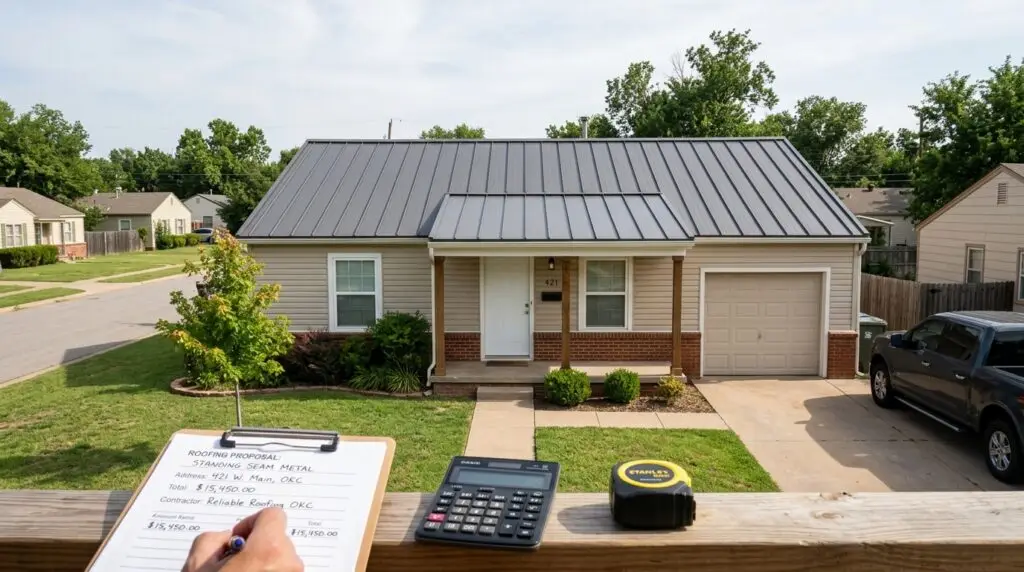
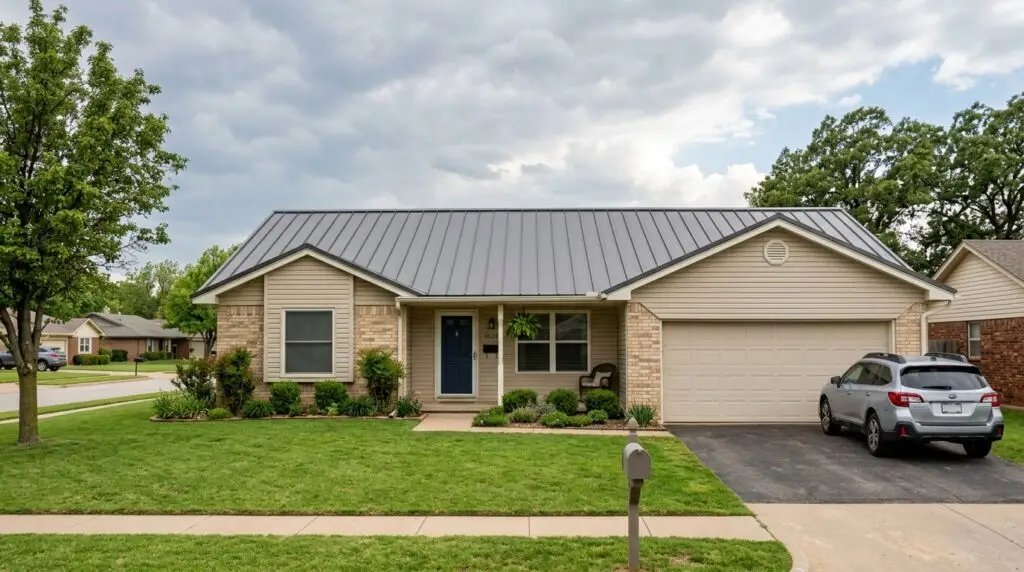
Natural slate is the most durable roofing material overall, followed by clay and concrete tile, then metal. For most Oklahoma City homes, standing seam metal is the best long term durability you can actually put on the house, because it handles hail impact, wind uplift, and fire without the structural weight that slate and tile demand.
Here is the one line version of each option.
- Natural slate. Longest service life of anything on the market. Heavy, costly, and rarely practical on local framing.
- Clay and concrete tile. Decades of service, also heavy, and brittle when hail gets large.
- Standing seam metal. Long service life, top tier impact and wind performance, Class A fire rating, light enough for standard framing.
- Synthetic composite shingle. Good impact numbers, lighter than tile, shorter track record than the materials it copies.
- Architectural and Class 4 asphalt shingle. The value pick and the local default, with the shortest realistic life in a hail climate.
Why the national ranking and the Oklahoma ranking are not the same
National lists rank by lifespan under ideal conditions. Rank instead by what survives repeated impact, uplift, and thermal cycling on a house that already exists, with framing you are not going to rebuild, and the order shifts. That is the ranking that matters when you are writing the check.
Roofing Material Lifespan: Published Ranges vs. What We See Here
| Material | Commonly cited lifespan | What we see across the OKC metro | What usually fails first |
|---|---|---|---|
| Natural slate | 75 to 150 years | Rare on local housing stock, weight usually rules it out | Cracked slates from large hail, plus flashing and fasteners long before the stone |
| Clay or concrete tile | 50 to 100 years | Occasional on custom builds, needs a structural review | Brittle fracture from hail, breakage from foot traffic |
| Standing seam metal | 40 to 70 years | Reaches the middle of that range with maintenance | Sealant, pipe boots, and flashing well before the panels |
| Exposed fastener metal panel | 25 to 40 years | Life depends almost entirely on fastener service | Screws backing out, neoprene washers hardening under UV |
| Synthetic composite shingle | 40 to 50 years | Newer here, strong on impact, limited local history | Heat and UV aging, varies by product |
| Class 4 architectural shingle | 25 to 30 years | Often replaced on a storm cycle, not a wear cycle | Mat fracture, granule loss, wind lifted tabs |
| Standard three tab shingle | 15 to 25 years | Shortest practical life in this climate | Hail bruising, heat curl, blow off |
Those published spans assume moderate weather and clean installation. Neither is guaranteed here. Repeated impact, uplift cycles, hard UV, and attic temperatures that climb well past comfortable all shave years off the label. In our experience, a roof in this metro should be judged on storm history first and age second. A twelve year old roof in Moore that has taken three hail events is a different animal than a twelve year old roof in a sheltered pocket of central Oklahoma City.
Five things decide lifespan no matter which material you pick: installation quality, attic ventilation, decking condition, flashing detail, and whether anyone maintains the thing. Material choice matters. It just is not the whole story.
Hail and Wind: How Each Material Actually Fails Here
Cosmetic damage and structural damage are not the same problem
This is the distinction almost no durability guide makes, and it is the heart of the local argument.
When hail hits metal, the usual result is a dent. The panel deforms, the coating may crack, and the roof keeps shedding water. When hail hits asphalt, it can fracture the mat underneath. That roof looks fine from the driveway and leaks eight months later. Tile and slate crack outright.
Small hail rarely marks a properly installed metal roof. Once stones reach roughly an inch to an inch and a half, we start seeing dents, dimpled gutters, and cracked coating. What we do not see, most of the time, is water coming through the panel. It comes through the boot, the seam, or the flashing.
Impact ratings without the sales pitch
UL 2218 Class 4 is the top impact classification. A two inch steel ball gets dropped from twenty feet, and the product either cracks or it does not. Worth knowing: Class 4 is a rating a product earns, not a material category. Asphalt, metal, and composite products all carry it.
Class 4 also is not a promise. The Insurance Institute for Business and Home Safety is clear that no roof covering is hail proof, and neither are we. Anyone who tells you otherwise is selling something.
Wind uplift starts at the edges
Wind does not usually peel a roof from the middle. It gets under an edge. Eaves, rakes, ridges, and especially the corner where the rake meets the eave. Once air gets beneath a panel or a shingle tab, it inflates the system and works it loose.
Concealed fastener standing seam with correct clip spacing and well secured edge metal generally outperforms thin screw down panels and shingle tabs in that scenario. Look for uplift testing under UL 580 or ASTM E1592 rather than a mile per hour number pulled from an ad.
The slow damage nobody photographs
Thermal cycling backs fasteners out. UV chalks coatings and dries the binders in asphalt. Freeze thaw drives water into every gap that summer opened up. None of it makes the news. All of it is why an Oklahoma roof ages faster than the brochure suggests.
Metal, tile, slate, and most asphalt products carry Class A fire ratings under UL 790 and ASTM E108. And wind borne debris punctures more panels around here than homeowners expect, which is a durability factor worth thinking about if you have big trees or open acreage.
Metal Roofing in Oklahoma: What the Lifespan Really Depends On
Standing seam vs. exposed fastener
Standing seam hides the fasteners and lets the panels move with temperature. Screw down panels put a rubber washer out in the weather, and that washer becomes your maintenance clock. Exposed fastener systems still make sense on shops, barns, carports, and simple gable roofs where budget drives the decision. They just need attention on a shorter schedule.
Gauge, substrate, and coating
Lower gauge number means thicker steel. 24 gauge resists denting better than 26 gauge, and in a hail market that difference shows up. Galvalume substrate handles corrosion well, and a PVDF finish such as Kynar 500 holds color and fights chalking under our summer sun better than economy coatings. Ask what is being quoted. A bid that will not name the gauge and the coating is hiding something.
What fails first on a metal roof
In order: pipe boots, sealant at end laps and penetrations, closures and ridge trim, fasteners and washers, then finally the panels. Most homeowners don’t realize the panels typically outlive everything attached to them. That is exactly why “metal lasts fifty years” is only true with maintenance behind it. A metal roof inspection every year or two catches all five of those items while they are still cheap.
Metal over shingles, and the decking underneath
Sometimes a recover over existing shingles is fine. Sometimes it buries a problem. Decking condition, how many layers are already up there, ventilation, and City of Oklahoma City permit requirements all factor in. Get the decking looked at before anyone quotes a recover.
Two objections worth answering straight
Noise. Over solid decking, underlayment, and an insulated attic, metal is not meaningfully louder in normal rain than shingles. Over open purlins on a barn, it absolutely is.
Lightning. Metal does not attract lightning. It is non combustible, which counts in its favor.
Where metal is the wrong answer
Tight budget with a short ownership horizon. An HOA that prohibits panel profiles. Low slope porches and additions that need a different system entirely. We would rather tell you that now than sell you a roof you regret.
Cost Per Year of Protection: The Math That Settles the Argument
Upfront price is the wrong comparison. Cost per year of protection is the right one.
Installed costs in the Oklahoma City market stack up in bands. Architectural asphalt sits at the entry point. Class 4 asphalt adds a modest upgrade over that. Exposed fastener metal comes in above both. Standing seam sits well above that. Tile and slate are the premium tier. Pitch, roofline complexity, penetration count, decking repairs, and material choice move every one of those numbers, so treat any quote you see online as a starting point.
Now divide installed cost by realistic service life in this climate, not the national label. A shingle roof that gets replaced on a storm cycle can cost more per year of protection than a metal roof that never gets replaced during the same ownership period.
And add the costs that comparison charts leave out:
- Tear off and disposal on every replacement
- A wind and hail deductible on every claim
- Interior drywall, paint, and insulation repairs when a leak beats you to it
- Cooling load differences over a long Oklahoma summer
- The disruption of doing the whole job again in eight years
Metal usually wins that math for homeowners staying put. If you are selling within three to five years, the gap narrows, and a well installed architectural or Class 4 shingle roof may be the rational buy. It depends on several factors, and ownership horizon is the biggest one.
Installation Quality Outranks Material Choice
Here is the thing most durability articles skip. The most durable roofing material installed badly will fail before a mid tier material installed correctly. Every rating on every spec sheet assumes ideal installation.
What separates the two:
- Fastener type and pattern, with tighter spacing at perimeters and corners where uplift concentrates
- Sealant placed in front of the fastener line, not behind it
- Expansion allowance on long panel runs
- Correct underlayment over sound decking
- Secured drip edge and rake trim
- Real valley, sidewall, and kick out flashing, fabricated rather than improvised
- Balanced intake and exhaust ventilation
Metal roofing is sheet metal work. Seams, clips, expansion, fabricated flashing, coating systems. Shingle roofing is a different craft with different habits. When you interview companies, ask what they install every week, not what they are willing to install. Our guide on how to choose the right roofing contractor walks through the rest of that vetting process.
Also separate your three warranties: manufacturer material, finish or paint, and contractor workmanship. Most real world failures land in the third category, which is usually the shortest of the three. Get all three in writing.
Maintenance Load by Material
“Low maintenance” gets thrown around constantly and defined almost never. Here is the honest version.
| Material | Realistic upkeep | The item that decides its lifespan |
|---|---|---|
| Standing seam metal | Annual visual check, gutter and valley clearing, post storm inspection | Sealant and boots at penetrations |
| Exposed fastener metal | Same, plus a fastener and washer review roughly on a 10 to 20 year clock | Screws and neoprene washers |
| Asphalt shingle | Post storm inspections, granule and tab checks, sealant upkeep | Storm impact and heat aging |
| Tile or slate | Broken unit replacement, flashing and underlayment service | Underlayment and flashing, not the tile |
| Composite shingle | Light, similar cadence to metal | Product specific coating and fastening details |
One rule covers every material in this metro: get eyes on the roof after any significant hail or high wind event, keep dated photos, and keep gutters and valleys clear. Our storm damage services exist for that first check after a bad night.
And please do not walk a metal roof yourself. It is slick long before it looks slick, and foot traffic creates the exact damage you climbed up to find.
Insurance, Impact Ratings, and What Durability Is Worth in Oklahoma
Many Oklahoma carriers offer a wind and hail premium credit for UL 2218 Class 4 roofs. The amount varies by carrier, and nobody should promise you a number. Ask your agent, get it in writing, and check the Oklahoma Insurance Department for consumer guidance.
Between you and me, the policy term that matters most for a metal roof is the cosmetic damage exclusion. Some policies will not pay for dents that do not affect function. On a metal roof in Hail Alley, that clause decides whether a hail event is a claim or a shrug. Read the roof surfacing endorsement before you choose a material, not after.
Two more terms worth knowing. Replacement cost value pays to replace, actual cash value pays depreciated value. And wind and hail deductibles are often a percentage of insured value rather than a flat dollar amount, which means every storm cycle replacement carries a real out of pocket cost. Fewer replacements, fewer deductibles.
Worth a look as well: the Oklahoma Insurance Department administers a grant program for upgrades to the IBHS FORTIFIED roof standard. Check current eligibility directly with them, since program details change.
How to Choose: A Framework That Fits Your House
| Your situation | What to prioritize | What usually fits |
|---|---|---|
| Staying 15 years or more, tired of storm cycle replacements | Impact and uplift performance, lowest cost per year | Standing seam metal |
| Selling in 3 to 5 years | Upfront cost, clean appearance, insurability | Class 4 architectural shingle |
| Tight budget, roof failing now | A sound, permitted, well flashed system | Quality architectural shingle, or exposed fastener metal on a simple roofline |
| Repeat hail claims on record | Failure mode, deductible frequency, policy language | Metal, with the cosmetic exclusion checked first |
| Heavy tree cover | Puncture and abrasion resistance, valley detail | Heavier gauge metal or composite |
| Complex roofline, many penetrations | Flashing craftsmanship over material brand | Whatever your best sheet metal crew installs |
| Low slope porch, carport, or addition | The right system for the slope | A low slope rated system, tied into the main roof correctly |
Three questions settle most of these decisions. How long will you own the home? What does your policy say about roof surfacing and cosmetic damage? Can your framing carry the weight of what you are considering? Answer those and the material picks itself.
Durability by Property Type Across the OKC Metro
Ranch homes from the 1950s through the 1970s in Del City, Midwest City, Bethany, and older south Oklahoma City. Simple gable roofs, thinner original decking, sometimes more than one existing layer, and limited attic ventilation. Sort out decking and ventilation before you shop materials, and stay with lightweight systems.
Mature tree neighborhoods around Nichols Hills and central Oklahoma City. Debris packs the valleys, limbs abrade coatings, and moisture sits behind chimneys. Abrasion resistant finishes and generous valley detail earn their keep.
Newer builds in Edmond, Yukon, Mustang, and Norman. More valleys, dormers, and sidewall transitions, plus wide open western exposure to straight line wind. More flashing means more failure points. Craftsmanship at the transitions matters more than the brand on the panel.
Moore and the south metro storm corridor. Repeat hail exposure makes failure mode the deciding factor. Impact rated systems plus disciplined documentation.
Acreage toward Piedmont and El Reno. Long unobstructed wind fetch, metal outbuildings, low slope additions. Gauge, edge trim, closures, and lap sealant carry the load.
Custom and historic homes. Tile and slate occasionally make sense, but only after a structural evaluation of dead load. Most tract framing in this metro was never designed for that weight, and no material is durable if the structure underneath is fighting it. We work across Oklahoma City and the surrounding metro, and the right answer shifts by neighborhood more than people expect.
Mistakes We See on Oklahoma City Roofs
- Buying the lifespan number instead of the failure mode. A fifty year rating means nothing if the system fails at a pipe boot in year eight.
- Assuming metal is maintenance free. Panels are the durable part. Boots, sealant, closures, and fasteners run on a shorter clock.
- Picking the thinnest gauge to hit a price. First regret after the first real hail season.
- Ignoring the decking. New material over soft sheathing inherits the old roof’s problems.
- Skipping ventilation. A superheated attic ages every material from underneath.
- Letting a shingle crew fabricate metal flashing. Different trade, different skill set.
- Signing with a storm chase crew the week after hail, then having nobody local to call for warranty work.
- Never reading the roof surfacing endorsement before buying metal in a cosmetic exclusion market.
- Pressure washing coated panels, which drives water under laps and hurts the finish.
- Comparing bids on price per square alone, with no line items for underlayment, flashing, fasteners, decking allowance, and permits.
- Paying out of pocket for a roof that still had a claimable storm on it. Get it inspected before you write that check. Our notes on how weather affects roofing materials cover what storm damage looks like on each system.
Get a Straight Answer About Your Roof
Rank by failure mode and cost per year. Check your framing and decking. Read your policy. Then hire the trade that installs your material every week. That is the whole framework, and it holds up better than any list of the best roofing materials for long term durability written for a climate that never sees a hailstorm.
Before you sign anything, ask these questions. Do you install metal specifically, or mostly shingles? What gauge, substrate, and coating are you quoting? Is the fastener pattern tightened at perimeters and corners? Can I see the material, finish, and workmanship warranties in writing? Do you pull City of Oklahoma City permits? And will you tell me plainly if my roof does not need replacing yet?
If you want a straight read on what your house actually needs, schedule a free metal roof inspection. We handle metal roof installation and metal roof repair across Oklahoma City, Edmond, Moore, Norman, Yukon, Mustang, and Midwest City, and we will tell you when the answer is “not yet.”
Frequently Asked Questions
What is the most durable roofing material?
Natural slate lasts longest overall, followed by clay and concrete tile. For most Oklahoma City homes, standing seam metal offers the best durability that standard framing can support, with strong hail, wind, and fire performance.
How long does a metal roof last in Oklahoma?
Standing seam metal is commonly rated for 40 to 70 years, and with regular maintenance it typically reaches the middle of that range here. Exposed fastener panels run shorter, usually 25 to 40 years, depending on fastener upkeep.
What is the best roofing material for hail?
Impact rated systems perform best, and UL 2218 Class 4 is the top rating. Metal usually fails cosmetically, meaning dents, while asphalt can fracture and leak. No roof is hail proof, whatever the sales pitch says.
Is a metal roof worth the extra cost in Oklahoma City?
If you plan to stay long term, usually yes, because cost per year of protection drops when you stop replacing the roof every storm cycle. If you are selling within a few years, a Class 4 shingle roof may be the better financial call.
Does hail dent a metal roof, and does insurance pay for it?
Hail around an inch and larger can dent panels. Whether the dents get paid depends on your policy, since some carriers exclude cosmetic damage on metal roofing. Read your roof surfacing endorsement before choosing a material.
Are metal roofs noisy during Oklahoma storms?
Not on a typical home. Over solid decking, underlayment, and attic insulation, a metal roof sounds about like any other roof in normal rain. Open purlin buildings such as barns are the loud exception.
Can a metal roof be installed over existing shingles?
Sometimes. It depends on decking condition, how many layers are already there, ventilation, and permit requirements. Have the decking inspected first, because a recover over bad sheathing shortens the life of the new roof.