Yes, metal roofs can rust, but it’s not as common as most homeowners assume. Modern metal roofing comes coated with zinc, aluminum, or paint systems specifically designed to block moisture from reaching the base metal. When that coating stays intact, rust isn’t much of a concern. When it gets scratched, dented, or worn thin from years of Oklahoma weather, that’s when problems start.
Here’s the thing: the metal itself usually isn’t the weak point. The coating is. And in Oklahoma City, that coating takes more of a beating than it would in a milder climate.
The Short Version for Voice Search
If you’re asking your phone “will my metal roof rust,” the answer is this: properly coated metal roofing resists rust for decades, but damage, poor installation, or skipped maintenance can let rust form years earlier than expected.
How Rust Actually Forms on a Metal Roof
Rust isn’t random. It’s a chemical reaction, and it needs three things to happen: exposed iron, oxygen, and water. Take any one of those away and rust can’t form.
The Role of Moisture and Oxidation
Most steel roofing panels are made from an iron alloy, which means untreated steel will rust if it stays wet long enough. Manufacturers get around this by applying a protective layer, usually zinc or a zinc-aluminum blend, over the steel before it ever reaches your roof. That layer acts like a raincoat. Water hits it, beads up, and runs off before it ever touches the iron underneath.
Oxidation is a slow process. It doesn’t happen overnight. But once moisture finds a way past the coating, even a tiny scratch, the clock starts ticking.
Why Scratches, Dents, and Broken Coatings Matter Most
Most homeowners don’t realize that a single scratch is often the whole story. A roofer’s boot, a fallen tree limb, a ladder set down carelessly, any of these can chip through the protective layer and expose bare metal. From there, rain does the rest.
It’s the same reason a scratched car fender starts rusting at the scratch line first, not across the whole panel. Localized damage means localized rust. That’s actually good news, because it means most rust problems start small and stay small if you catch them early.
Not All Metal Roofing Rusts the Same Way
Not every metal roof is built the same, and the type of metal on your home changes how much you need to worry about rust.
Galvanized Steel (Zinc-Coated)
Galvanized steel is coated in zinc, which corrodes sacrificially. In plain terms, the zinc corrodes so the steel underneath doesn’t have to. Over time, that zinc layer wears down from weather exposure. Once it thins out enough in one spot, the steel underneath becomes vulnerable.
Galvalume Steel (Zinc + Aluminum)
Galvalume combines zinc with aluminum, and it’s become the standard for a lot of residential metal roofing because it holds up better against corrosion than zinc alone. The aluminum adds a layer of durability, while the zinc still provides that sacrificial protection at cut edges and scratches. For a lot of Oklahoma homes, this is a solid middle ground between performance and cost.
Aluminum Roofing (Naturally Rust-Resistant)
Aluminum doesn’t contain iron, so it doesn’t rust in the traditional sense. Instead, it forms a thin oxide layer on its surface that actually protects it from further corrosion. It’s a great option for homeowners who want to worry less about rust long term, though it tends to cost more upfront and isn’t always the look people want for a traditional home.
Copper Roofing (Patina, Not Rust)
Copper is a different animal entirely. It doesn’t rust because there’s no iron in it. Instead, it develops a patina, that greenish coating you see on old copper fixtures and statues. It’s not damage. It’s actually a protective layer that builds up as copper reacts with air and moisture over years. Copper roofs are less common around Oklahoma City, mostly due to cost, but they’re about as rust-proof as roofing gets.
Why Oklahoma City’s Climate Puts Extra Stress on Metal Roofs
This is where a lot of general roofing articles fall short. They’ll explain rust in general terms without ever addressing what actually causes coating failure here, in this specific climate.
Hail and Severe Storm Season Impact on Coatings
Oklahoma City sits in an area that sees regular severe weather, including hail. Hail impacts can chip or crack the protective coating on a metal panel even when the panel itself doesn’t dent badly. That chipped spot is exactly the kind of exposed area where rust likes to start. If your roof has been through a hailstorm recently, it’s worth having someone take a look, even if the roof looks fine from the ground.
High Wind and Wind-Blown Debris Scratching
Strong straight-line winds and the occasional tornado activity in this region don’t just risk major damage. They also kick up branches, gravel, and debris that scrape across roof panels during a storm. Those scratches are often small enough that homeowners never notice them, but they’re exactly the kind of thing that lets moisture in over time.
Humidity, Rain, and Freeze-Thaw Cycles
Oklahoma City gets a mix of humid summers and winters that swing between mild and freezing. That freeze-thaw cycle matters more than people think. Water that gets into a small crack or seam can freeze, expand, and widen the damage, then thaw and let more water in next time. Repeat that cycle enough times over a few seasons and a minor scratch can turn into a real vulnerability.
How This Compares to Drier or Coastal Climates
Coastal homes deal with salt air, which is famously hard on metal. Drier climates like parts of Arizona see less rust simply because there’s less moisture around to start the reaction. Oklahoma City lands somewhere in between. We don’t have salt air, but we get enough rain, humidity, and severe weather that coating durability genuinely matters here, more than it would in a consistently dry region.
Common Causes of Rust That Have Nothing to Do With the Metal Itself
Between you and me, a lot of rust problems we see aren’t really about the roofing material at all. They’re about how the roof was put together or maintained.
Improper Installation and Exposed Fasteners
A poorly installed metal roof can develop rust years earlier than a well-installed one, even with identical materials. Overdriven or underdriven screws, exposed fastener heads, and gaps around flashing all create entry points for water. This is one of the biggest reasons installer experience matters as much as the roofing material you choose.
Dissimilar Metal Contact (Galvanic Corrosion)
When two different metals touch each other in the presence of moisture, it can trigger galvanic corrosion, a reaction that speeds up rust on one of the metals involved. This is why using the wrong fasteners, or letting copper flashing touch a steel panel, can cause problems. It’s also why using a graphite pencil to mark panels during installation is a bad idea. Graphite can trigger the same kind of corrosive reaction.
Trapped Debris, Leaves, and Standing Moisture
Leaves, pine needles, and general yard debris that pile up in roof valleys hold moisture against the panel for extended periods. That constant dampness is exactly the environment rust needs. Roofs with a lot of tree coverage nearby tend to need more frequent debris cleanup for this reason.
Skipped Inspections and Deferred Maintenance
It depends on several factors, but generally speaking, roofs that go years without a single inspection are the ones where small issues turn into bigger ones. A five-minute check after a bad storm can catch a scratch before it becomes a rust spot.
How to Tell If Your Roof Has Rust (or Something Else)
Signs of Early-Stage Coating Failure
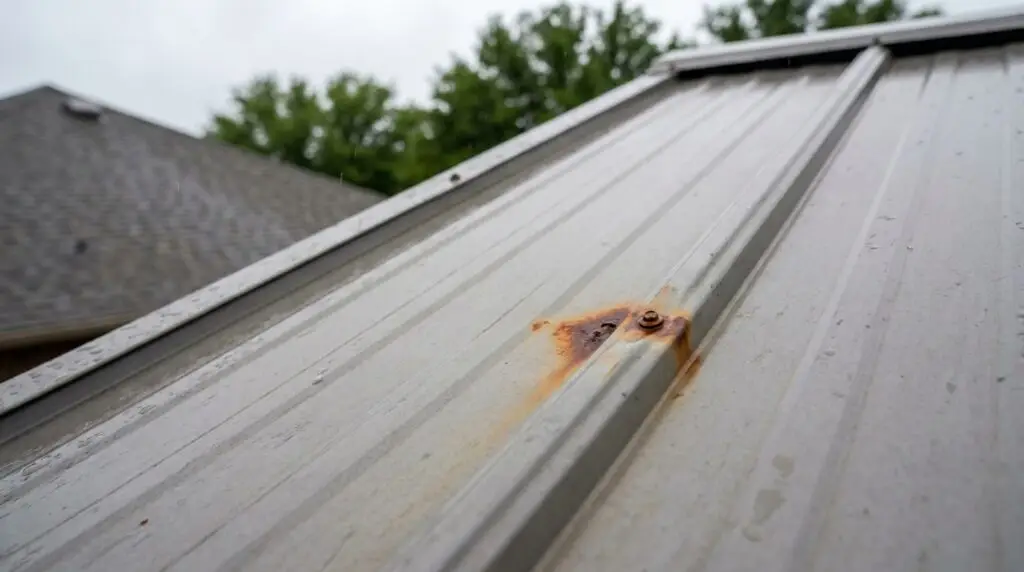
Look for small reddish-brown spots, usually starting at seams, fastener heads, or areas with visible scratches. Chalky or dull patches on painted panels can also signal that the protective coating is breaking down, even before actual rust appears.
Cosmetic Weathering vs. Actual Rust
Not every discoloration is rust. Metal roofs can develop surface staining from pollen, tree sap, or general weathering that looks concerning but isn’t structural. The difference usually comes down to texture. Rust tends to feel rough or flaky. Cosmetic staining stays smooth.
When a Small Spot Is Serious vs. Not
A single small rust spot caught early is rarely an emergency. Multiple spots, rust near seams or flashing, or any area where the metal feels soft or pitted is worth a professional look sooner rather than later.
How Long Before a Metal Roof Might Show Rust?
Typical Coating Lifespan by Material Type
This varies quite a bit depending on the coating and how well the roof was maintained. In general, well-maintained galvanized and Galvalume roofs can go many years, often decades, before coating wear becomes a real concern. Aluminum and copper tend to outlast steel-based options simply because they don’t rely on a sacrificial coating in the same way.
What Shortens That Timeline in This Region
Storm exposure, skipped maintenance, poor installation, and heavy tree debris all shorten that timeline. A roof in a wooded part of the metro that never gets cleaned off is going to age differently than one in an open area that gets inspected regularly.
Preventing Rust: What Actually Works
Choosing the Right Coating for OKC Homes
For most homes in this area, Galvalume steel offers a strong balance of cost and corrosion resistance given our storm exposure. Homeowners wanting extra peace of mind sometimes lean toward aluminum, especially if the property sees a lot of wind-blown debris.
Routine Inspection Schedule (Especially Post-Storm)
In our experience, the single biggest factor in preventing rust is simply getting the roof looked at after major storms, particularly hail events. A quick inspection can catch coating damage long before it turns into a visible rust spot.
Gutter, Debris, and Fastener Maintenance
Keep gutters clear so water drains properly instead of backing up onto the roof edge. Clear off leaves and branches that collect in valleys. Check that fasteners are seated properly and not backing out over time.
Professional Recoating Options
For roofs showing early wear but no significant rust yet, a professional recoating can extend the life of the existing panels without a full replacement. This is often the most cost-effective move if caught early enough.
Rust Found, Repair, Recoat, or Replace?
When a Localized Repair Makes Sense
A small, isolated rust spot can usually be treated, sealed, and repainted without touching the rest of the roof. This is the most common and least expensive fix when caught early.
When Recoating Extends Roof Life
If the rust is more widespread but the panels themselves are still structurally sound, a full recoat can buy years of additional life without the cost of tearing off the existing roof.
When Rust Signals It’s Time to Replace
If rust has spread through multiple panels, compromised the structural integrity of the metal, or shows up alongside other age-related issues, replacement is usually the more practical long-term choice.
Rough Cost Factors to Weigh
Costs vary widely depending on the extent of the damage, roof size, and material chosen, so it’s tough to give a number without seeing the roof. Generally speaking, spot repairs cost far less than recoating, and recoating costs far less than full replacement. Catching rust early is what keeps you in that lower-cost range.
Mistakes Oklahoma Homeowners Make With Metal Roof Rust
Ignoring Small Spots After Hailstorms
It’s easy to assume a metal roof “bounced back” after a hailstorm since dents aren’t always obvious from the ground. Coating damage isn’t always visible from a distance, which is why post-storm inspections matter even when the roof looks fine.
Using the Wrong Fasteners or Materials During DIY Repairs
Mixing metal types during a DIY patch job, or using the wrong screws, can actually introduce galvanic corrosion where there wasn’t a problem before. If you’re not sure what’s compatible with your specific roofing material, it’s worth asking a professional before making a repair yourself.
Skipping Insurance Documentation After Storm Damage
Homeowners who don’t document roof condition after a storm sometimes miss the window for filing a claim if rust or damage shows up later. Photos and a professional inspection report right after a storm can make a real difference down the line.
Choosing a Metal Roof That Resists Rust From Day One
Best Coating Types for OKC Homes
Given the hail, wind, and humidity swings common in this area, Galvalume and aluminum tend to be the strongest performers for long-term rust resistance. The right choice really depends on your budget, the look you’re going for, and how much storm exposure your property typically sees.
Questions to Ask Your Installer
Ask what coating type is being used, how fasteners will be installed, and how flashing details will be handled around vents and valleys. A good installer should be able to walk you through exactly how they’re minimizing the risk of rust for your specific roof, not just quote you a price.
Frequently Asked Questions
Do metal roofs rust over time?
Yes, but only when the protective coating is scratched, worn down, or improperly installed. A well-maintained, properly coated metal roof can go decades without significant rust.
What type of metal roof rusts the least?
Aluminum and copper resist rust the best since neither contains iron. Galvalume steel is a close, more affordable alternative for most residential homes.
Does hail damage cause metal roofs to rust?
It can. Hail impacts sometimes chip the protective coating without denting the panel severely, creating a small exposed spot where rust can eventually start.
How long does it take for a metal roof to start rusting?
It depends on the coating type, installation quality, and local weather exposure. A damaged or poorly installed roof can show rust within a few years, while a well-maintained one may go decades without issue.
Can rust on a metal roof be fixed, or does the whole roof need replacing?
Small, isolated rust spots can typically be repaired and sealed. Widespread rust affecting multiple panels usually calls for recoating or, in more serious cases, replacement.
Is a rusting metal roof still safe?
Minor surface rust caught early usually isn’t an immediate safety issue, but it should be addressed. Left untreated, rust can eventually weaken panels and lead to leaks.
Does living in Oklahoma make metal roofs more likely to rust?
Oklahoma City’s mix of hail, high winds, humidity, and freeze-thaw cycles puts more stress on roof coatings than a milder climate would. That makes coating quality, installation, and regular inspections more important here than in drier regions.