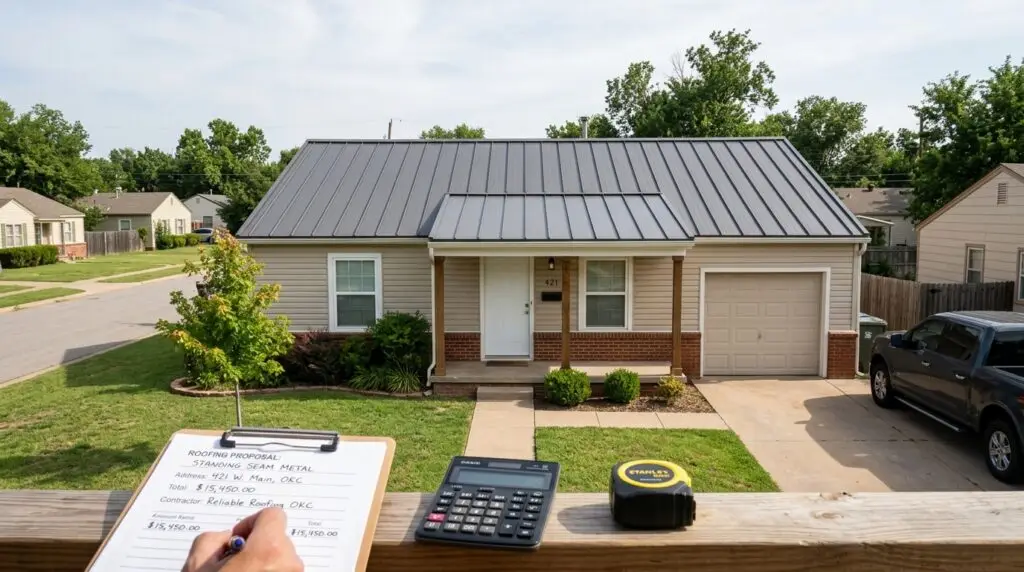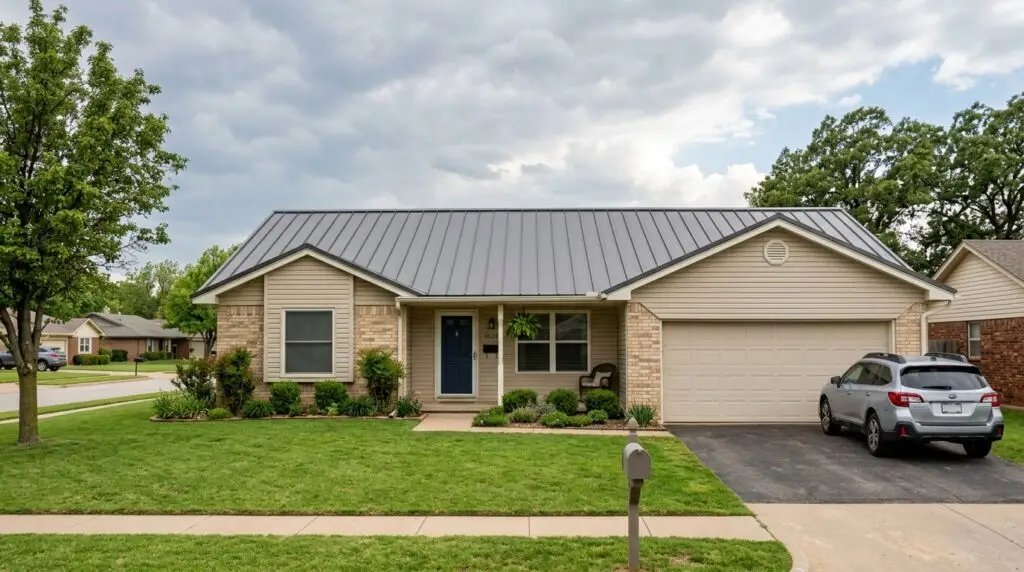
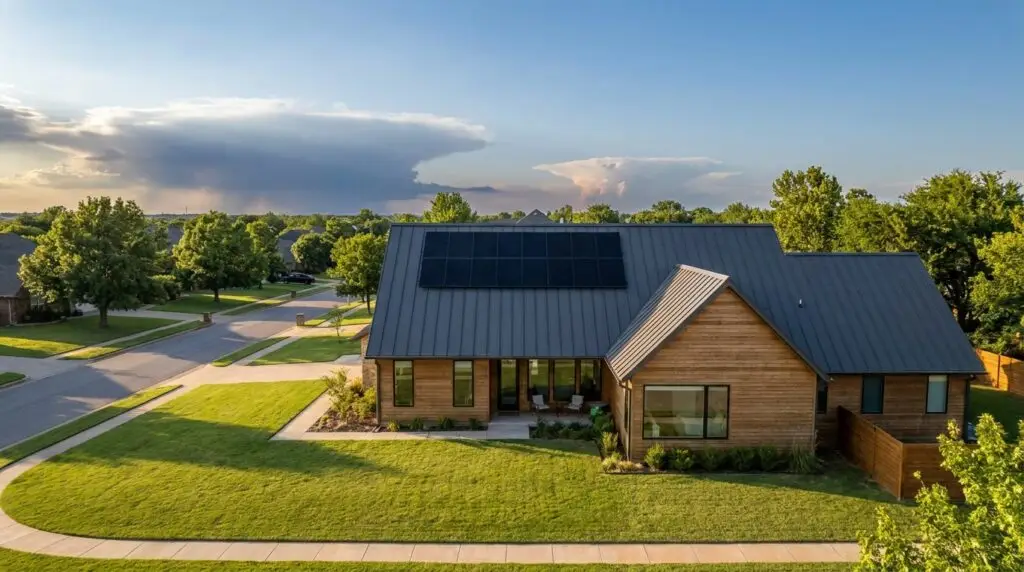
Yes. Metal roofs are one of the best surfaces you can put solar panels on. A standing seam metal roof lets installers clamp panels down with no drilled holes, and the roof itself lasts 40 to 70 years, far longer than the 25 to 30 years you get from the panels. For Oklahoma City homes that take a beating from hail and wind, that pairing makes a lot of sense.
If you own a home around Oklahoma City and you have been eyeing solar, you have probably asked the same question we hear all the time: are metal roofs good for solar panels, or are you setting yourself up for leaks and headaches down the road? Fair question. There is a lot of confusing advice online, and some of it comes from people who have never actually mounted a panel on a standing seam roof.
So let’s talk straight. This guide walks through how solar attaches to metal, which roof types work best, what it costs, and how our local weather changes the math. We will also cover when a metal roof is genuinely ready for solar and when you should hold off. No fluff, just what actually matters before you spend the money.
The Short Answer: Are Metal Roofs Good for Solar Panels?
Yes, and it is not close. Metal is widely considered the friendliest roofing material for a solar setup, for a few practical reasons:
- Lifespan that matches. Your panels are a long-term investment. A metal roof outlives them easily, so you are not ripping panels off to replace the roof underneath.
- Mounting without holes. On standing seam profiles, the panels clamp onto the raised seams. No penetrations means no new leak points.
- It reflects heat. Metal bounces a good chunk of solar radiation back off the roof, which helps keep your attic and cooling bills in check during a brutal Oklahoma July.
- Light load. Metal is one of the lighter roofing materials, so it handles the added weight of a solar array without drama.
Why solar installers actually prefer metal roofs
Ask any experienced crew and most will tell you the same thing. Metal is predictable. The seams give them a clean, strong attachment point, the surface sheds water well, and there is far less risk of a callback for a leak two years later. Most homeowners don’t realize how much easier a good metal roof makes the whole job, which often shows up as lower labor time and fewer surprises.
How Solar Panels Attach to a Metal Roof (Without Leaks)
This is the part that worries people most, and it should. The number one fear we hear is simple: won’t drilling into my roof cause leaks? On the wrong roof, with the wrong crew, sure. On metal, you often skip drilling entirely.
Standing seam: clamp-on mounting with zero roof penetrations
Standing seam is the gold standard for solar. The raised vertical seams act like built-in rails. Installers attach specialized clamps directly to those seams, then mount the racking and panels on top. Nothing punches through the roof surface. Water still runs off exactly the way it was designed to, and your roof stays watertight. Here’s the thing: this is also faster and uses less material, which is why it tends to be the cleanest install of any roof type.
Exposed-fastener panels (R-panel, corrugated): sealed bracket mounting
Not every metal roof has hidden seams. Exposed-fastener systems like R-panel and corrugated are attached with screws through the face of the panel. To mount solar on these, brackets are fastened into the structure and sealed with proper flashing and gaskets. It does involve fasteners, but when a pro does it right, with the correct sealant and placement into the framing, it holds up fine for the long haul. The key word is right. Sloppy sealing is where leaks start.
Metal shingle and stone-coated steel: specialty brackets
Metal shingles and stone-coated steel need their own approach, usually specialty brackets designed for that specific profile. These installs are absolutely doable, but they call for someone who has worked with the material before. This is not the roof to let a general handyman experiment on.
Which Metal Roof Types Work Best for Solar
Not all metal roofs are equal when it comes to mounting panels. Here is a quick comparison to set expectations:
| Roof type | Mounting method | Penetration needed? | Typical lifespan | Solar fit |
|---|---|---|---|---|
| Standing seam | Clamps on raised seams | No | 40 to 70 years | Excellent |
| Corrugated / R-panel | Sealed brackets into structure | Yes (sealed) | 30 to 50 years | Very good |
| Metal shingle | Specialty brackets | Varies | 40 to 60 years | Good |
| Stone-coated steel | Specialty brackets | Varies | 40 to 60 years | Good |
If you are planning a new roof anyway and solar is in your future, standing seam is the profile worth paying for. It gives you the widest range of mounting options and the least risk. Our metal roof installation team can walk you through which profile fits your home and budget.
Metal Roof vs. Shingle Roof for Solar: Lifespan and Long-Term Cost
This is where the real money decision lives. On paper, an asphalt shingle roof is cheaper to install. But look at the timeline.
Asphalt shingles usually last somewhere between 15 and 30 years, and in our climate they often land on the shorter end. Solar panels are built to run 25 to 30 years. A metal roof lasts 40 to 70 years. See the problem? If you mount panels on a shingle roof and that roof gives out in year 18, you have to pay a crew to pull the entire array off, replace the roof, and reinstall the panels. That removal and reinstall alone commonly runs somewhere in the range of a few thousand dollars, and sometimes more for larger systems.
Why matching roof and panel lifespans saves money
With metal, the roof and the panels retire on roughly the same schedule, or the roof outlasts the panels entirely. You install once and you are done. Between you and me, that avoided tear-off is the single most underrated reason metal wins over the life of the system. You pay more upfront and you stop paying for it later.
Do Solar Panels Void a Metal Roof Warranty?
Short version: usually no, as long as the work follows the manufacturer’s guidelines and gets done by qualified hands.
Roof warranties generally split into two parts. There is a materials warranty, which covers defects in the roofing product itself, and a workmanship warranty, which covers the quality of the install. Solar mounting mostly interacts with the workmanship side. On a standing seam roof where nothing penetrates the surface, you sidestep most of the risk entirely. On exposed-fastener systems, the concern is whether new fasteners were placed and sealed correctly.
A couple of practical tips. Keep documentation of who installed the panels and how. Confirm the mounting hardware is approved for your specific roof. And if your roof is still under a manufacturer warranty, check whether they require a certified installer to keep coverage intact. A little paperwork now protects you later.
Cost of Solar on a Metal Roof (Oklahoma City Ranges)
Costs move around, so treat these as ballpark ranges rather than a quote. Nationally, residential solar tends to run somewhere around 2.50 to 3.50 dollars per watt before incentives. A typical home system falls in the 6 to 9 kilowatt range. The good news for us: solar pricing across Texas and the broader Southwest often runs a bit below the national average per watt, and Oklahoma City sits in a strong sun market, so the payback tends to be reasonable here.
How the federal solar tax credit changes the math
The federal solar tax credit (often called the ITC) has offered a 30 percent credit on qualifying systems, which pulls your net cost down significantly. Because tax policy shifts over time, confirm the current percentage and eligibility rules before you sign anything. It depends on several factors, including your tax situation, so it is worth a quick conversation with a tax professional.
Should you install the metal roof and solar at the same time?
If your current roof is aging, doing both together almost always makes sense. You share the scaffolding, the permitting, and a lot of the labor, which trims the combined bill compared to tackling them years apart. You also skip the future removal-and-reinstall cost. If your metal roof is newer and in good shape, there is no rush, you can add panels whenever you are ready.
Oklahoma City Weather: How Hail and Wind Affect Metal Roofs and Solar
This is where being local matters. Oklahoma City sits squarely in a severe-storm corridor. We see large hail, straight-line winds, and the occasional tornado threat across the metro every season, from Edmond and Moore down to Norman and out to Yukon. Any roofing decision here has to account for that.
How heavier-gauge metal resists hail
Gauge matters. Heavier-gauge metal, such as a 24-gauge panel, holds up to hail far better than thin, bargain material. Smaller hailstones rarely cause anything beyond cosmetic dimples on a quality metal roof, and the structural performance keeps going. Punctures are uncommon with properly installed, heavier-gauge systems. If you want to understand your options, our metal roof inspection can tell you exactly what gauge and condition you are working with.
What hail does to panels versus the roof beneath
Modern solar panels are tested against hail impact and are tougher than most people expect, but they are still glass, and a severe Oklahoma hailstorm can crack or damage them. The upside of a metal roof is that the surface under and around the array stays intact, so you are dealing with panel repair, not a full roof replacement on top of it.
Wind uplift and why mounting matters in our storms
Wind is the quiet threat. A panel array is essentially a set of surfaces the wind can grab. Correct racking, spacing, and attachment to the structure are what keep the whole system planted when a front rolls through. This is one more reason to use a crew that understands local wind loads and does not cut corners on the mounting.
Documenting storm damage for insurance
After a storm, document everything. Photos of the roof, the panels, and any debris, dated and clear. If you suspect damage, get a professional assessment quickly. Our storm damage services team helps homeowners inspect and document damage so the insurance conversation goes smoother. Do not wait months, since delays make claims harder.
Common Mistakes OKC Homeowners Make
In our experience, most solar regrets trace back to a handful of avoidable errors:
- Mounting solar on a roof that is already near the end. If the roof needs replacing in a few years, deal with that first. Panels on a dying roof are a future bill waiting to happen.
- Hiring a solar-only crew with no metal roof experience. Solar and roofing are different trades. The best outcomes come when whoever touches your roof actually understands metal.
- Chasing the cheapest bid. Thin gauge, generic brackets, and rushed sealing look fine on day one and cause problems by year three.
- Skipping the inspection. People assume the roof is fine because it looks fine from the ground. It rarely tells the full story.
Signs Your Metal Roof Is Ready for Solar
Run through this quick checklist before you commit:
- Age and condition. The roof should have plenty of service life left, with no active corrosion or loose fasteners.
- Profile and gauge. Standing seam and heavier-gauge panels give you the most mounting flexibility and the best storm resistance.
- Structure. The framing needs to carry the added load. A pro can confirm this.
- Orientation and sun. South-facing slopes with minimal shading produce the most energy.
- Seams and fasteners. Everything should be tight and sound before anything gets mounted on top.
When to repair or re-roof before going solar
If the inspection turns up corrosion, worn coatings, storm damage, or loose seams, fix those first. Handle any metal roof repair before the array goes up, because reaching those spots later means working around and sometimes removing panels. If the roof is genuinely near the end, replacing it now and mounting solar on the fresh roof is the smarter play.
How to Choose the Right Installer in the Oklahoma City Metro
The crew you pick matters more than the brand of panel. Look for a team that handles both metal roofing and solar mounting, so nobody is guessing at your roof. Ask for local references. Confirm they coordinate with your roof warranty and use hardware approved for your profile. And make sure they actually know our weather, because someone who has worked roofs through OKC hail seasons brings judgment you cannot fake.
We serve homeowners across the metro, including Edmond, Moore, Norman, Yukon, and Mustang. You can see the full list on our service areas page. If you are weighing solar, the honest first step is a roof-readiness inspection, so you know exactly what you are working with before anyone talks panels.
Frequently Asked Questions
Are metal roofs good for solar panels?
Yes. Metal is one of the best roofing materials for solar. Standing seam roofs allow clamp-on mounting with no drilled holes, and the roof lasts 40 to 70 years, well beyond the life of the panels. That combination lowers long-term cost and leak risk.
Can you install solar panels on a metal roof without drilling holes?
On a standing seam metal roof, yes. Installers clamp the racking directly to the raised seams, so nothing penetrates the roof surface. Exposed-fastener roofs like corrugated and R-panel do use sealed brackets, but a proper install still keeps the roof watertight.
Do solar panels damage a metal roof?
Not when installed correctly. On standing seam, the clamps grip the seams without piercing the metal. The main risk comes from inexperienced crews or poor sealing on exposed-fastener systems, which is why the installer’s skill matters most.
How long do solar panels last on a metal roof?
Solar panels typically last 25 to 30 years. A metal roof lasts 40 to 70 years, so the roof easily outlives the array. You will likely replace or upgrade the panels before the roof ever needs attention.
Can a metal roof with solar survive Oklahoma hail?
Heavier-gauge metal handles hail well, often with only cosmetic dimples. Panels are impact-tested but are still glass, so severe hail can damage them. The advantage of metal is that the roof beneath the array usually stays intact.
Do solar panels void a metal roof warranty?
Usually not, as long as the install follows manufacturer guidelines and uses approved hardware. Standing seam mounting avoids penetrations entirely, which protects the materials warranty. Keep documentation and confirm any certified-installer requirements before you start.
Should I replace my roof before installing solar panels?
If your roof is near the end of its life, yes. Replacing it first avoids the expensive job of removing and reinstalling panels later. If your metal roof is newer and sound, you can add solar whenever you are ready.</content>