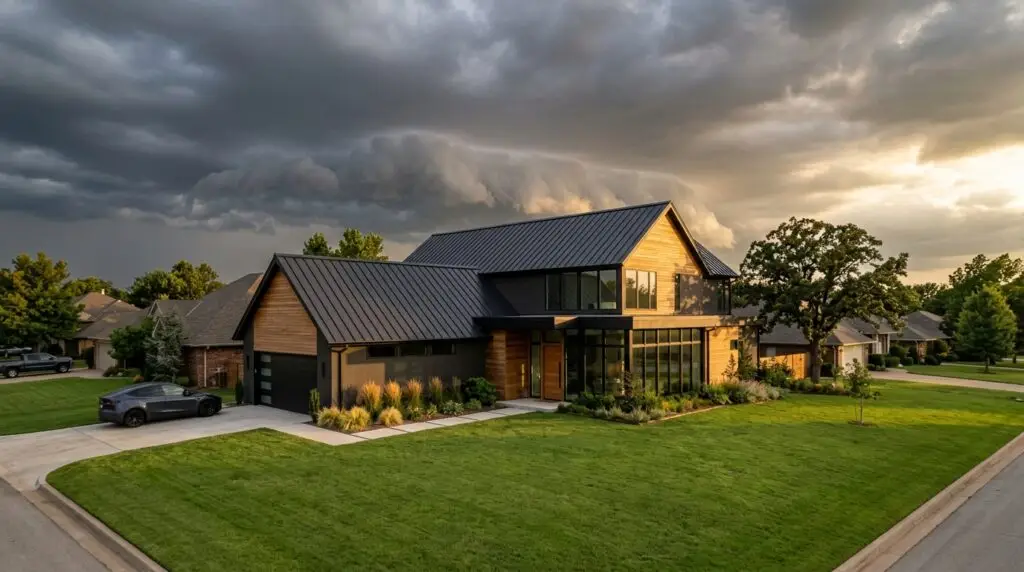
If you live in Oklahoma City or anywhere along the Interstate 35 corridor from Edmond down through Moore and Norman, you already know what severe weather feels like. Hail the size of golf balls. Wind gusts that test every fastener on your roof. The kind of spring storms that make national news.
What most homeowners don’t realize is that Oklahoma’s roofing codes exist specifically because of that weather. These aren’t bureaucratic formalities. They are the minimum engineering standards your roof must meet to survive what Oklahoma reliably throws at it.
Here’s the thing: Oklahoma modifies the national building code in ways that surprise even experienced homeowners, and sometimes out-of-state contractors who storm-chase after hail events. If you’re planning a roof replacement, considering metal roofing, or just dealing with recent storm damage, understanding these codes before work begins protects you legally, financially, and structurally.
One more thing worth flagging upfront: Oklahoma City adopted a new roofing permit ordinance effective August 1, 2025 that changes what’s required for all residential roofing work. Most homeowners we talk to haven’t heard about it yet. We’ll cover that in full below.
What Building Code Governs Roofing in Oklahoma?
The IRC 2018 Is the Starting Point, But Oklahoma Rewrites Key Sections
Oklahoma’s residential roofing standards are built on the International Residential Code (IRC) 2018, administered at the state level through the Oklahoma Uniform Building Code Commission. That’s the baseline. But the state applies several amendments that override national defaults, and those local modifications matter considerably.
Oklahoma County (Oklahoma City), Cleveland County (Norman), and Canadian County (Edmond and Yukon) can layer additional wind-resistance requirements on top of the state code. So what’s technically compliant in another state, or even in a less-exposed Oklahoma county, may not pass inspection here.
The core reason Oklahoma tightens these standards is geographic reality. Oklahoma sits in the heart of Tornado Alley. The state consistently ranks among the highest nationally for hail frequency and severe wind events. Codes that work fine in the Pacific Northwest or the Southeast can fail catastrophically here.
Why This Matters More for Metal Roofing Buyers
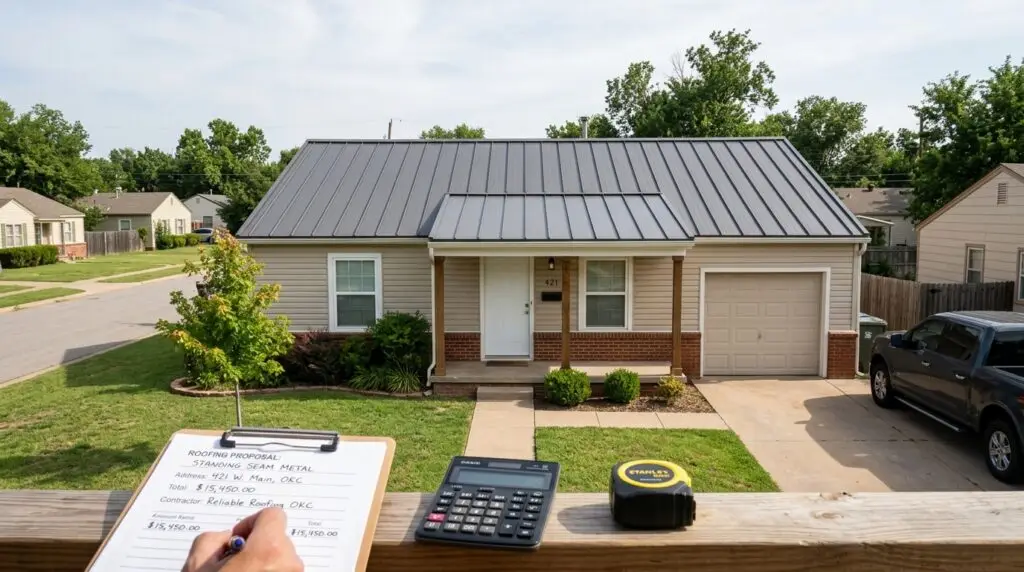
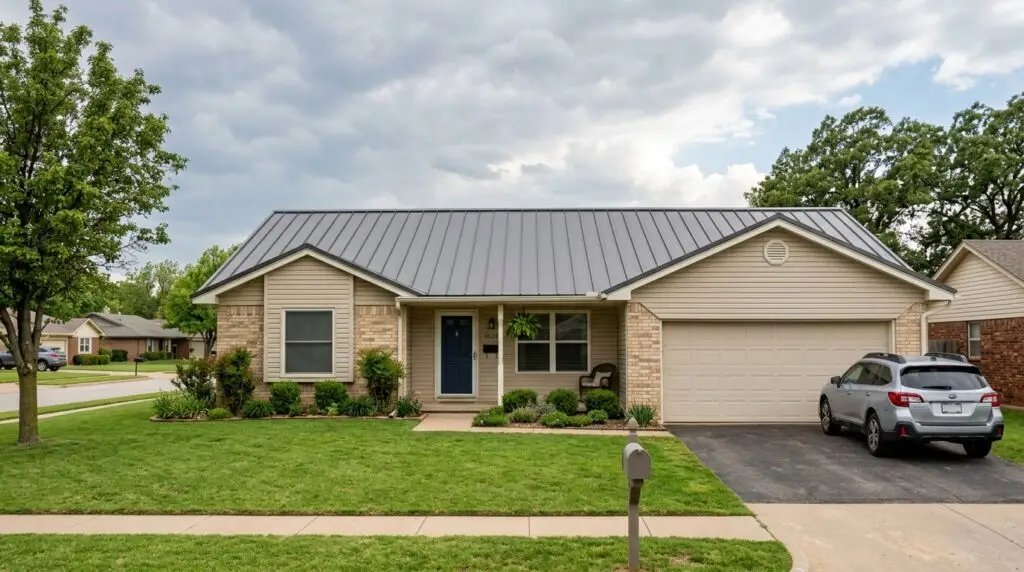
In our experience working with Oklahoma City homeowners, the code framework actually creates a clear advantage for those choosing metal roofing over asphalt. Metal roofing systems, particularly standing seam panels, are engineered to exceed these requirements by a meaningful margin, not just meet minimums. We’ll revisit that distinction throughout this article.
The Oklahoma City Roofing Permit, What Changed in 2025
OKC’s New Permit Ordinance: What Every Homeowner Must Know
This is where we’ll spend a little extra time, because the change is recent and the stakes are high.
The Oklahoma City Council adopted a new roofing ordinance on June 17, 2025. It took effect August 1, 2025. Under this ordinance, a roofing permit is now required for ALL roof removal, repair, and replacement on single-family homes and duplexes within OKC city limits, regardless of project size.
Previously, permits were required for projects covering 500 square feet or more. That threshold is gone. Whether you’re replacing the entire roof on a home in Edmond or repairing a section after a hail event in Midwest City, a permit must be obtained before work begins.
Development Services Director Brock Rowe explained the reasoning directly: given the frequency of severe weather in Oklahoma City, the ordinance establishes vital oversight that protects homeowners, especially during post-storm periods when less reputable contractors operate quickly and without proper accountability.
| Quick Answer for Voice Search
Do I need a permit to replace my roof in Oklahoma City? Yes. As of August 1, 2025, ALL roofing work on single-family homes and duplexes in Oklahoma City requires a permit before work begins, regardless of the project size. |
How the OKC Permit Process Works
The good news: permits are typically issued same-day through OKC Development Services. You can reach them at (405) 297-2525 or visit okc.gov/access for permit information.
A legitimate, code-compliant contractor handles permit pulling on your behalf. This is important. If a contractor asks you to pull your own permit, or offers to skip it entirely to “save time and money,” treat that as a serious red flag.
Two mandatory inspections are built into the process:
- After tear-off, before any new roofing material is installed, the inspector checks the deck condition
- Final inspection upon project completion, verifying material compliance, fastening patterns, flashing, and drainage
Keep copies of all inspection reports. They matter at resale, and they protect you if an insurance claim arises later.
Oklahoma’s “One Layer” Rule, The Code That Surprises Most Homeowners
This is probably the single most misunderstood aspect of Oklahoma roofing code. And it costs homeowners real money when they don’t know about it going in.
The national International Residential Code allows up to two layers of roofing material on a residential structure. Oklahoma does not follow that provision. Oklahoma’s state-specific amendment prohibits adding a new layer of asphalt shingles over an existing one. If your home already has one layer of asphalt shingles, a full tear-off is required before any new roofing material goes down.
Why? Because stacking two layers of asphalt adds significant weight to the roof structure, conceals deck damage that should be identified and repaired, and creates compounded wind uplift risk. When 110 mph winds hit Moore or Edmond, a double-layered asphalt roof has more material for the wind to work against, and the hidden deck condition is an unknown failure point.
The Metal Roofing Exception, and Why It Matters
Here’s where metal roofing offers a genuine practical advantage. Metal panels can typically be installed over one existing layer of asphalt shingles in Oklahoma City, provided the existing deck is inspected and confirmed structurally sound, and fasteners penetrate through the existing shingles into solid deck sheathing.
This isn’t a loophole, it’s a code-recognized installation method that avoids a full tear-off in qualifying situations. The weight of metal panels is substantially lower than a second layer of asphalt. The fastening system is engineered to reach the deck directly. And because the existing shingles can act as a secondary moisture barrier in some configurations, it’s a legitimate option when the deck is in good condition.
Between you and me, this single code provision is one of the most compelling practical arguments for metal roofing in Oklahoma City. The potential to avoid a full tear-off can translate to meaningful cost savings, though deck condition always gets the final say.
Wind Resistance Requirements for OKC Roofing, Why This Is Non-Negotiable
ASCE 7 Standards and What They Mean for Your Roof
Oklahoma roofing systems must comply with ASCE 7 structural wind load standards, the engineering framework for how buildings respond to wind forces. In Oklahoma County and other high-exposure zones, this translates to roofing products rated to resist sustained winds at minimum design speeds, with enhanced fastening requirements in particularly exposed locations.
Roofing materials must meet ASTM D7158 or ASTM D3161 wind resistance testing standards. Products must be rated for wind speeds exceeding 110 mph. That’s not a suggestion, it’s a code minimum for this region. And in the direct storm tracks that run through Moore, Yukon, and south OKC, treating it as a minimum rather than a target is exactly the wrong approach.
How Standing Seam Metal Roofing Outperforms Under Oklahoma’s Wind Code
Standing seam metal roofing with concealed clip systems consistently outperforms exposed-fastener panel systems in high-wind testing. The reason is mechanical: concealed clips allow the metal panels to expand and contract with temperature changes while maintaining a continuous structural connection to the deck. There are no exposed fastener points, and exposed fasteners are failure points under sustained wind loading.
Commercial-grade standing seam metal panels rated for 130 to 160 mph winds are available and routinely specified for Oklahoma City installations. That’s not just meeting code, it’s building a margin of safety that asphalt systems at the same price point cannot match.
When you’re comparing roofing options for a home in Edmond, Moore, or Midwest City, ask your contractor specifically: what is the wind uplift rating for this panel system, and can you show me the manufacturer’s test documentation? A reputable contractor will have that information ready.
Fastening Requirements and What Inspectors Check
Under Oklahoma code, fasteners must be corrosion-resistant, galvanized or stainless steel, and must penetrate the deck sheathing by a minimum of three-quarters of an inch, or through the full thickness of the deck, whichever is less. The fastening pattern itself matters: improper spacing, even with compliant materials, can result in code failure.
For metal roofing, fasteners must reach solid deck sheathing, not just the existing shingle layer in an overlay installation. This is the inspection checkpoint that separates a properly installed metal roof from a shortcut job.
Fire Ratings, Hail Ratings, and Material Standards Under Oklahoma Code
Class A Fire Rating, The Non-Negotiable Minimum
Most Oklahoma jurisdictions require Class A fire-rated roofing materials, the highest classification available. Metal roofing is inherently Class A fire-rated. There’s no additional treatment required, no special product selection, and no upcharge. It’s a baseline characteristic of the material itself.
Asphalt shingles must be specifically tested and verified to achieve Class A ratings. Not all products automatically qualify, which means material selection matters during the specification process.
Class 4 Impact Resistance, The Oklahoma Insurance Advantage
Oklahoma consistently ranks among the top states nationally for hail frequency and damage severity. Building standards and insurance underwriting increasingly favor Class 4 impact-resistant materials, the highest rating under UL 2218 impact resistance testing.
Steel and aluminum metal panels routinely achieve Class 4 ratings as part of their standard manufacturing. This isn’t a premium option, it’s standard performance for quality metal roofing systems.
The practical financial benefit: many Oklahoma homeowners with Class 4 rated roofs receive meaningful insurance premium discounts. Before installation, verify directly with your insurer what discount applies to your policy and what documentation they require. This conversation can offset a portion of the installation investment over time.
Flashing, Ventilation, and Deck Requirements, What Inspectors Actually Look For
Oklahoma’s Flashing Standards Are Stricter Than the National Code
Oklahoma requires a 36-inch ice and water barrier in all valleys and slope changes, this is a state-specific amendment that goes beyond standard IRC requirements. The barrier must also extend 24 inches inside the exterior wall line.
For Oklahoma City’s climate, where winter freeze-thaw cycles follow summer heat extremes, proper flashing at chimneys, skylights, pipe penetrations, and all roof-to-wall intersections is critical. We’ve seen more leak callbacks trace back to improper or missing flashing than to any other single issue. Inspectors look at this carefully, and they should.
Attic Ventilation, The Code Requirement That Protects Your Investment
Oklahoma follows IRC R806.2 for ventilation: a minimum of 1 square foot of ventilation area per 150 to 300 square feet of attic floor space, depending on vapor barrier configuration. That’s the minimum. Meeting it prevents the moisture and heat buildup that accelerates roof system degradation from the inside out.
Metal roofing interacts with attic ventilation somewhat differently than asphalt. Metal’s thermal properties mean attic temperatures can behave differently, particularly around condensation management in shoulder seasons. A knowledgeable metal roofing contractor accounts for this in the installation design, specifying appropriate underlayment and ventilation configuration for the specific panel system being used.
Roof Deck and Sheathing, The Inspection You Can’t Skip
Oklahoma requires solid continuous sheathing for residential roof systems. The post-tear-off inspection exists specifically to evaluate deck condition before new material goes down. Inspectors will flag damaged sheathing, compromised structural members, and any areas that can’t adequately support the new system’s wind uplift requirements.
In our experience, this inspection stage is where the real surprises happen, and where cutting corners costs homeowners the most. A deck problem discovered during installation is a manageable repair. The same problem discovered after a storm, when it’s a structural failure, is a claim, a disruption, and potentially a safety issue.
Contractor Licensing and Insurance Requirements in Oklahoma
Oklahoma does not maintain a statewide roofing contractor license. But Oklahoma City requires contractors to register with the city and carry valid general liability insurance. Workers’ compensation coverage is equally important, and often overlooked by homeowners at the contract stage.
Here’s why that matters directly to you: if an uninsured worker is injured on your property, you as the homeowner may carry liability. That’s not a theoretical risk. It’s a documented outcome that happens when homeowners skip the verification step.
Before signing any roofing contract in Oklahoma City, verify:
- City of OKC contractor registration status
- Current general liability insurance certificate
- Workers’ compensation coverage documentation
- That the contractor, not you, will pull the required permit
- That both mandatory inspections will be scheduled
Ask specifically: “Have you installed metal roofing under OKC’s current code requirements?” and “Will you provide manufacturer wind uplift documentation for the panel system you’re specifying?” How a contractor answers those questions tells you a lot about their competency and their willingness to be accountable.
How Oklahoma Roofing Codes Apply Differently to Metal Roofing
Where Metal Roofing Has a Clear Code Advantage
Let’s be direct about this: metal roofing isn’t just a premium aesthetic choice. Under Oklahoma’s specific code framework, it offers structural and compliance advantages that asphalt systems can’t fully match.
- Metal is not subject to Oklahoma’s asphalt re-roofing prohibition, overlay over one existing shingle layer is generally permissible with proper deck verification
- Class A fire rating is inherent, no special product selection required
- Class 4 hail resistance is standard for steel and aluminum panels
- Wind uplift performance at and above code minimums is achievable with standard standing seam systems
- Longer service life means fewer permit cycles and fewer code re-compliance processes over the ownership horizon
What OKC Inspectors Check on a Metal Roof Installation
Understanding what an inspector evaluates helps you verify that your contractor is doing the job correctly before the inspection happens. For metal roofing installations in Oklahoma City, inspectors focus on:
- Fastener penetration depth and spacing, must reach solid deck sheathing
- Flashing at all penetrations, valleys, and roof-to-wall transitions
- Deck condition verification sign-off (post-tear-off or post-deck inspection for overlays)
- Ventilation system compatibility with the specific panel system installed
- Ridge cap integrity, seam continuity, and drainage compliance at the final inspection
Energy Code Interaction With Metal Roofing
Oklahoma follows the International Energy Conservation Code (IECC), with R-value requirements that vary by region. Reflective metal roofing contributes to energy performance, particularly relevant in Oklahoma City’s hot summers, where attic temperatures can dramatically affect cooling loads.
Cool-roof rated metal panels reduce attic heat gain measurably. That’s not just a selling point, it’s a performance characteristic that intersects with code minimums and exceeds them in practical application.
Common Oklahoma Roofing Code Violations to Watch For
Knowing what goes wrong is as valuable as knowing what the code requires. These are the violations we see come up most frequently on Oklahoma City roofing projects:
- Installing a second layer of asphalt shingles, Oklahoma’s most cited amendment violation
- Starting work without a permit, now a violation for ALL residential roofing in OKC as of August 2025
- Improper or missing valley flashing, the most common source of future leak callbacks
- Skipping the post-tear-off deck inspection, often done to save time, almost always regretted
- Using code-rated materials with incorrect fastening patterns, compliant on paper, non-compliant in practice
- Hiring an unregistered or uninsured contractor, shifts liability directly to the homeowner
- Improper waste disposal, Oklahoma DEQ regulations apply; your contractor must provide documentation
Most of these violations share a common theme: they’re shortcuts that look invisible until a storm, a sale, or an insurance claim makes them visible. By then, the remedy is expensive.
What Oklahoma Roofing Codes Mean for Your Home’s Value and Insurance
Code compliance isn’t just about passing inspection. It has direct financial consequences at multiple points in your homeownership timeline.
When you sell your home, a buyer’s inspector will evaluate the roof. Unpermitted work, code violations, or improperly documented installations will surface, and they create exactly the kind of title and negotiation complications that kill deals or force price reductions. A code-compliant, permitted metal roofing installation, by contrast, is a documented asset. It’s verifiable, transferable, and it tells the next buyer that the work was done right.
On the insurance side, Oklahoma’s active hail and wind claim environment makes roof documentation critical. A code-compliant installation with permit records is significantly harder for an insurer to dispute following storm damage. Class 4 rated roofing, which metal achieves by default, qualifies for premium discounts with many Oklahoma carriers.
The cost of code compliance, permit fees, proper materials, licensed contractor, is minimal compared to the cost of forced tear-off, failed inspections, disputed insurance claims, or complications at closing. It depends on the project scope, but in our experience, homeowners who try to cut corners on the compliance side pay far more in the medium term than they saved upfront.
If you’re weighing roofing options for your Oklahoma City area home, start the conversation with a contractor who pulls permits without being asked, schedules both required inspections proactively, and can provide manufacturer documentation for every material specification. That’s not an unusually high bar. It’s what code-compliant metal roofing installation looks like when it’s done right.
Frequently Asked Questions About Oklahoma Roofing Codes
Do I need a permit to replace my roof in Oklahoma City?
Yes. As of August 1, 2025, Oklahoma City requires a roofing permit for all roof removal, repair, and replacement on single-family homes and duplexes, regardless of project size. Permits are typically issued same-day through OKC Development Services at (405) 297-2525.
Can I put a metal roof over my existing shingles in Oklahoma?
In most cases, yes. Metal roofing can be installed over one existing layer of asphalt shingles, provided the deck is inspected and structurally sound, and fasteners penetrate to solid sheathing. Oklahoma prohibits adding a second layer of asphalt shingles, but metal panel overlays are generally code-permissible under the right conditions.
What wind speed must roofing materials meet in Oklahoma City?
OKC roofing materials must comply with ASCE 7 structural wind load standards and meet ASTM D7158 or D3161 wind resistance ratings. The minimum design wind speed threshold for this region is 110 mph. Quality standing seam metal systems routinely exceed this.
What is Oklahoma’s ‘one layer rule’ for roofing?
Unlike the national IRC which allows up to two layers, Oklahoma’s state amendment prohibits adding a new layer of asphalt shingles over an existing one. A full tear-off is required. This restriction applies specifically to asphalt shingles, metal panel installations are treated differently under code.
Does metal roofing meet Oklahoma’s fire code requirements?
Yes. Metal roofing is inherently Class A fire-rated, the highest classification available, and meets Oklahoma’s fire resistance requirements without any special treatment or additional products.
What happens if roofing work is done without a permit in OKC?
Unpermitted work can result in fines, a mandatory tear-off and redo, complications at home sale, and potential homeowner liability. The City of Oklahoma City can require non-compliant work to be redone entirely at the homeowner’s expense.
How do I verify my roofing contractor is legitimate in Oklahoma City?
Confirm the contractor is registered with the City of OKC, carries current general liability insurance and workers’ compensation coverage, and that they, not you, will pull the required roofing permit before work begins. A qualified contractor will also schedule both mandatory inspections and provide manufacturer wind uplift documentation.