Oklahoma City sits squarely inside what meteorologists call Hail Alley a high-frequency storm corridor that stretches through the Central Plains and delivers some of the most intense hail, wind, and ice events in the country. If you own a metal roof here, you’ve made one of the smartest investments a homeowner can make. But here’s the thing: a metal roof is only as good as the maintenance behind it.
Most homeowners are sold on metal roofing with the promise that it’s “low maintenance.” That’s true compared to asphalt shingles, the upkeep is minimal. But low maintenance is not zero maintenance. A metal roof that’s ignored for years in an Oklahoma City climate will develop problems that are entirely preventable: sealant failures, panel edge corrosion from leaf debris sitting in gutters, backed-out fasteners loosened by thermal expansion, and hail-related coating damage that silently reduces your roof’s lifespan.
This guide gives you a complete, practical metal roof maintenance checklist built specifically for OKC homeowners including what to do after a storm, what you can safely handle yourself, and when it’s time to call a professional. Let’s get into it.
Why Oklahoma City Homeowners Need a Consistent Maintenance Routine
Let’s be honest about what OKC weather actually does to a roof over time. It’s not just one thing it’s the combination of extreme heat in summer, sub-freezing temperatures in winter, sudden violent hailstorms in spring and fall, sustained high winds, and the occasional ice storm that coats every surface in a quarter-inch of ice. No roofing material handles all of that effortlessly forever.
Metal roofing handles it better than anything else on the market. But that doesn’t mean you can install it and forget it for 50 years.
Oklahoma’s Temperature Swings Create a Specific Maintenance Challenge
Metal expands in heat and contracts in cold this is basic physics called thermal expansion. In Oklahoma City, where summer temperatures regularly hit 100°F and winter nights can drop below 10°F, that expansion-contraction cycle is extreme. Over time, it stresses the fasteners on screw-down panel roofs and can work sealants loose at penetrations. A standing seam metal roof is engineered to accommodate that movement. A screw-down panel system requires more vigilant inspection because of it.
Storm Exposure Is Year-Round, Not Seasonal
Most homeowners think of spring tornado season as the main threat and it is significant. But in our experience working across Oklahoma City, Edmond, Moore, Norman, and surrounding communities, the fall storm season catches just as many homeowners off guard. The September 2024 hailstorm that hit OKC’s downtown and surrounding neighborhoods served as a clear reminder: significant storm damage can happen any time from March through November. A good maintenance routine keeps your roof ready for all of it.
The Complete Metal Roof Maintenance Checklist for OKC Homeowners
Print this out. Keep it in your home maintenance folder. Check each item off on schedule and you’ll dramatically extend the life of your metal roofing system while keeping your warranty and insurance coverage intact.
| ✓ | Maintenance Task | Frequency |
| ☐ | Ground-level visual inspection scan for lifted panels, damaged areas, obvious debris
Use binoculars from the ground never get on a wet metal roof |
After every major storm |
| ☐ | Attic interior check look for moisture stains, new water intrusion, soft spots in decking | After every storm + seasonally |
| ☐ | Clear debris from roof surface and valleys leaves, pecan hulls, branches
Organic debris traps moisture and accelerates edge corrosion |
Monthly Oct–Dec; after storms |
| ☐ | Clean gutters and downspouts remove debris, check for rust at panel edges
Standing water in gutters causes rust along the bottom panel edge |
2× per year (March & October) |
| ☐ | Inspect all flashing chimneys, vents, skylights, pipe boots for lifted or cracked sealant
Flashing failure is the #1 source of metal roof leaks |
2× per year |
| ☐ | Fastener inspection (screw-down roofs) check for backed-out screws, failed rubber gaskets
Thermal expansion is the primary cause of fastener failure in OKC |
Annually |
| ☐ | Standing seam panel inspection check clip integrity, panel separation, oil-canning concerns | Annually |
| ☐ | Paint and coating inspection look for chalking, fading, bare metal exposure, peeling
South and west-facing panels get the most UV stress in OKC |
Annually |
| ☐ | Sealant refresh at all penetrations remove cracked sealant, apply fresh metal-rated sealant | As needed / every 3–5 years |
| ☐ | Tree branch clearance maintain 6+ feet between overhanging branches and roof surface
Pecan and oak trees in Edmond and Norman are common offenders |
Annually / seasonally |
| ☐ | Attic ventilation check ensure ridge and soffit vents are clear and functioning
Poor ventilation accelerates coating failure from the inside out |
Annually |
| ☐ | Licensed professional metal roof inspection
Required by many warranties and supports insurance claim documentation |
Minimum annually |
| Contractor Tip: Know Which Roof System You Have
Not sure if you have a standing seam or screw-down panel roof? Here’s the quick test: look at the roof surface. If you can see screws or fasteners on the face of the panels, it’s a screw-down system. If the fasteners are hidden with only raised seams visible, it’s standing seam. This matters because the two systems have meaningfully different maintenance priorities especially in Oklahoma’s extreme climate. |
Oklahoma’s Seasonal Metal Roof Maintenance Schedule
Generic maintenance guides tell you to inspect your roof in “spring and fall.” That’s a good starting point, but Oklahoma City has its own weather personality. Here’s what a smart maintenance calendar actually looks like when you’re anchored to OKC’s real conditions.
| Season / Timing | OKC Weather Reality | Key Maintenance Actions |
| Spring (March–May) | Peak tornado and hail season. Heavy rains begin. Temperature swings still wide. | Post-winter debris clearance. Inspect sealants for freeze-thaw cracking. Clean gutters. Complete pre-season inspection before storm activity peaks. |
| Summer (June–August) | Sustained 100°F+ heat. UV intensity high. Little rain but intense sun degrades sealants. | Check coating condition on south and west panels. Inspect attic ventilation heat buildup accelerates coating failure from underneath. Look for sealant separation at all penetrations. |
| Fall (September–November) | Second peak storm season. Heavy leaf fall. September has historically seen major OKC hail events. | Clear pecan, oak, and elm leaf debris monthly. Inspect and refresh all sealants before freeze season. This is the ideal window for annual professional inspection. |
| Winter (December–February) | Ice storms. Freeze-thaw cycles. Occasional snow. Winds often intensify. | Monitor for ice damming at eaves after freezing rain. Check attic for new moisture intrusion. Use only non-metal tools to clear ice scratching the coating creates corrosion entry points. |
Most of the OKC homeowners we talk to are surprised to hear that fall is actually our busiest inspection season not spring. After the leaves drop and before the ground freezes, it’s the perfect window to get a clear view of the roof surface, identify anything that needs attention, and make repairs before winter makes everything harder.
How to Inspect Your Metal Roof After an Oklahoma City Storm
Every time a significant storm moves through Oklahoma City and they do move through regularly your roof needs a check. Metal roofs resist penetration far better than asphalt shingles, but that doesn’t mean they’re invincible. A strong hailstorm can dent panels, crack the protective coating, and compromise sealants in ways that don’t produce an immediate leak but absolutely shorten the roof’s service life.
Step 1: Start on the Ground Don’t Rush to the Roof
The very first thing to do after a storm is a ground-level walkthrough. Use binoculars to scan the roof surface from multiple angles. Look for lifted panels, visible dents, debris buildup in valleys, or anything that looks out of place. Most importantly do not get on a wet metal roof. Even experienced roofing professionals treat a wet metal surface with extreme caution. The risk of a serious fall isn’t worth it.
Also check your gutters, downspouts, and any soft metal elements like flashing or vents. Hail that’s large enough to dent those surfaces has almost certainly left marks on your roof panels as well. This collateral evidence is actually important documentation if you end up filing an insurance claim.
Step 2: Check Your Attic Within 48 Hours
Don’t skip this step. Head into the attic and look carefully for any new water stains, drips, wet insulation, or daylight visible through the roof decking. If you find moisture intrusion that wasn’t there before the storm, you have an active problem that needs professional attention right away. Catching it in the attic stage before it reaches your ceiling saves thousands in interior repair costs.
Step 3: Document Before You Touch Anything
If you see any damage even cosmetic damage photograph it thoroughly from the ground before any repair work begins. Note the date and approximate time of the storm. This documentation is critical for insurance claims. Oklahoma homeowners insurance policies typically provide a one-year window to file a storm damage claim, but some policies are shorter. Check yours, and don’t wait.
Step 4: Get a Professional Post-Storm Inspection
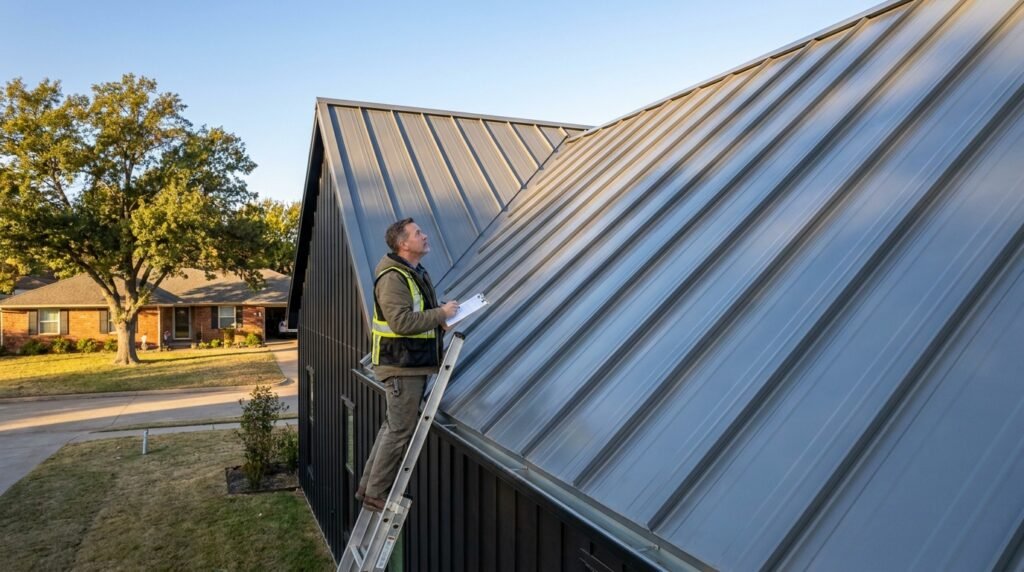
Between you and me, this step is the one most homeowners skip and it’s the most important one. After a major storm, an experienced metal roofing contractor can identify coating damage, micro-dents, and sealant failures that simply aren’t visible from the ground. That inspection report also serves as your professional documentation if you need it for a warranty or insurance claim.
| OKC Storm Chaser Warning
After every significant storm in the Oklahoma City area, out-of-state contractors appear in neighborhoods going door-to-door. Some are legitimate. Many are not. Before signing anything or allowing anyone on your roof, verify that the contractor holds a current Oklahoma contractor license and carries both general liability and workers’ compensation insurance. Ask for their license number and check it with the Oklahoma Construction Industries Board. A reputable local contractor will never pressure you to sign on the spot. |
Standing Seam vs. Screw-Down Panels: Maintenance Differences That Matter in OKC
This is something most homeowners don’t realize: not all metal roofs are maintained the same way. The two most common residential metal roofing systems standing seam and screw-down (exposed fastener) panels have meaningfully different maintenance profiles, and Oklahoma’s extreme climate makes those differences even more significant.
Standing Seam Metal Roofs
Standing seam panels are connected along raised seams, with fasteners hidden beneath the surface. The panels are designed to float they can expand and contract with temperature changes without stressing the attachment points. For Oklahoma City’s dramatic temperature swings, this is a significant structural advantage.
Maintenance focus for standing seam roofs centers on: seam integrity, coating condition, sealant at penetrations, and flashing condition. Fastener inspection is minimal because the fasteners are concealed and protected.
Screw-Down Panel Roofs (Exposed Fastener Systems)
Screw-down panels use exposed fasteners with a rubber gasket between the screw head and the panel surface. In Oklahoma’s heat-to-cold cycle, those gaskets experience real stress. The panel wants to expand and contract, but the screw is fixed. Over time typically every several years depending on installation quality and sun exposure gaskets can harden, crack, or allow the screw to back out slightly. Each of those conditions is a potential leak point.
If you have a screw-down metal roof, make fastener inspection a non-negotiable annual task. Look for screws that appear to be backing out, missing screws, or screws where the gasket has flattened or cracked. Address any issues before they allow water infiltration.
Common Metal Roof Maintenance Mistakes Oklahoma Homeowners Make
In our experience, most metal roof problems we’re called to repair trace back to one of a handful of preventable mistakes. Here are the ones we see most often and how to avoid them.
Mistake #1: Using a Pressure Washer
This one is surprisingly common. Metal roofs look sturdy, and homeowners figure a pressure washer is the fastest way to clean them. It’s not. High-pressure water can force its way under panel laps and seam edges, drive moisture into fastener holes, and strip or damage the protective coating. Use a soft-bristle brush, mild detergent mixed with water, and a low-pressure garden hose rinse. That’s it.
Mistake #2: Walking on the Roof Without Proper Setup
Metal panels especially painted ones are slippery when wet and can be damaged by improper foot placement. Walking on the flat face of a panel can cause denting. If you must access the roof, walk on the structural seam or rib areas, never the flat panel span, and always do so on a dry day with proper footwear. Better yet, call a roofing professional who knows how to navigate a metal roof safely.
Mistake #3: Ignoring Galvanic Corrosion Risk
Galvanic corrosion happens when two dissimilar metals come into direct contact in the presence of moisture. It’s a real problem in DIY repairs. Installing a copper flashing piece against a steel panel, or using the wrong fastener material, can accelerate corrosion at that contact point. Always use materials that are compatible with your existing panel system when in doubt, ask a professional.
Mistake #4: Assuming Metal Roofs Can’t Be Hail-Damaged
This misconception is widespread and expensive. Metal roofs are dramatically more hail-resistant than asphalt shingles, but a large hailstone can still leave dents, crack paint coatings, and compromise seals. More importantly, insurance companies look at coating damage, not just penetration. If your metal roof’s coating has been compromised by hail, the clock is ticking on its corrosion resistance. Get a professional inspection after any significant storm.
Mistake #5: Letting Tree Debris Accumulate
This is particularly relevant in Edmond, Norman, and Nichols Hills where mature pecan and oak trees are everywhere. Pecan hulls, wet leaves, and accumulated organic debris sitting in roof valleys and against panel edges create sustained moisture contact. That moisture drives the early stages of edge corrosion. Debris clearance isn’t glamorous maintenance but it’s some of the most cost-effective roof protection you can do.
What Metal Roof Maintenance Costs in Oklahoma City
It depends on several factors roof size, pitch, system type, and what specifically needs attention. But here are realistic ranges for the OKC market to help you budget:
| Typical Oklahoma City Metal Roof Maintenance Cost Ranges
Professional Annual Inspection …………… $150 – $400 Gutter Cleaning (standalone service) …….. $100 – $250 Sealant Replacement at Penetrations ……… $200 – $600 Fastener Re-sealing (screw-down, full roof) .. $300 – $900 Minor Flashing Repair ………………….. $150 – $500 Panel Coating Touch-up …………………. $500 – $2,000+ Emergency Leak Repair ………………….. $300 – $1,500+ Note: These are approximate ranges for the OKC market. Get a written estimate from a licensed local contractor for your specific situation. |
Here’s the math that matters: a professional inspection in the $200–$400 range that catches a failing sealant early costs you a few hundred dollars. That same sealant failure, left unaddressed for a year, can allow water into the decking and a decking repair, interior ceiling repair, and potential mold remediation can run several thousand dollars easily.
Preventive maintenance isn’t just about the roof. It’s about protecting everything below it.
What OKC Homeowners Can Safely Do vs. When to Call a Pro
Not everything on this checklist requires a contractor. There are legitimate maintenance tasks you can handle yourself and there are tasks where attempting it yourself creates more risk than it resolves. Here’s how to think about it.
What You Can Safely Handle
- Ground-level visual inspections using binoculars
- Gutter cleaning from a stable ladder (with appropriate safety precautions)
- Removing accessible debris from roof valleys carefully, from a ladder or low-slope section
- Trimming tree branches away from the roof (or hiring an arborist)
- Attic interior checks for moisture or water staining
- Post-storm documentation and photography from the ground
Leave These to a Licensed Metal Roofing Professional
- Any roof surface inspection that requires walking the panels
- Sealant replacement at flashings or penetrations
- Fastener inspection, tightening, or replacement on screw-down systems
- Post-storm damage assessment for insurance purposes
- Coating touch-up or recoating
- Any repair work that involves modifying panels or seams
The safety reality in Oklahoma is straightforward: metal surfaces covered in morning dew, post-rain wetness, or residue from OKC’s clay soil blowing onto the roof are genuinely dangerous to walk on. Professional roofers have the training, equipment, and experience to navigate that safely. The cost of a professional inspection is minor compared to the cost of an emergency room visit.
How Metal Roof Maintenance Protects Your Oklahoma Homeowner’s Insurance Coverage
This is a section that most online maintenance guides skip entirely and it’s one of the most practically important topics for Oklahoma City homeowners. Your maintenance habits directly affect your ability to use your insurance coverage when you need it.
Documented Maintenance Protects Your Claims
Many Oklahoma homeowners insurers require evidence of “reasonable maintenance” when processing hail or wind damage claims. If your insurer can demonstrate that an obvious maintenance failure a deteriorated sealant, a backed-out fastener, clogged gutters contributed to the damage, they may dispute or reduce your claim. A maintenance log with dates, tasks completed, and contractor names provides protection against that scenario.
Know Your Oklahoma Claim Window
After a storm event, most Oklahoma homeowners insurance policies allow one year to file a damage claim. Some are shorter as few as six months depending on your carrier and policy language. Don’t assume. Read your policy or confirm the timeframe with your agent immediately after any storm that might have caused damage. A professional inspection report, obtained shortly after the storm, documents the damage and date which is critical if you’re filing near the end of the claim window.
Metal Roofing and Potential Premium Benefits
Some Oklahoma insurers offer premium discounts for Class 4 impact-resistant metal roofing. If you installed a metal roof and haven’t discussed this with your insurance agent, it’s worth a phone call. The savings vary by carrier and policy, but some homeowners see meaningful reductions on their annual premiums. Confirm with your specific insurer this article is general information, not insurance or legal advice.
| Build Your Maintenance Log What to Track
Date of inspection or maintenance task Tasks performed (be specific ‘replaced sealant at north chimney flashing’) Name and license number of any contractor used Any damage found and action taken Photographs stored by date in a designated folder Storm events and dates even if no visible damage was found |
Frequently Asked Questions About Metal Roof Maintenance in Oklahoma
These are the questions we hear most often from Oklahoma City homeowners and the straightforward answers you deserve.
How often should a metal roof be inspected in Oklahoma City?
At minimum, once a year ideally each fall before winter. Because Oklahoma City sits in Hail Alley, an additional inspection is strongly recommended after any significant storm event involving hail, high winds, or ice. Documented annual inspections also protect manufacturer warranties and support homeowner’s insurance claims.
Can hail actually damage a metal roof in Oklahoma?
Yes. While metal roofs resist penetration far better than asphalt shingles, large hailstones can dent panels, crack protective coatings, and compromise sealants around penetrations. These issues may not produce an immediate leak but accelerate corrosion and reduce service life if left uninspected. Always get a professional assessment after a significant OKC hailstorm.
What is the most important metal roof maintenance task?
Inspecting and maintaining the sealants around every roof penetration vents, chimneys, skylights, and pipe boots. These are the points most likely to fail first, and a small sealant failure can allow water infiltration that causes significant structural damage before it’s ever visible from inside the home.
How do I clean a metal roof without damaging it?
Use a mild dish soap or detergent mixed with water, applied with a soft-bristle brush, and rinsed with a low-pressure garden hose. Never use a pressure washer it can force water under panel seams and strip the protective coating. Avoid abrasive pads, metal brushes, or anything that can scratch the painted surface.
Does a metal roof need maintenance during Oklahoma winters?
Yes. Winter maintenance focuses on monitoring for ice damming at roof eaves after freezing rain, checking the attic for moisture intrusion after ice events, and clearing snow or ice carefully using non-metal tools that won’t scratch the coating. A pre-winter inspection each October or November is the best way to enter cold season with confidence.
How long does a metal roof last with proper maintenance in Oklahoma?
A properly maintained metal roof in the Oklahoma City area can realistically last 40 to 70 years, depending on the panel type, coating quality, and installation method. Standing seam systems typically outlast screw-down panels due to fewer exposed fastener points. Regular maintenance particularly sealant upkeep and post-storm inspections is the single largest factor in reaching that full service life.
Should I be on my roof to do maintenance myself?
In most cases, no. Most of the maintenance tasks a homeowner can safely perform visual inspections, gutter cleaning, debris removal, attic checks don’t require getting on the roof itself. Metal panels are slippery when wet and can be damaged by improper foot placement. For anything that requires walking the roof surface, hire a licensed metal roofing professional.