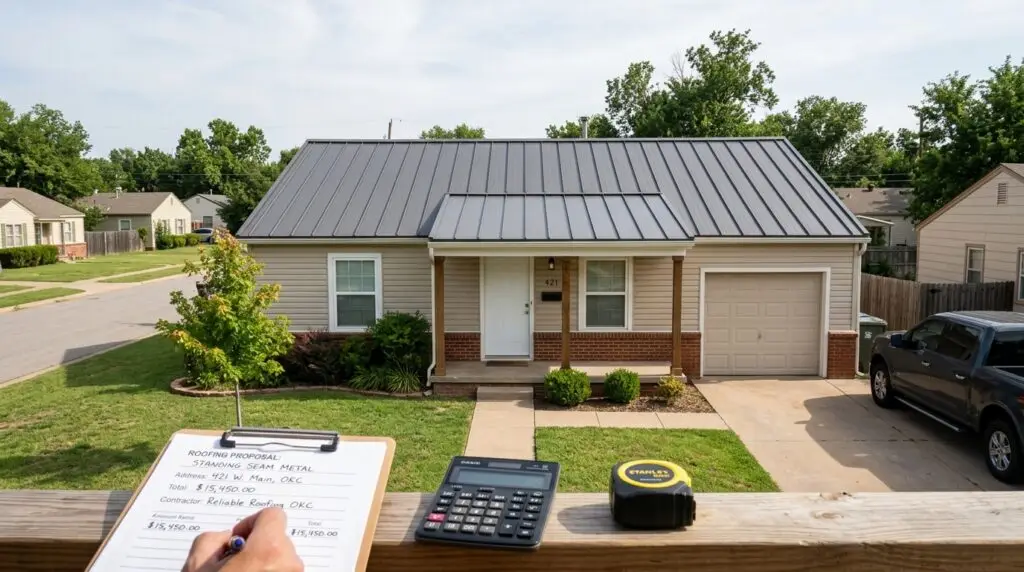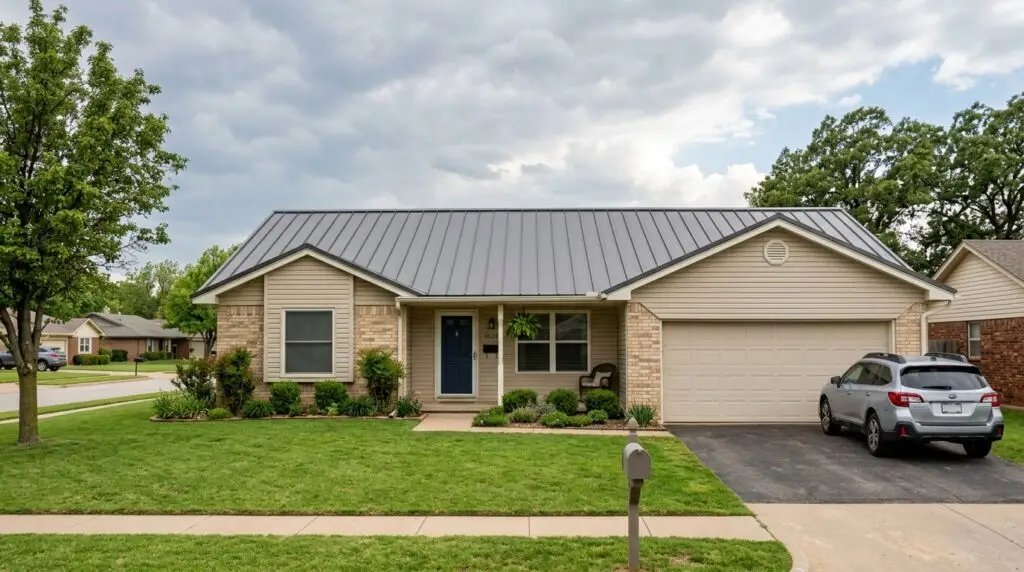
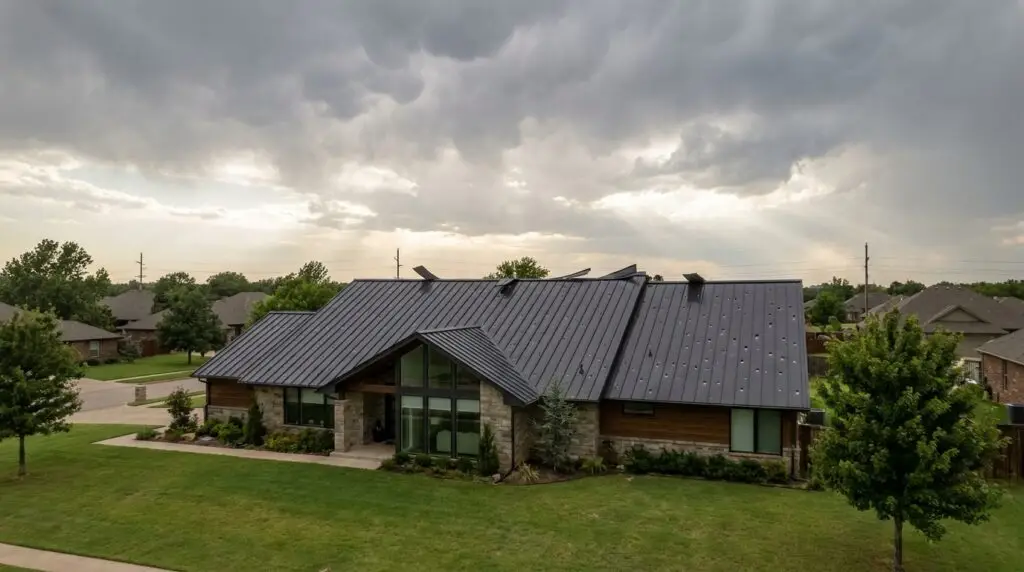
A metal roof can shrug off a lot. But it is not bulletproof, and in Oklahoma City it takes a beating most of the country never sees. Hail in the spring. Straight line winds that come out of nowhere. Freeze and thaw swings that push panels around all winter. You need roof repair immediately when you spot active leaks, dented or lifting panels after a storm, fasteners backing out of the metal, separated seams, or daylight showing through the attic. In our climate, the smart move is a professional look within 24 to 72 hours of any hail or high wind event, even if the roof looks fine from the driveway.
Here is the thing most homeowners miss. Metal hides trouble differently than shingles. A shingle roof screams when it fails. Metal tends to whisper. That is exactly why knowing the warning signs matters so much around here.
What Counts as an Immediate Repair, and What Can Wait
Not every roofing issue is a middle of the night emergency. An immediate repair is anything letting water in right now, putting the structure or your safety at risk, or leaving your home open to the next storm. Everything else can usually wait for a scheduled visit.
Think of it in three triggers:
- Active water intrusion. Water is already inside, or it will be the moment it rains again.
- Structural or safety risk. Sagging, a punctured panel, or a limb through the roof.
- Ongoing exposure. A lifted panel or missing flashing that the wind keeps working on.
If any of those three are true, treat it as urgent. If none are, you likely have time to plan, though you should still get it looked at.
Why metal roofs hide damage differently than shingles
With asphalt, damage is loud. Granules wash into the gutters, tabs blow off, and you can spot bald patches from the ground. Metal is quieter. A hail dent can look cosmetic while the coating underneath has cracked and started to rust. A fastener can loosen a sixteenth of an inch and open a slow path for water. Most homeowners don’t realize that a metal roof can be compromised and still look almost perfect from the street. That gap between how it looks and how it performs is where the real risk lives.
Warning Signs Your Metal Roof Needs Repair Right Now
Run through this list after any rough weather. Each sign below is worth acting on.
Active leaks or spreading water stains
A brown ring on the ceiling, a damp spot on a wall, or a drip during rain means water has already found a way in. Stains that grow after each storm confirm it. Do not wait for a steady drip. By the time water shows up on drywall, it has usually been traveling through the decking and insulation for a while.
Dents, dings, or depressions on panels
After a hailstorm, walk the yard and look at the roofline from a few angles. Visible dents tell you the storm was strong enough to do work. On metal, denting becomes likely once hail reaches roughly one to one and a half inches. A dent alone may be cosmetic, but it is your cue to check everything else.
Loose, backing out, or missing fasteners
This one is specific to metal, and it is one of the first things a good roofer checks. Screws can back out over time as panels expand and contract, and the rubber washers under the heads compress or crack. Once that seal fails, every screw hole is a possible leak. On an exposed fastener roof, this is the most common quiet failure we find.
Separated, lifted, or buckled seams
A little waviness across a panel, often called oil canning, is usually cosmetic and not a leak risk. Real seam separation is different. If a standing seam has pulled apart or a panel edge has lifted, wind can get underneath and peel it further. Learn the difference, or have an inspector confirm it, before you panic or ignore it.
Damaged or pulled away flashing
Flashing seals the joints where the roof meets chimneys, vents, valleys, and walls. It is also the first thing wind and hail tend to loosen. Bent, cracked, or lifting flashing is a leak waiting to happen, even when the panels themselves are fine.
Coating or finish failure and early rust
Metal roofs rely on their coating to hold off corrosion. When you see chalky fading, peeling paint, scratches down to bare metal, or the first orange freckles of rust, the protective layer is losing the fight. Caught early, this is a repair. Ignored, it spreads.
Sagging rooflines or soft decking
Step across the street and look at the ridge and the field of the roof. It should read straight. Any dip, wave, or sag points to trouble underneath, often water damaged decking or a weakened structure. This is a safety issue, not a someday issue.
Daylight or moisture in the attic
Go into the attic after a storm on a bright day. If you see pinpoints of light through the roof deck, water has a path too. Damp insulation, a musty smell, or dark streaks on the underside of the decking all point to a roof that is letting the weather in.
Dented gutters and downspouts
Roofers call the gutters and vents the soft metal tell. They dent before your panels show obvious damage, so they confirm both the size and direction of a hailstorm. If your gutters, downspouts, or vent caps took visible hits, your roof almost certainly did too.
A sudden jump in energy bills
When the roofing system loses its seal or the attic ventilation gets disrupted, your heating and cooling work harder. A cooling bill that spikes without a clear reason during an OKC summer can trace back to the roof more often than people expect.
Quick homeowner checklist: interior stains, panel dents, loose or missing screws, separated seams, damaged flashing, rust or coating loss, sagging, attic daylight or damp, dented gutters, and unexplained energy spikes. Two or more after a storm means book an inspection.
How Oklahoma City Weather Puts Your Roof at Risk
Roofs here age on a different clock than roofs in calmer parts of the country. To understand the warning signs, you have to understand what our weather does to a roof.
The hail reality
Oklahoma sits in the heart of Hail Alley, and Oklahoma City catches more than its share. Peak season runs from about mid April into May, when the biggest hail producing storms roll through. Damage is also cumulative. A roof can survive one storm looking fine, then fail after the third or fourth season of repeated hits. That is why we push seasonal checks rather than waiting for an obvious problem.
Wind and tornado season exposure
Central Oklahoma gets straight line winds, gusts along storm fronts, and full tornado season risk every spring. Wind rarely damages the middle of a well installed panel. It goes after the edges, the seams, and the flashing, prying at anything that has already loosened. Wind driven hail is its own problem, since it strikes at an angle and concentrates force on parts of the roof a vertical hit would miss.
Freeze and thaw swings
Our winters bounce. A morning in the twenties can turn into an afternoon in the fifties. Metal expands and contracts with every swing, and that constant movement is what slowly works fasteners loose and stresses sealant over the years. It is a slow grind, but it is real.
Around the metro
Homeowners from Edmond and Moore to Norman, Yukon, Mustang, and Midwest City all deal with the same core threats, though any single storm cell can hammer one suburb and skip the next. If a storm tracked through your area, assume your roof may have been in the path even if a neighbor’s was not.
Can Hail Actually Damage a Metal Roof
Yes, it can. Metal handles hail better than most materials, but it is not immune, and pretending otherwise gets homeowners in trouble.
Size thresholds
As a general rule, hail under an inch rarely leaves a mark on a properly installed metal roof. Once stones reach roughly one to one and a half inches, visible denting becomes likely. Golf ball sized and larger can do real functional damage. Oklahoma City regularly sees stones in and above that range during peak season.
Cosmetic versus functional damage
This is the distinction that matters. Cosmetic damage is denting that looks bad but does not affect performance, and it may or may not be covered depending on your policy. Functional damage cracks the coating, splits a seam, punctures a panel, or fails a fastener seal, and it will lead to leaks. An inspection sorts one from the other, which protects both your roof and your insurance claim.
Why gauge and profile matter
Thicker steel resists hail better. A 24 gauge or heavier panel holds up far better than thinner material, and standing seam profiles with concealed fasteners generally take storms better than exposed fastener panels. If you are weighing a new roof, this is worth understanding before you buy.
What to Do Right After a Storm
Inspect from the ground first
Stay off the roof. Walk the perimeter and look for dented gutters and vents, panel dents visible from the yard, debris, and anything lying in the yard that used to be on the roof. Then check the attic and your ceilings inside. You can gather most of what you need without ever climbing.
Document everything for insurance
Take clear, dated photos of any damage and of the storm’s aftermath. Note the date of the storm. Good documentation makes an insurance conversation go smoother and gives an adjuster something concrete to work with.
Protect against more water
If you have an active leak and cannot get a repair scheduled right away, professional tarping buys you time and stops the damage from spreading while you wait. It is a stopgap, not a fix.
Get a professional look within 24 to 72 hours
The sooner a trained eye gets on the roof, the sooner you know whether you are dealing with a small repair or something bigger. A prompt metal roof inspection also strengthens an insurance claim, since damage is easier to tie to a specific storm when it is documented quickly.
Metal Roof Repair Costs in Oklahoma City
Between you and me, anyone quoting a firm price before seeing the roof is guessing. Cost depends on several factors, and the honest answer is that it varies.
What moves the price
- Extent of damage. A few fasteners and a flashing repair sit at the low end. Multiple panels and structural work sit much higher.
- Panel type and gauge. Standing seam and specialty finishes cost more to match and repair than basic exposed fastener panels.
- Access and pitch. Steep or hard to reach roofs take more labor.
- Coatings and matching. Matching an older finish can add cost and time.
Repairs generally land well below the cost of a full replacement, which is one reason catching problems early pays off. Small fixes stay small when you handle them fast.
When insurance steps in
Storm damage from hail and wind is often covered, while wear and tear and neglect usually are not. Policies differ, especially on cosmetic hail damage, so read yours or ask your agent. A documented inspection report is your best friend in that conversation.
Repair or Replace: A Simple Way to Decide
Consider the age
A quality metal roof commonly lasts 40 to 70 years. If yours is young and the damage is localized, repair is usually the right call. If it is near the end of that range and failing in several places, replacement may cost less over time.
Localized damage versus system wide failure
One damaged section on an otherwise sound roof is a repair. Widespread fastener failure, rust across multiple panels, or leaks in several spots point toward a system that is wearing out. For bigger jobs, it is worth comparing a repair against metal roof installation so you are not paying twice.
The recurring problem rule
Here is a rule of thumb we use. If you keep patching the same roof for the same kind of failure season after season, the roof is telling you something. Stop patching and plan a replacement.
Common Mistakes OKC Homeowners Make
- Waiting for a visible leak. By the time water shows up inside, the damage has usually been growing for a while. The warning signs come first.
- Assuming metal is damage proof. It is tough, not invincible. Hail and wind still find the weak points.
- DIY sealant fixes. A tube of caulk over a failing fastener can hide a problem, void a warranty, and make the eventual repair harder.
- Hiring storm chasers. Crews that flood the metro after a big storm are gone by the next one. A local, licensed contractor is there when you need the warranty honored.
How to Prevent Emergency Repairs
Inspect on a schedule
In a storm prone place like ours, once a year plus a look after any major hail or wind event is the right rhythm. Prevention is cheaper than emergency work every single time.
Keep up with fasteners, sealant, and flashing
These are the parts that fail first on a metal roof. A periodic check and touch up of screws, sealant, and flashing heads off most leaks before they start. Routine metal roof repair on small items keeps the big items away.
Manage gutters and debris
Clear gutters and remove branches and leaves that trap moisture against the roof. It is simple, and it protects both the panels and the edges where water likes to sit.
When to Call a Local Metal Roofing Professional
What you should never DIY
Steep roofs, structural sagging, active leaks, and post storm inspections belong to a professional. Walking a metal roof is genuinely dangerous, and you can do more harm than good poking around up there.
What a real inspection looks like
A thorough pro checks every slope, examines fasteners and seams up close, inspects flashing and penetrations, looks at the soft metals for storm evidence, and goes into the attic. You should get clear photos and a plain explanation of what needs to happen and what can wait.
What to ask before you hire
Ask whether they are local and licensed, whether they carry insurance, how they handle claims, and what warranty backs the work. If a storm hit your neighborhood, our storm damage services team covers homes across the OKC metro service areas, and a fast response makes a real difference.
Frequently Asked Questions
What are the first signs a roof needs immediate repair?
Active leaks, water stains that grow after rain, dented or lifting panels after a storm, loose or missing fasteners, and daylight in the attic. Any of these means call for an inspection now.
Can hail damage a metal roof in Oklahoma?
Yes. Hail under an inch rarely marks a solid metal roof, but stones of one to one and a half inches and larger can dent panels and crack coatings. Oklahoma City sees hail in that range every spring.
How soon should I inspect my roof after an OKC hailstorm?
Within 24 to 72 hours if you can. A quick inspection catches hidden damage early and makes any insurance claim easier to support.
How much does metal roof repair cost in Oklahoma City?
It depends on the extent of the damage, the panel type, and roof access, so costs vary widely. Small repairs stay affordable, which is why acting early saves money.
Is a small dent in a metal roof a problem?
Sometimes. A shallow dent can be purely cosmetic, but it can also mean the coating cracked or a fastener seal failed nearby. Have it checked so a cosmetic ding does not turn into a leak.
Should I call my insurance company or a roofer first?
Many homeowners get a professional inspection first so they know what they are actually dealing with, then file with solid documentation. Either way, photos and storm dates help.
How long does a metal roof last in Oklahoma?
A quality metal roof commonly lasts 40 to 70 years, though our hail and wind can shorten that if damage goes unaddressed. Regular inspections help you reach the high end of that range.