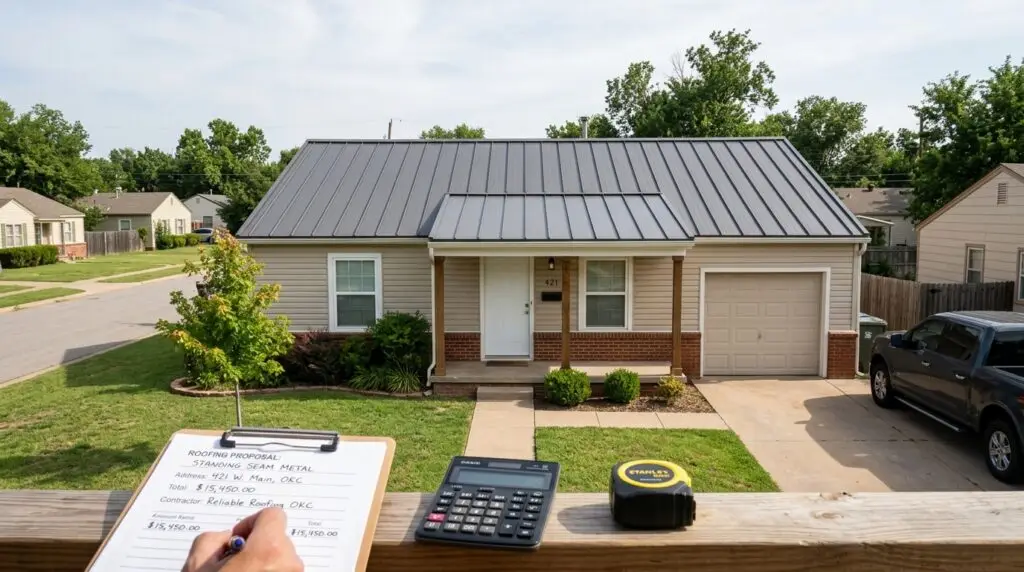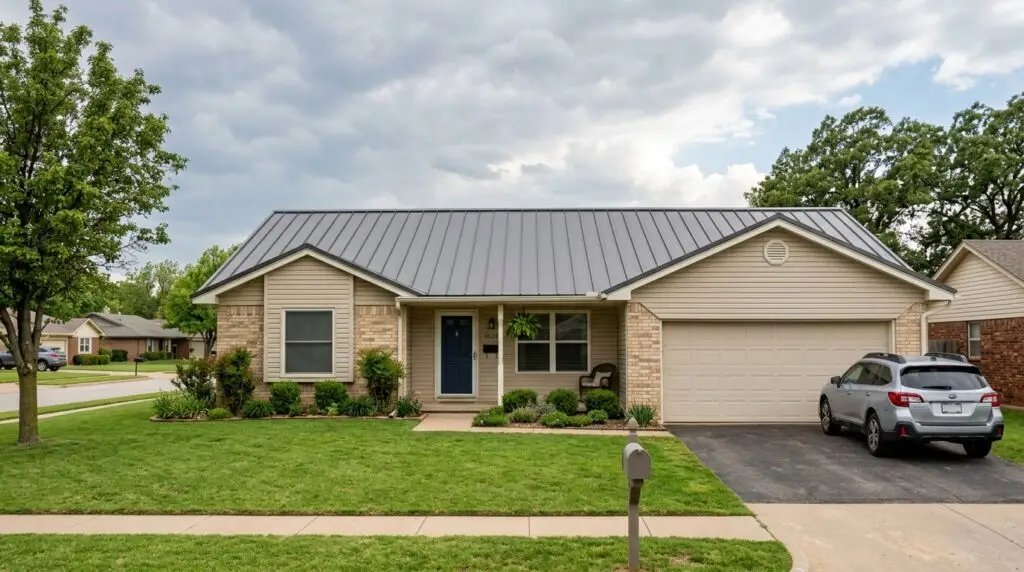
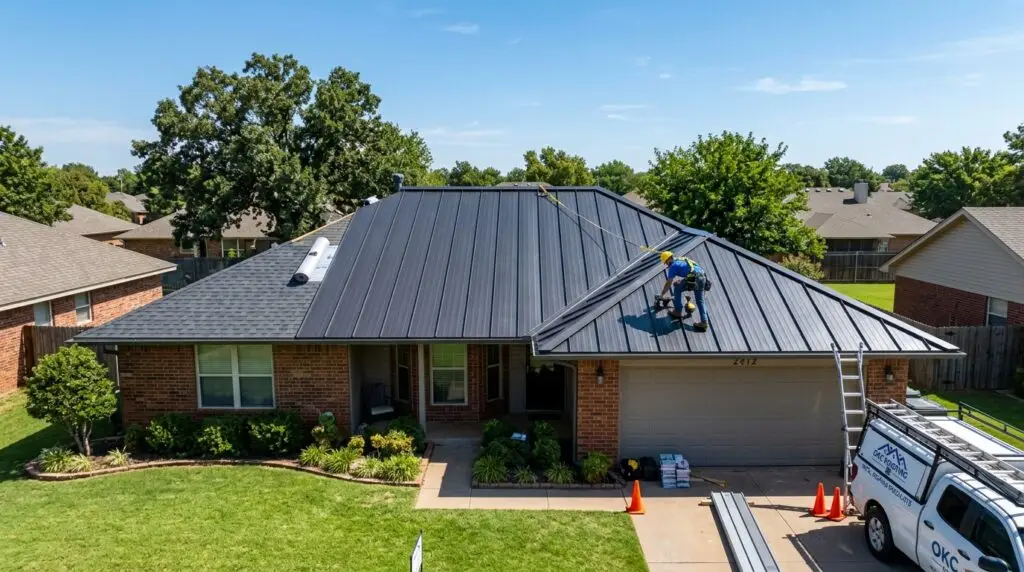
If you’re an Oklahoma City homeowner researching a metal roof upgrade, you’ve probably already run into this question can you skip the tear-off and install metal roofing directly over your existing shingles? The short answer is: yes, in many cases it’s possible. But here in the OKC metro, where hailstorms roll through like clockwork and temperatures swing from 100°F summers to freezing winters, the real answer is a little more nuanced than most articles will tell you.
This guide gives you the full picture code requirements, installation methods, what our climate actually demands, and how to make a smart decision for your home and budget.
1. The Short Answer Yes, But Oklahoma Homeowners Need to Know This First
Yes, you can install metal roofing over existing asphalt shingles. It’s a recognized and practiced method in the roofing industry. But whether you should do it depends on several factors that are especially important in Oklahoma’s climate.
Most national articles stop at “yes, it’s allowed.” What they don’t tell you is that the OKC market with its tornado-alley wind exposure, severe hail events, and dramatic seasonal temperature swings creates specific conditions that change the calculus on this decision significantly.
Here’s the thing: what works fine for a home in Arizona or the Pacific Northwest may not be the best choice for a house in Edmond, Moore, or Midwest City. Before you sign anything, read this guide in full.
2. What Oklahoma City’s Building Code Actually Says About Metal Roof Overlays
The One-Layer Rule and Permit Requirements
Oklahoma follows the International Residential Code (IRC) as its base building code, with state-level amendments applied by the Oklahoma Uniform Building Code Commission. Here’s what that means for your project:
- Metal roofing can generally be installed over one existing layer of asphalt shingles not two or more.
- Oklahoma City requires a building permit for any roofing project covering 500 square feet or more.
- Overlay projects require that the existing roof structure be inspected and confirmed to support the added load.
- In 2025, OKC updated its code enforcement position to require permits for all full metal roof replacements unpermitted work can void insurance claims.
| Always ask your contractor to pull the permit before work begins. If a contractor suggests skipping it to save time or money, that’s a serious red flag especially in a city where storm-related insurance claims are common. |
HOA and Neighborhood Restrictions in the OKC Metro
If you live in a community with a Homeowners Association common in neighborhoods throughout Edmond, Yukon, and parts of northwest Oklahoma City there may be additional restrictions on roofing materials, colors, and installation methods. Always check with your HOA before committing to any overlay project.
The OKC Development Services Department is your official source for current code requirements. When in doubt, call them directly or ask a licensed local contractor to verify before work begins.
3. Is Your Existing Roof Actually a Candidate for a Metal Overlay?
This is the question that separates a smart overlay from an expensive mistake. Not every roof qualifies and in our experience, a surprising number of homes in older OKC neighborhoods have conditions that disqualify them from an overlay before the first nail is ever driven.
The Four-Point Assessment Every Contractor Should Perform
Before recommending an overlay, any reputable Oklahoma City roofing contractor should walk through these four checkpoints:
- Shingle condition: The existing shingles must be flat, stable, and free of significant curling, buckling, or delamination. Wavy or lifted shingles create an uneven surface that causes real problems for metal panel installation.
- Number of existing layers: Only one existing shingle layer is acceptable. If there’s already a previous overlay beneath what you can see, that’s a tear-off job no exceptions.
- Roof deck integrity: This is the big one. A contractor cannot fully inspect the decking for rot, water damage, or structural weakness without removing the shingles. An overlay essentially bets that the deck is sound without being able to verify it.
- Roof geometry: Homes with complex rooflines, multiple valleys, dormers, chimneys, or skylight penetrations common in older OKC neighborhoods from the 1970s through the 1990s create far more overlay complexity and increase the risk of future leak points.
When a Tear-Off Is the Smarter Move in Oklahoma
Some situations simply call for a full tear-off and fresh start. In our local market, those situations include:
- Any visible or suspected hail damage to the current shingle layer very common across the OKC metro after spring storm seasons
- Two or more existing shingle layers already in place
- Active moisture infiltration, mold, or musty smells coming from the attic
- Homes in Del City, Midwest City, or other older suburbs with original decking from the 1970s or earlier
- Roofs where the decking material is unknown or suspected to be inadequate
4. The Two Main Ways Metal Roofing Is Installed Over Shingles
Not all metal overlay installations are the same. There are two primary methods, and they perform very differently in Oklahoma’s climate.
Method 1: Direct Overlay with Underlayment Barrier
In this approach, a synthetic underlayment or roofing felt is laid directly over the existing shingles before the metal panels are attached. The underlayment acts as a barrier between the rough granulated shingle surface and the back of the metal which is important because without that buffer, thermal expansion and contraction of the metal would grind against the shingle granules over time, causing wear and potential damage to both layers.
This method works but it leaves no airspace between the layers, which has thermal and moisture implications that matter more in Oklahoma than in many other markets.
Method 2: Furling Strip (Purlin) System The Better Option for Oklahoma
This is the method we recommend most often for OKC homeowners. Wood purlins or metal battens are fastened through the existing shingles down into the roof deck, creating a raised framework that the metal panels attach to. That framework creates an air gap between the old shingles and the new metal surface.
Here’s why that matters in Oklahoma:
- Thermal buffering: The air gap prevents the metal from transferring heat directly into the structure below a significant advantage during Oklahoma summers when roof surface temperatures can exceed 160°F.
- Moisture management: Airflow through the gap reduces the risk of trapped moisture between layers, which is a genuine concern during Oklahoma’s humid spring seasons.
- Better fastener holding power: Purlins distribute load and provide solid anchor points for fasteners critical in a state where wind events regularly exceed 70–90 mph.
- Radiant barrier compatibility: The air cavity allows for the installation of a radiant barrier beneath the metal, further reducing cooling loads and utility costs.
| Between you and me, in the Oklahoma City market, a purlin system isn’t just a preference it’s a practical advantage that pays back in lower utility bills and better storm performance over the life of the roof. |
5. How Oklahoma’s Weather Makes This Decision Different
This is the section you won’t find in most national roofing articles. Oklahoma’s climate creates specific challenges that directly affect whether a metal overlay is the right choice for your home.
Hail Exposure Across the OKC Metro
Oklahoma consistently ranks among the top states in the country for hail frequency and severity. Areas like Norman, Edmond, and Moore sit in particularly exposed terrain, where spring storms arrive fast and hit hard. A hailstorm that drops golf-ball-sized stones on your neighborhood isn’t hypothetical here it’s a when, not an if.
Why does this matter for overlays? Two reasons. First, the metal itself needs to be the right gauge. For the OKC market, most contractors recommend 26-gauge steel as a minimum, with 24-gauge being the smarter choice in hail-heavy zones. Thinner panels dent more easily, and dented metal isn’t just cosmetic it affects water shedding and long-term performance.
Second and this is something most homeowners don’t realize if your metal roof does sustain hail damage, assessing and repairing that damage is considerably more difficult when there’s an underlying shingle layer. A full inspection becomes a bigger job, and replacement of damaged sections can require more extensive work than on a clean-deck installation.
Wind Load Considerations in Tornado Alley
Oklahoma sits squarely in Tornado Alley. Roofing systems here must be engineered for serious wind uplift resistance, in compliance with ASCE 7 structural load standards and in particularly exposed areas, additional fasteners or clip systems may be required.
For an overlay installation, this has a specific implication: the metal panels must be fastened through the existing shingles all the way into solid roof decking. If that decking is compromised even partially wind uplift risk increases dramatically. That’s another reason why the deck inspection step is non-negotiable before any overlay project moves forward.
Standing seam metal roofs with concealed clips consistently outperform exposed-fastener panel systems in high-wind testing. If wind performance is a priority and in OKC, it should be discuss panel type with your contractor specifically.
Temperature Swings and Material Expansion
Oklahoma’s seasonal temperature range is dramatic. Metal expands in heat and contracts in cold, and with the OKC climate producing both triple-digit summer highs and well-below-freezing winter lows, that movement is significant across the life of a roof. Non-bitumen synthetic underlayments are preferred for overlay applications here because they don’t soften and adhere to the metal backing the way asphalt-based products can, which allows the metal to move freely without stress buildup.
6. Real Cost Breakdown Overlay vs. Full Tear-Off in Oklahoma City
The primary reason most homeowners consider an overlay is cost savings. Let’s be honest about where those savings are real and where they can disappear.
Where the Savings Are Genuine
- Tear-off labor elimination: Removing existing shingles and hauling them away represents a meaningful portion of a full replacement project. Skipping this step reduces total labor hours.
- Disposal fees: Shingle disposal costs at OKC-area landfills have increased in recent years. An overlay avoids those fees entirely.
- Faster project completion: Less prep time means fewer days with your roof exposed during Oklahoma’s unpredictable spring storm season which is a real practical advantage.
- Environmental benefit: Keeping existing shingles out of landfills is a genuine sustainability advantage that some homeowners value.
Where the Overlay Can Cost You More Long-Term
Here’s the honest part of the conversation that some contractors skip:
- Hidden deck damage: If there’s rot, moisture damage, or structural compromise beneath the shingles, you won’t know until you’re doing a full replacement later at which point repair costs will be substantially higher.
- Leak diagnosis difficulty: Tracking a roof leak through two separate roofing layers is significantly more complicated and expensive than diagnosing a leak on a single-layer system.
- Insurance complications: Some Oklahoma carriers scrutinize overlay installations differently when processing hail or wind claims. Notify your insurance company before the project begins and get their position in writing.
- Resale considerations: Future buyers and their home inspectors may flag an overlay. In a competitive OKC market, this could be a negotiating factor.
| A practical rule of thumb: if the savings from skipping the tear-off represent less than 15–20% of your total project cost, the full replacement is usually worth the investment in the Oklahoma market especially on older homes where deck condition is uncertain. |
7. Ventilation and Moisture The Hidden Risk Most Articles Skip
Most national roofing articles barely mention ventilation in the context of overlays. In Oklahoma’s climate, this is a significant omission.
Trapped Moisture Is a Bigger Problem in Oklahoma
Oklahoma’s humidity levels during spring and early summer create real moisture migration risk beneath roofing systems. Without a ventilated airspace which the purlin system provides and a direct overlay does not moisture can become trapped between the existing shingle surface and the new metal panels. Over time, this accelerates degradation of both the shingles beneath and the underside coating of the metal itself, shortening the effective lifespan of the system.
Attic Ventilation Requirements Still Apply
Adding a metal overlay does not eliminate the requirement to meet Oklahoma’s attic ventilation standards (IRC R806.2). Ridge and soffit ventilation must remain functional after the overlay is complete. If a contractor doesn’t specifically address ventilation as part of the overlay design, that’s a conversation worth having before you proceed.
Poorly ventilated metal roofs in OKC’s hot summers can increase attic temperatures significantly, negating the energy efficiency gains that metal roofing is supposed to deliver.
8. Honest Pros and Cons for OKC Homeowners
Genuine Advantages of a Metal Overlay
- Reduces upfront project cost by eliminating tear-off labor and disposal fees
- Adds a second weather-resistant layer meaningful protection during Oklahoma storm season
- Faster completion window reduces your home’s exposure during spring weather
- Environmentally responsible keeps shingle waste out of landfills
- Can be a solid option when the existing deck is confirmed sound and the shingle layer is in good condition
Limitations You Should Understand Before Signing
- Deck integrity cannot be fully verified without removal you’re making a bet on what’s underneath
- Manufacturer warranty terms may differ for overlay installations versus clean-deck applications confirm this before purchasing panels
- Home insurance coverage may be affected; always notify your carrier in advance
- Two-layer systems are more complex to diagnose and repair if a leak develops later
- Not appropriate for roofs with existing storm damage, two or more layers, or active moisture problems
9. How to Choose the Right Oklahoma City Metal Roofing Contractor for This Job
A metal overlay is not a standard shingle replacement. It requires specific knowledge of fastening systems, underlayment selection, ventilation management, and load calculations. Not every contractor who installs metal roofing has hands-on overlay experience and the difference matters.
Questions to Ask Before Hiring
- Do you pull building permits with Oklahoma City Development Services for overlay projects?
- Will you perform a full deck and attic inspection before recommending an overlay?
- What underlayment system do you use between the shingles and metal panels and why?
- What gauge metal do you recommend for our hail exposure zone?
- How is your installation warrantied if deck damage is discovered during or after the project?
Red Flags Specific to the OKC Roofing Market
- Contractors who quote without an attic inspection no credible professional recommends an overlay without looking at what’s beneath
- Anyone suggesting you skip the permit full stop, walk away
- Unusually low bids that omit underlayment, purlin systems, or proper flashing around penetrations
- Out-of-state storm chasers who arrive in force after hail events they’re often gone before warranty issues surface. Always verify a current Oklahoma contractor’s license.
10. Common Mistakes Oklahoma Homeowners Make With Metal Roof Overlays
Most homeowners don’t realize these mistakes are being made until they’re already dealing with the consequences. Here’s what we see come up repeatedly in the OKC market:
- Choosing an overlay to avoid the permit process OKC now requires permits for roofing work over 500 sq ft, and unpermitted work creates serious problems with insurance claims and future resale.
- Skipping the attic inspection before proceeding moisture damage and deck rot are invisible from the surface and can only be assessed from below.
- Selecting lower-gauge metal to reduce cost without accounting for OKC’s documented hail severity. This is a short-term saving that often becomes a long-term expense.
- Not verifying insurance coverage before work begins some Oklahoma policies have specific language about overlay installations. Read yours carefully.
- Assuming all metal roofing contractors have overlay experience it requires different techniques, materials, and planning than a standard new-deck installation. Always ask specifically.
Explore Our Oklahoma City Metal Roofing Services
Looking for more information before making your decision? These resources can help:
→ Metal Roof Installation in Oklahoma City
→ Storm Damage Roof Inspection
→ Metal Roofing Cost Calculator in Oklahoma City
→ Our Service Areas OKC, Edmond, Norman, Moore, Yukon, Midwest City
Frequently Asked Questions Metal Roofing Over Shingles in Oklahoma City
Can you install metal roofing over shingles in Oklahoma City?
Yes in many cases. Oklahoma City allows metal roofing to be installed over a single existing layer of asphalt shingles, provided a building permit is obtained, the roof deck is confirmed to be in sound condition, and the installation is performed by a licensed contractor. A full deck and attic inspection should always precede any overlay recommendation.
How many shingle layers can be under a metal roof in Oklahoma?
Oklahoma’s building code generally permits a metal roof overlay over one existing shingle layer only. If two or more shingle layers are already present, a full tear-off is required before any new roofing material metal or otherwise can be installed.
Will a metal roof overlay void my homeowner’s insurance in Oklahoma?
It may complicate your claims process. Some Oklahoma insurance carriers have specific language in their policies regarding overlay installations. Notify your insurance company before the project starts, ask for their requirements in writing, and make sure the work is properly permitted all of which help protect your coverage.
Is a metal overlay a good idea given Oklahoma City’s hail risk?
It can be, if the installation uses the right gauge metal (24–26 gauge minimum for OKC’s hail exposure) and the existing deck is sound. The main concern is that hail damage becomes more difficult to assess and repair when there’s a shingle layer beneath the metal. Discuss this specifically with your contractor and insurance agent.
Do I need a permit for a metal roof overlay in Oklahoma City?
Yes. As of 2025, Oklahoma City requires a building permit for any roofing project covering 500 square feet or more. Working without a permit can affect your homeowner’s insurance and create complications if you sell the home.
How long does a metal roof over shingles last in Oklahoma?
A properly installed metal roof whether on a clean deck or over sound shingles can last 40 to 70 years. Performance over existing shingles depends heavily on the condition of the underlying deck, the quality of the underlayment system, and whether the installation accounts for Oklahoma’s wind and hail exposure requirements.
Is an overlay cheaper than a full metal roof replacement in OKC?
Upfront, yes primarily by eliminating tear-off labor and disposal costs. Long-term, the picture depends on what’s underneath. If the deck has hidden damage, the eventual repair costs can exceed whatever was saved on the overlay. Get a full inspection and an honest assessment before making the decision on cost alone.