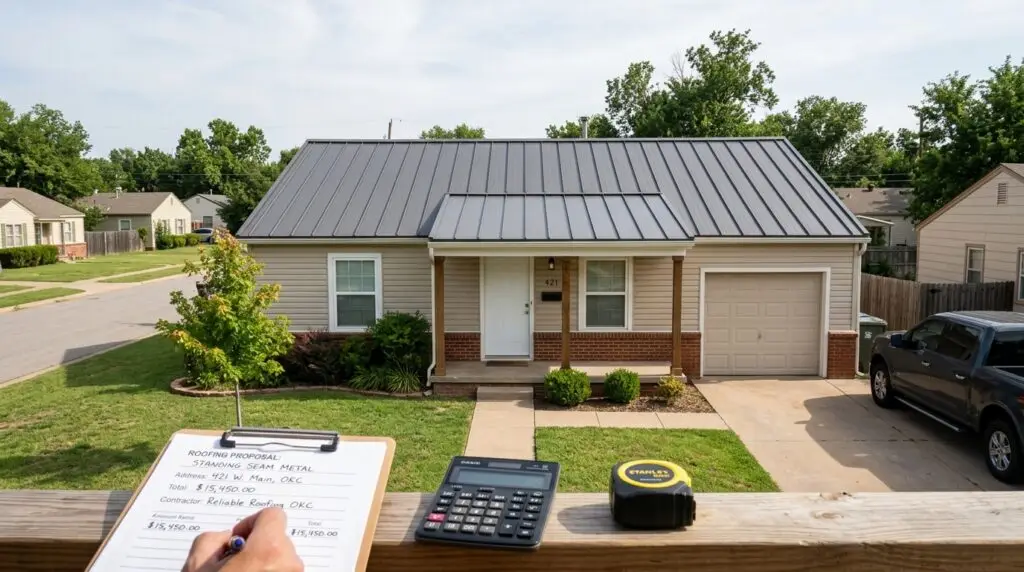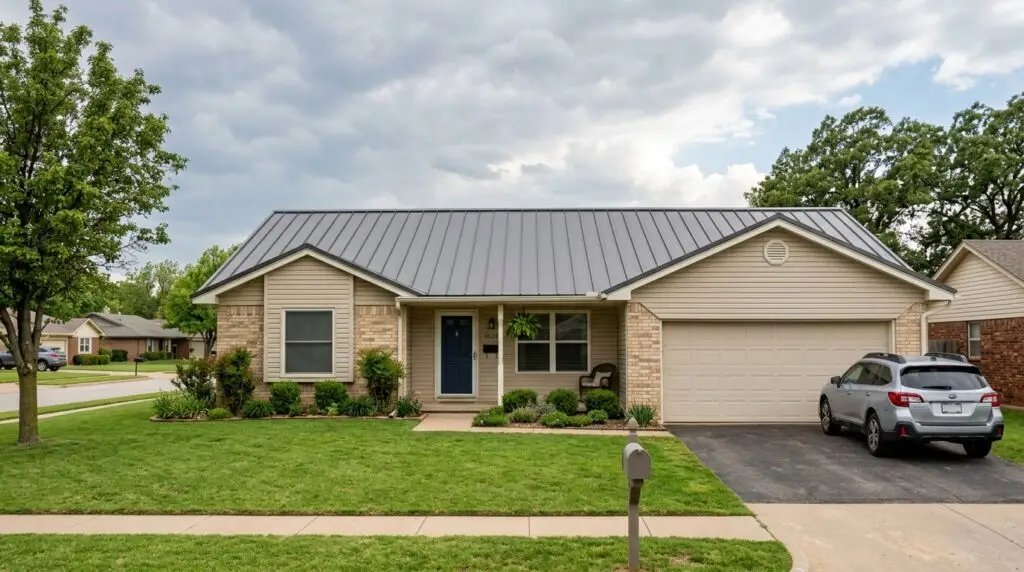
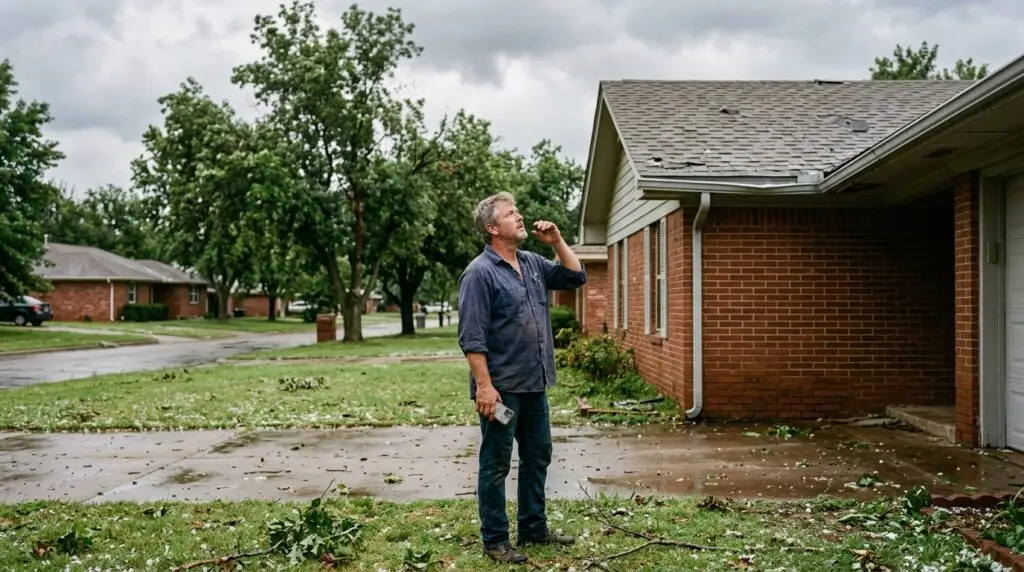
Living in Oklahoma City means living with hail. It’s just part of the deal. Most springs bring at least a few serious storm events, and some years the storms come hard, fast, and repeatedly across the metro from Edmond and Yukon down through Moore and Norman. When a major hailstorm passes through, tens of thousands of OKC homeowners wake up the next morning wondering the same thing: what do I do now?
This guide walks you through exactly what to do after a hailstorm damages your roof step by step, from the first hour after the storm to the final decision on repair or replacement. No generic advice. This is written specifically for Oklahoma City homeowners dealing with Oklahoma weather.
Why Oklahoma City Homeowners Face a Higher Hail Risk Than Almost Anywhere in the Country
Oklahoma’s Place in ‘Hail Alley’ What That Means for Your Roof
Oklahoma sits squarely within what storm researchers call Hail Alley a geographic corridor running through the central plains where the collision of cold Arctic air and warm Gulf moisture generates the kind of severe supercell thunderstorms that produce large, damaging hail on a regular basis. This is not rare weather for us. It is the norm.
Hailstones of one inch or larger enough to cause meaningful roof damage are common across the OKC metro area every single spring. In particularly active years, significant hail events can strike the same neighborhoods multiple times within a single season. That kind of repeated impact cycling does something that a single storm event elsewhere might not: it compounds damage over time, weakening roofing materials incrementally until a relatively minor storm causes a disproportionate amount of destruction.
Most homeowners don’t realize that the “useful life” projections printed on their asphalt shingle packages assume moderate climate conditions. In Oklahoma, that lifespan gets compressed significantly sometimes dramatically by repeated storm exposure.
How OKC Spring Storms Are Different
Oklahoma City storms frequently combine large hail with straight-line winds hitting 60 to 70-plus miles per hour. That combination matters because wind-driven hail strikes roofing surfaces at an angle rather than straight down and many standard shingle impact ratings are tested with vertical drops, not angled hits. The result is damage patterns that exceed what the material’s rating would suggest.
The communities of Moore, Norman, Edmond, Yukon, and Mustang all fall within the same high-exposure zone. If you own a home anywhere in the OKC metro, your roof is operating in one of the most challenging storm environments in the United States.
The First 24 Hours After a Hailstorm A Step-by-Step Action Plan
Here’s the thing: what you do in the first 24 hours after a hailstorm can have a significant impact on your insurance claim outcome. Most homeowners either wait too long or move too fast. Both create problems. Follow these steps in order.
Step 1: Stay Safe Before You Step Outside
Wait until the storm has completely passed. Wet roofs, downed power lines, and storm debris create real hazards. Do not climb onto the roof immediately after a storm wet decking and debris-covered surfaces are a serious fall risk, and the structural integrity of the roof itself may be temporarily compromised in a severe event.
Start with a careful perimeter walk at ground level. That single step costs nothing and tells you a great deal.
Step 2: Do a Ground-Level Damage Inventory
Before you call anyone, take stock of what you can observe from the ground. Look at:
- Gutters and downspouts dents and crushed sections in soft aluminum gutters are one of the most reliable visual indicators of hail size
- HVAC units denting on condenser fins or casing indicates impact force
- Vehicles parked outside if your car hood shows dents, assume your roof took similar or worse
- Wood window sills and fence caps fresh impact marks on soft materials confirm hail size
- Window screens small punctures are a tell-tale hail signature
In our experience working on roofs across the OKC metro, the condition of soft-metal surfaces on the ground is the single best proxy for the severity of roof damage before you ever get a ladder out.
| Pro Tip
Collect a hailstone sample from your yard or landscaping and place it in a bag in your freezer immediately. A frozen hailstone next to a ruler in a photo is among the most compelling evidence you can give an insurance adjuster. |
Step 3: Document Everything Before Touching Anything
Date-stamped photos and video are your most important tool in an insurance claim. Document every observable impact point at ground level. Photograph the frozen hailstone. Note the exact storm date, approximate duration, and hail size based on what you observed or collected.
This documentation package built before any repair work begins is what separates homeowners who receive full claim settlements from those who end up in lengthy disputes with their insurers.
Step 4: Apply Emergency Protective Measures If Needed
If you can see exposed decking, missing shingle sections, or you have active water intrusion, tarping the damaged area is both practically smart and legally important. Most Oklahoma homeowners insurance policies include a “reasonable mitigation” requirement meaning you are expected to take steps to prevent additional damage after an event. Failure to do so can affect your claim.
Move interior valuables away from ceiling areas that may be compromised. Board any shattered windows. Then call a licensed local roofing contractor not the person who just knocked on your door.
How to Identify Hail Damage on Your Roof And What Homeowners Usually Miss
Signs of Hail Damage on Asphalt Shingles
Asphalt shingles show hail damage in several distinct ways, and not all of them are immediately obvious from the ground:
- Granule loss dark spots or shiny patches where the protective granule layer has been knocked away; you’ll often see granule accumulation in gutters and at downspout exits
- Bruising soft depressions in the shingle mat, similar to a bruise on fruit; these are felt before they’re seen and require getting onto the roof to confirm
- Fractured mat cracks that penetrate through the fiberglass reinforcement layer, not just the surface coating
- Displaced or missing shingles from combined wind and hail impact
Here’s what makes this genuinely dangerous for homeowners: bruised shingles do not typically leak immediately. The leak often appears 6 to 18 months later, after UV exposure and subsequent storms complete the process of breaking down the compromised area. By that point, secondary water damage to decking, insulation, and framing may already be in progress and the window to file an insurance claim may have closed.
Signs of Hail Damage on Metal Roofing
Metal roofing behaves very differently under hail impact than asphalt shingles, and OKC homeowners with metal roofs need to know what they’re actually looking for:
- Surface dents visible dings on flat panels, ridge caps, and low-slope sections; these are the primary hail marker on metal
- Coating damage chipped paint or exposed bare metal at impact points; this creates a rust-initiation risk if left unaddressed
- Seam and fastener integrity the most functionally important thing to check; compromised seams can allow water infiltration even when panel surfaces are intact
Here’s an important distinction that even many insurance adjusters miss: metal roofs do not crack, do not lose granules, and in the overwhelming majority of OKC hail events, sustain damage that is cosmetic rather than structural. The roof continues to keep water out. This is one of the most significant performance advantages of metal roofing in an Oklahoma storm environment. That said when hailstones exceed roughly 2.5 inches in diameter, all bets are off on any roofing material.
Hidden Damage That Even Careful Homeowners Often Miss
In our experience doing post-storm inspections across Oklahoma City, these areas produce the most “surprise” damage discoveries:
- Flashing around chimneys, plumbing vents, and skylights frequently damaged by hail impacts, almost never visible from the ground
- Valley areas the V-shaped channels where two roof slopes meet concentrate hail impact and debris, creating accelerated wear
- Ridge cap shingles these sit at the highest exposure point on the roof and are often the first component to show functional failure
- The attic water stains on the underside of the decking, daylight visible through the sheathing, or soft spots in the wood are indicators of existing penetration
Getting a Professional Roof Inspection After a Hailstorm What to Expect and What to Ask
Do not skip the professional inspection. This is not a sales pitch it’s practical advice based on what we see happen to homeowners who try to assess hail damage themselves.
Bruising on asphalt shingles is nearly impossible to identify without physically pressing on the shingle surface. Insurance adjusters conducting post-storm inspections are often working from compressed schedules after major OKC storm events, and they can miss damage that a qualified contractor specifically trained in storm assessment will find. Getting a contractor-prepared scope of damage report before the adjuster visit and having your contractor present during that visit protects your claim in a way that nothing else reliably does.
What a Qualified Metal Roofing Inspector Checks
A thorough post-hail inspection of a metal roofing system should cover panel surface condition, coating integrity, seam and fastener status, all flashing and trim at penetration points, underlayment condition via attic inspection, and the complete drainage system including gutters and downspouts. Each finding should be photographically documented and included in a written report that report becomes the basis of your insurance claim.
Questions to Ask Your Roofing Contractor Before You Hire
- Are you licensed with the Oklahoma Construction Industries Board? (Verify the license number yourself it takes 30 seconds online)
- Do you specialize in metal roofing, or is it a secondary service you offer?
- Will you be present during the insurance adjuster’s inspection of my property?
- Can you provide a written scope of damage with photographs?
- What is your workmanship warranty, separate from the manufacturer product warranty?
Between you and me a contractor who hesitates on any of those questions deserves a second look before you move forward.
Navigating the Insurance Claim Process in Oklahoma A Homeowner’s Roadmap
Oklahoma homeowners pay among the highest property insurance premiums in the country. Part of the reason is exactly what we’ve been discussing hail exposure. You are paying for that coverage every month. When storm damage occurs, using it properly is worth the effort.
The Right Order of Operations for Filing a Hail Damage Claim
Most homeowners do this backwards they call the insurance company first, then try to figure out what happened. Here is the sequence that protects you:
- Step 1: Complete your own documentation photos, storm notes, frozen hailstone sample
- Step 2: Get a professional inspection and written damage assessment from a licensed contractor
- Step 3: Contact your insurance company to report the damage and open a claim
- Step 4: Schedule the adjuster visit with your contractor present
- Step 5: Review the adjuster’s report against your contractor’s scope before authorizing any work
- Step 6: Dispute any discrepancies in writing before proceeding
Oklahoma’s Insurance Claim Deadlines Don’t Miss This
Most Oklahoma homeowners insurance policies impose a claim filing deadline often one year from the date of the damage event, though this varies by policy and insurer. Delayed claims are one of the leading reasons OKC homeowners end up paying out-of-pocket for damage that their insurance policy should have covered.
If you are unsure whether storm damage occurred, filing a claim to preserve your rights and withdrawing it if inspection reveals no legitimate damage is a far better outcome than missing the deadline entirely. Check your specific policy this matters.
What Insurance Covers And What It Often Doesn’t
Functional and structural damage is typically covered. Cosmetic-only denting on metal roofing is where some OKC homeowners encounter complications certain policies include cosmetic exclusion riders that limit coverage to damage affecting the roof’s waterproofing function rather than its appearance. If you have a metal roof, review your policy for this language before storm season, not after.
Pre-existing wear and aging is another area where adjusters may attempt to attribute some portion of observed damage to prior deterioration rather than the storm event. A thorough, dated inspection report from a qualified contractor is your best counter to that argument.
Understanding Repair and Replacement Costs in the OKC Market
It depends on several factors roof size, pitch, material, and the timing of the repair relative to storm season. In general terms:
- Minor repairs involving flashing, ridge caps, or limited sections can range from a few hundred to a few thousand dollars
- Partial replacements of storm-damaged sections run into the mid-to-upper thousands depending on roof size and material
- Full asphalt shingle replacement costs vary widely based on square footage, pitch, and material grade
- Full metal roof replacement carries a higher upfront cost than asphalt but substantially longer service life and potential insurance savings in Oklahoma’s storm-heavy environment
One practical note: after major OKC storm events, contractor demand surges and scheduling lead times can stretch considerably. Homeowners who act quickly after a storm with proper documentation, not panic typically get better scheduling windows and better attention to detail from contractors who are not yet overwhelmed.
How to Spot Storm Chasers and Protect Yourself From Post-Storm Contractor Fraud in OKC
This section matters. After every significant hail event in Oklahoma City, out-of-state roofing crews descend on neighborhoods within hours. Some do legitimate work. Many do not. Knowing the difference protects both your home and your insurance claim.
Red Flags That Signal a Storm Chaser Operation
- Door-knocking within hours of a storm particularly from vehicles with out-of-state license plates
- Pressure to sign contracts or documents before you have received your insurance determination
- Unusually low bids with no written scope of work or material specifications
- No verifiable Oklahoma contractor license number and no established local business address
- Claims to ‘work directly with your insurance company’ as a reason you should let them handle everything
- No established Google reviews or Better Business Bureau history from OKC-area homeowners
Legitimate local contractors do not need to knock on doors within the first few hours of a storm. Their phones are already ringing.
The Assignment of Benefits Risk Read Before You Sign Anything
Some contractors ask homeowners to sign what is called an Assignment of Benefits a document that transfers your insurance claim rights to the contractor. Once signed, you lose meaningful control over the negotiation of your own claim. Oklahoma has seen regulatory attention on this practice in recent years. Never sign any document transferring your claim rights without first consulting with your insurance company or a licensed public adjuster.
Repair, Replace, or Upgrade to Metal Making the Right Decision After Hail Damage
This is the question most OKC homeowners are really asking when they call us after a storm. The answer genuinely depends on several factors, and we’ll be straight with you about each of them.
When Repair Is the Right Call
Isolated damage limited to specific sections, flashing, or ridge components on an otherwise sound roof is a legitimate candidate for targeted repair particularly on a roof that is relatively recent and has not been through multiple storm cycles. If you have a metal roof with cosmetic denting only and no seam or coating compromise, repair or even no action may be entirely appropriate, depending on your insurance coverage terms.
When Full Replacement Makes More Sense
An asphalt shingle roof over 10 to 12 years old in Oklahoma is a strong candidate for full replacement after significant storm damage not because the roof is “old” by national standards, but because Oklahoma’s storm cycling compresses the effective lifespan of asphalt materials significantly compared to more temperate climates. Widespread granule loss across multiple sections, prior unreported storm damage, or an insurance determination covering full replacement are all conditions where a full replacement is the logical decision.
Here is something worth considering: if your insurance is already covering the replacement, this is the best possible moment to upgrade materials rather than restore like-for-like. You will only replace this roof once if you make the right material decision now.
Why Many OKC Homeowners Upgrade to Metal Roofing After a Hail Event
Metal roofing tested and rated to UL 2218 Class 4 impact resistance the highest classification available has been tested to withstand simulated large hail impacts without functional damage. Unlike asphalt, metal does not lose impact resistance with age. A Class 4-rated metal roof performs the same on installation day as it does twenty years later.
Many Oklahoma insurance carriers recognize this and offer premium reductions for Class 4-rated roofing materials. Over a 30-year ownership period, the combination of a longer replacement interval, reduced storm damage risk, and potential insurance savings shifts the cost equation considerably compared to repeated asphalt replacements in Oklahoma’s storm environment.
Stone-coated steel options provide the look of traditional shingles with the structural performance of metal a common choice for OKC homeowners who want the performance benefits without changing the visual profile of their home. Standing seam metal systems offer maximum durability and the cleanest long-term maintenance profile.
Common Mistakes Oklahoma Homeowners Make After a Hailstorm
We have seen these play out repeatedly across OKC neighborhoods. Most of them are avoidable.
- Waiting too long to inspect Oklahoma’s heat cycles and secondary rain events accelerate damage from compromised shingles; what is a minor issue in week one can become a significant one by month three
- Climbing the roof themselves post-storm decking can be compromised, wet, or debris-covered; contractor injuries happen every storm season, and homeowner injuries happen more
- Contacting the insurance company before completing their own documentation photos and a professional assessment first, claim filing second
- Accepting the first adjuster’s report as final adjusters regularly miss damage items, particularly on metal roofing where denting patterns require experienced eyes to fully document
- Signing anything at the door from a storm chaser no contractor who has your best interests in mind needs your signature before you have reviewed the damage independently
- Assuming no visible leak means no damage the most expensive hail damage in Oklahoma City is the kind that quietly progresses over months before announcing itself through your ceiling
- Authorizing only partial replacement on a significantly aged roof mismatched materials and partial repairs often create uneven storm resistance and may void manufacturer warranties
Post-Repair Roof Maintenance for Oklahoma City Homes Protecting Your Investment Long-Term
Most competitors stop at the repair decision. We don’t, because what happens after the repair matters just as much for long-term protection.
What to Do in the 30 Days Following Repair or Replacement
Confirm all flashing points are fully sealed chimneys, plumbing vents, skylights, and HVAC penetrations. Clear your gutters of granule debris if the repair involved asphalt materials. Photograph the completed work for your home maintenance file. Register any manufacturer warranty that came with the repair or replacement especially on metal roofing systems where registration is often a condition of the full warranty term.
Annual Inspection Habits for OKC Homeowners
Schedule a professional inspection at two points in the year: once before storm season begins (March is ideal) and once after the main season winds down (late October). After any significant hail event even what appears to be a minor one a targeted post-storm check of flashing, valleys, and ridge lines takes less than an hour and can catch developing issues before they become expensive ones.
Keep a dated file of inspection reports, photographs, and any repair invoices. This documentation strengthens future insurance claims in a way that is nearly impossible to replicate after the fact.
How Metal Roofing Changes Your Long-Term Maintenance Approach
A metal roof fundamentally changes what you are monitoring. Granule loss becomes irrelevant. Shingle curling, cracking, and UV surface degradation disappear as concerns. Your maintenance attention shifts to sealants at penetration points, fastener and seam condition at periodic intervals, and coating integrity checks every several years. In Oklahoma’s 100-degree-plus summers, metal’s thermal emissivity properties also reduce heat transfer compared to dark asphalt a practical energy efficiency benefit that compounds over time.
The Honest Case for Upgrading to Metal After Your First Major OKC Hail Event
After experiencing one serious Oklahoma hailstorm with a standard asphalt roof, many homeowners reassess how they think about roofing as an investment. The question shifts from ‘what is the cheapest repair right now’ to ‘what protects my home across the next 20 to 30 storm seasons in this climate.’
Metal roofing installed by an OKC-based metal roofing specialist carries a fundamentally different warranty structure, installation quality, and long-term performance profile than generic roofing work performed by contractors for whom metal is a secondary offering. The material matters. The installer matters equally.
The right conversation after a storm is not simply ‘metal versus asphalt.’ It is ‘what does this roof need to do for my home over the next three decades in Oklahoma and what decision gives my family the best combination of protection, longevity, and total cost?’
For a large and growing number of Oklahoma City homeowners, that answer is metal.
Frequently Asked Questions
How soon after a hailstorm should I have my roof inspected in Oklahoma City?
| As quickly as possible ideally within 1 to 3 days of the storm. Oklahoma homeowners insurance policies have filing deadlines, and damage that seems minor can worsen through subsequent heat cycles or rain events. After major OKC storm events, reputable local contractors book up quickly, so prompt action also secures a better scheduling window. |
Does hail damage always cause my roof to leak right away?
| No and that is exactly what makes it dangerous. Granule loss, shingle bruising, and compromised flashing often do not produce visible leaks for weeks or months. By the time water appears on your ceiling, secondary damage to decking, insulation, or framing may already be occurring, and your insurance claim window may have narrowed. |
Can a metal roof get damaged by hail?
| Yes, but differently than asphalt. Metal roofs may show surface dents from large hailstones, but this is typically cosmetic rather than structural the roof continues to keep water out. Metal does not crack, lose granules, or suffer moisture penetration from hail impact the way asphalt shingles do. For most hail events in Oklahoma City, metal roof hail damage does not compromise the roof’s function. |
Will my insurance cover roof replacement after a hailstorm in Oklahoma?
| In most cases, yes if the damage is properly documented and your claim is filed within your policy’s deadline. Oklahoma homeowners carry some of the highest storm damage premiums in the country precisely because coverage for hail events is standard. One exception to review: cosmetic exclusion riders on metal roofing policies, which may limit coverage to functional damage only. |
How do I know if a roofing contractor is legitimate and not a storm chaser?
| Verify their Oklahoma Construction Industries Board license number, confirm a physical OKC metro business address, and check for established Google reviews from local homeowners. Do not sign any document including assignment of benefits paperwork before you have received an independent insurance determination and had time to review it. |
What is Class 4 impact-resistant roofing and should I upgrade after hail damage?
| Class 4 is the highest UL 2218 impact resistance rating available for roofing materials. Metal roofing consistently achieves this rating. Many Oklahoma insurance carriers offer premium discounts for Class 4-rated roofs. For OKC homeowners replacing a roof after storm damage, the combination of superior impact performance and potential insurance savings makes Class 4 metal roofing a strong option to evaluate. |
Is it worth replacing my asphalt roof with metal after hail damage in OKC?
| For many OKC homeowners particularly those with roofs over 10 years old or that have been through multiple storm cycles yes. Metal roofing offers superior impact resistance, lasts significantly longer than asphalt in Oklahoma’s climate, and may qualify for insurance premium reductions. Over a 30-year period with Oklahoma’s storm exposure, the total cost comparison often favors metal despite a higher initial investment. |
Related Topics: Metal Roof Installation OKC | Metal Roof Repair | Storm Damage Roof Inspection | Emergency Roof Tarping Oklahoma City | Metal Roof Cost Calculator | Service Areas: Edmond, Norman, Moore, Yukon, Mustang