Metal roofs are one of the best long-term investments you can make on a home. They’re durable, energy-efficient, and built to handle decades of weather without the constant upkeep that asphalt shingles demand. But here’s the thing — “low maintenance” does not mean “no maintenance.” And in Oklahoma City, that distinction matters more than almost anywhere else in the country.
So how often should a metal roof be inspected? The honest answer is: it depends on several factors, including your roof’s age, the type of metal panel system you have, and critically what the Oklahoma sky has thrown at it lately. This guide gives you a clear, practical framework for making that call, with context that’s specific to the OKC metro, not some generic national average.
The Short Answer: Metal Roof Inspection Frequency at a Glance
Most metal roofing professionals recommend a minimum of one professional inspection per year for Oklahoma City homeowners. That’s the baseline. But beyond that annual rhythm, two additional triggers should prompt an immediate inspection regardless of where you are in your schedule:
- After any significant hail or wind event more on why this is non-negotiable in Oklahoma in a moment
- Every 3–5 years, a deeper structural review beyond the standard annual walkthrough
If your roof is over 15 years old, consider moving to twice-yearly inspections spring and fall to stay ahead of age-related wear before it becomes a repair bill.
| Roof Age | Recommended Frequency |
|---|---|
| 0–5 years | Every 2–3 years (or per warranty terms) |
| 5–15 years | Annually |
| 15+ years | Twice yearly |
| After any major OKC storm | Immediately |
That table is a reasonable starting point. But for homeowners in the Oklahoma City metro including Moore, Edmond, Yukon, Midwest City, and Norman the storm factor alone often pushes that frequency higher.
Why Oklahoma City Metal Roofs Need More Attention Than the National Average
Most roofing articles give you generic advice written for a homeowner in a mild climate somewhere. That advice isn’t wrong it’s just incomplete for where you live.
Oklahoma sits squarely in what climate researchers and insurance adjusters call “Hail Alley,” a corridor running from the central plains down through Texas where atmospheric conditions routinely produce severe hailstorms. Oklahoma ranks among the top five states nationally for hailstorm frequency, and the numbers have been climbing. The state documented 214 hail events in 2022, 269 in 2023, and 339 in 2024 each involving hailstones at least one inch in diameter.
The OKC metro has been in the middle of that trend. Doppler radar has tracked nearly 300 documented hail events near Oklahoma City in recent years. On April 19, 2023 alone, hailstones the size of quarters or larger struck approximately 480,000 structures across the state.
Here’s what most homeowners don’t realize: it’s not always the dramatic golf-ball-sized hail that causes the most cumulative damage. The smaller, more frequent storms the ones dropping marble- to quarter-sized hail for twenty minutes quietly stress fasteners, panel seams, and protective coatings over time. That damage accumulates. And it won’t announce itself through a ceiling leak until it’s already progressed into something expensive.
The physics behind Oklahoma’s storms make this worse than it sounds. Central Oklahoma sits at the convergence of warm Gulf moisture and cold upper-level air masses. The resulting updrafts don’t just produce large hailstones they launch them at steep horizontal angles. Wind-driven hail hits a metal roof differently than hail falling straight down, concentrating impact force on seams and fastener points rather than distributing it across panel surfaces. For communities south and southeast of OKC particularly Moore, Del City, and Midwest City this storm pattern is a regular reality.
This is not a place where you install a roof and forget about it.
What Happens During a Professional Metal Roof Inspection
Understanding what a qualified inspector actually does helps you evaluate whether you’re getting real value or just a quick glance from someone who’s really trying to sell you a replacement.
A thorough metal roof inspection covers:
Exterior Surface and Panel Review
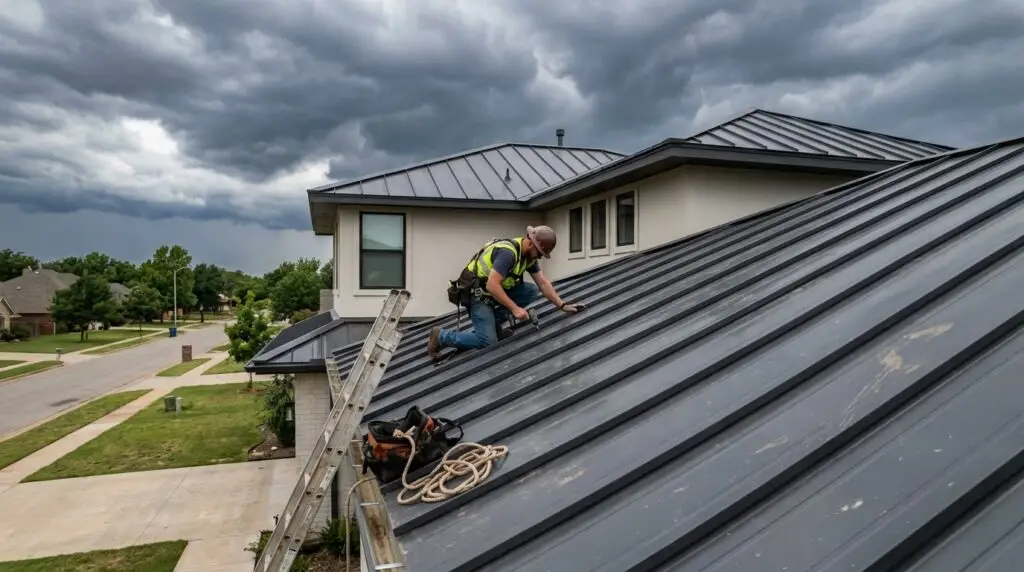
The inspector examines each panel for denting, surface coating wear, rust formation, and any areas where the protective finish has been compromised. They check panel seams particularly on standing seam systems for any shifting or separation that might allow moisture migration.
Fastener and Attachment Points
Over time, thermal expansion and contraction cycles cause metal panels to move. Fasteners can back out or loosen gradually. A trained inspector checks fastener tension across the entire system a detail that’s genuinely impossible to assess from the ground or a quick visual scan.
Flashing Integrity
The areas where your roof meets chimneys, vent pipes, skylights, and HVAC penetrations are sealed with flashing. These transition points are where leaks typically originate, even on metal roofs. Flashing sealant degrades over time, especially under Oklahoma’s UV intensity and temperature swings.
Gutter and Drainage Evaluation
Blocked gutters force water to back up along the roof edge, which creates conditions for moisture intrusion even on a well-installed metal system. The inspector will check that drainage paths are clear and functioning.
Attic Interior Check
In our experience, this is the step that separates a real inspection from a sales visit. A thorough inspection goes inside the attic to look for signs of moisture intrusion, condensation patterns, inadequate ventilation, and any structural concerns that aren’t visible from outside.
Written Report
You should always receive a written inspection report documenting findings, photos of any concerns, and specific recommendations. If an inspector can’t produce this, that’s a red flag.
Storm-Triggered Inspections: When to Call Before Your Annual Date
This is the section that most roofing articles handle in a single sentence. In Oklahoma, it deserves much more than that.
Hail Events: Cosmetic Damage vs. Functional Damage
Metal roofing handles hail better than almost any other material. The panels flex and absorb impact rather than cracking or losing protective granules the way asphalt shingles do. But that resilience comes with a hidden challenge: damage on a metal roof after a hailstorm often doesn’t look severe from the ground and yet the storm may have stressed fasteners, shifted seams, or created micro-fractures in protective coatings that will allow rust and moisture intrusion to develop over the following months.
A dented metal roof can still be watertight. But loosened fasteners and compromised coatings from that same storm may not show consequences for six to eighteen months. By then, you may be outside Oklahoma’s insurance claim window and that’s a painful and expensive position to be in.
Oklahoma law sets a firm deadline: wind and hail damage claims where the damage isn’t immediately visible without inspection must be filed within 24 months of the date of loss. Waiting until you see a ceiling stain often means you’ve already missed that window.
High-Wind Events
Straight-line winds in the 60–80 mph range are common in OKC severe weather events. These winds don’t dent panels they stress the attachment points. A fastener that was properly tensioned before a wind event may have backed out enough afterward to allow panel movement and eventual water infiltration. This is damage that only a professional inspection will catch.
After the Storm: What You Can Safely Check Yourself
Before calling a contractor, there are a few ground-level observations worth making:
- Check your gutters for unusual debris dislodged fasteners, granules (if you have a coated system), or grit suggest impact activity
- Look at neighboring homes if nearby asphalt shingle roofs show obvious hail damage, your metal roof was in the same storm and should be inspected
- Check inside your attic with a flashlight for any new moisture or light penetration
- Do not climb on the roof yourself metal panels become extremely slick when wet or after impact damage, and an untrained foot on a stressed panel can cause additional damage
How Roof Age Changes Your Inspection Schedule
A newer metal roof and a 20-year-old system have very different needs.
Years 1–5: Most quality metal roofing installations come with manufacturer warranties and installer workmanship warranties. During this period, your primary concern is verifying that the installation itself is holding up correctly proper fastener tension, no movement at seam points, no issues with flashing integration. Inspections every two to three years are generally adequate, though you should always review your specific warranty terms.
Years 5–15: This is the standard annual inspection window for most OKC homeowners. The system has settled, warranty periods vary, and the cumulative effect of Oklahoma’s storm seasons is worth tracking systematically each year.
Years 15 and beyond: Aging metal roofing systems become more susceptible to fastener fatigue, coating breakdown, and cumulative storm damage. Moving to twice-yearly inspections ideally in spring before storm season and in fall before winter temperature cycling gives you the visibility to make planned decisions rather than reactive ones.
Approaching end-of-life: Metal roofs are built to last 40–70 years depending on material and system type. When a professionally inspected roof is showing signs of widespread fastener fatigue, panel deformation across multiple sections, or coating failure that requires extensive re-coating, the conversation shifts from maintenance to replacement planning. A good inspector will be honest with you about where you stand not push you toward a decision you don’t need yet.
What Oklahoma’s Climate Does to Metal Roofing Between Inspections
Between storm events, Oklahoma’s climate is doing its own slow-motion work on your roof. Most homeowners don’t realize how much the day-to-day environment contributes to wear.
Thermal expansion and contraction are significant in Oklahoma City. Summer surface temperatures on a metal roof can reach well over 150°F on a clear day. Winter lows regularly drop below freezing. That range sometimes 100+ degrees of temperature swing across seasons causes metal panels to expand and contract constantly. Over time, this movement affects fastener integrity and sealant adhesion at flashing points.
UV degradation is accelerated in Oklahoma’s high-sun environment. Protective coatings on metal panels are designed to handle UV exposure, but they break down over time faster in intense sunlight. When a coating degrades, the underlying metal becomes vulnerable to oxidation. Annual inspections catch early-stage coating wear before it progresses to rust.
Humidity and freeze-thaw cycles create a different challenge in winter months. Moisture that infiltrates even minor seam gaps can freeze, expand, and incrementally widen those gaps over repeated cycles.
DIY Visual Checks vs. Professional Inspections
There are things homeowners can reasonably watch for between professional inspections. And there are things that only a trained contractor standing on the roof with calibrated eyes will catch. Understanding the difference saves you money and frustration.
What you can observe yourself:
- Water stains or discoloration on ceilings, particularly after rain
- Peeling paint near upper interior walls or at ceiling edges
- Musty or damp odors in the attic
- Visible debris accumulation in gutters after storms
What only a professional will find:
- Fastener back-out or improper tension across multiple panels
- Early-stage seam creep in standing seam systems
- Micro-fractures in protective coatings after hail impact
- Improper flashing integration or early sealant failure
- Structural movement in the decking below the metal system
Between you and me the roof problems that cost the most money are almost always the ones that weren’t visible from the ground for the first twelve to eighteen months they existed. An annual professional inspection is exactly how you avoid joining that club.
How Much Does a Metal Roof Inspection Cost in Oklahoma City?
Cost is one of the most-searched companion questions to roof inspection frequency, and most articles either skip it or give vague national figures that don’t mean anything locally.
In the OKC metro, professional metal roof inspection costs generally fall in a range from several hundred dollars for a straightforward residential inspection to more for complex systems, larger homes, or inspections requiring specialized equipment like moisture detection tools or drone assessment.
A few important cost distinctions:
Free inspections are commonly offered by roofing contractors in Oklahoma, particularly following storm events. These can be genuine value a contractor who knows metal roofing systems well can identify real concerns during a complimentary visit. However, approach free inspections with appropriate discernment. The difference between a legitimate free inspection and a sales call with a clipboard is whether the contractor provides a written, detailed finding report regardless of outcome including a clear finding that the roof is in good condition if that’s what the inspection reveals.
Insurance-covered inspections may apply after documented storm events. Check with your homeowner’s insurance provider before paying out-of-pocket for a post-storm inspection, as some policies cover professional assessment costs following a covered weather event.
Paid independent inspections from a certified roofing professional with no financial stake in the repair outcome offer the most objective perspective, particularly when you’re facing a significant repair or replacement decision.
Common Mistakes Oklahoma Homeowners Make With Metal Roof Maintenance
In our experience working on metal roofing systems across the Oklahoma City area, the same mistakes come up repeatedly.
Assuming metal means immune. Metal roofs are genuinely tough. But “tougher than asphalt” is not the same as “invincible.” Skipping inspections for years because the roof hasn’t leaked is how a manageable fastener issue becomes a panel replacement.
Waiting for a visible leak. By the time you see a water stain on your ceiling, moisture has typically been present in your roof system for weeks or months. The damage visible inside your home represents the end of a progression that started much earlier.
Missing the insurance claim window. This is a painful and very common mistake in Oklahoma. Hail damage that isn’t immediately obvious can go undetected through storm season and the 24-month claims window closes faster than most homeowners expect.
Using the wrong cleaning methods. Metal roofs don’t need frequent cleaning, but when they do need it, pressure washing at high PSI or abrasive scrubbing can damage protective coatings and accelerate corrosion. Use low-pressure rinsing and mild cleaning solutions appropriate for coated metal surfaces.
Hiring a general contractor instead of a metal roofing specialist. Metal panel systems particularly standing seam require specific knowledge of thermal movement, fastener systems, and seam integrity. A roofer who primarily works with asphalt shingles is not the right person to assess your metal system’s condition.
Scheduling Your Metal Roof Inspection in Oklahoma City: What to Look for in a Contractor
The best time to schedule your annual inspection in Oklahoma City is either in spring before the April–June peak storm season, or in fall after storm season wraps up and before winter temperature cycling begins. This timing maximizes the inspection’s value you either catch existing concerns before they’re tested by storm season, or you assess what storm season left behind.
When choosing a contractor, ask specifically:
- Do they specialize in metal roofing? General roofing experience is not the same as metal-specific expertise.
- Will they provide a written inspection report regardless of outcome including a clean bill of health if the roof is in good condition?
- Are they licensed and insured in Oklahoma? Verify this before anyone gets on your roof.
- Do they have experience with your specific panel system? Standing seam, corrugated, and exposed fastener systems each have different inspection considerations.
- What is their approach to insurance documentation? A qualified contractor should be able to provide the kind of professional report that supports an insurance claim if damage is found.
A contractor who only tells you your roof needs work without ever telling a client the roof is in good condition is not giving you an inspection. They’re giving you a sales pitch.
If you’re due for an inspection or a major storm has recently moved through your area, contact our metal roofing team in Oklahoma City for a professional assessment. We serve homeowners throughout the OKC metro, including Moore, Edmond, Yukon, Midwest City, Norman, and surrounding communities.
Frequently Asked Questions About Metal Roof Inspections
How often should a metal roof be inspected?
Most metal roofs in Oklahoma City should be inspected at least once a year. Homeowners with roofs older than 15 years should consider twice-yearly inspections. Additionally, any significant hail or high-wind event should trigger an immediate professional inspection, regardless of your regular schedule.
Do I need to inspect my metal roof after a hailstorm?
Yes especially in Oklahoma. Hail damage to metal roofing is not always visible from the ground, but it can compromise fasteners, seams, and protective coatings in ways that lead to leaks and rust months later. Oklahoma’s 24-month insurance claim deadline makes prompt inspection after storms particularly important.
What does a professional metal roof inspection include?
A thorough inspection covers panel surfaces, seam integrity, fastener tension, flashing at all roof penetrations, gutter condition, and an attic interior check for moisture or structural concerns. You should receive a written report documenting findings and photos.
How much does a metal roof inspection cost in Oklahoma City?
Costs vary based on roof size, system type, and whether the inspection is part of a service agreement. Many OKC contractors offer free post-storm inspections. Independent paid inspections typically run several hundred dollars for a residential system. Check whether your homeowner’s insurance covers inspection costs after a storm event.
Can I inspect my metal roof myself?
Homeowners can safely observe interior warning signs (ceiling stains, attic moisture) and ground-level indicators (gutter debris, visible panel damage) between professional inspections. However, a full inspection requires trained eyes on the roof surface and should always be performed by a qualified metal roofing contractor for safety and accuracy.
How long does a metal roof last without maintenance?
Metal roofs are built to last 40–70 years depending on the system type and gauge. However, even the most durable metal roof will underperform its potential lifespan without periodic inspection and maintenance particularly in high-storm environments like Oklahoma City where cumulative hail and wind exposure accelerates wear.
What is the best time of year to schedule a metal roof inspection in Oklahoma City?
Spring (before April–June storm season) and fall (after storm season, before winter) are the two optimal windows for OKC homeowners. Spring inspections allow you to address any existing concerns before severe weather tests them further. Fall inspections assess what storm season left behind and prepare your roof for winter temperature cycling.