If you’re facing a metal roof replacement in Oklahoma City, here’s what you need to know upfront: the process typically takes 2–5 days, involves tear-off of the old system, a full deck inspection, new underlayment, and metal panel installation followed by cleanup and a final walk-through. It’s a significant project, but when it’s done right, you’re looking at 40–50+ years of protection.
That said, metal roof replacement in Oklahoma City comes with a few extra layers of complexity that homeowners in other parts of the country simply don’t face. We’re sitting right in the middle of Tornado Alley. Spring hailstorms roll through Moore, Edmond, Yukon, Norman, and Midwest City on a near-annual basis. Straight-line winds, rapid temperature swings from winter to summer Oklahoma puts roofs through more punishment than almost anywhere else in the country.
This guide walks you through every stage of the replacement process, from the first inspection to what you should be watching for during the first rainstorm after installation. No fluff. No generic advice that applies everywhere and nowhere. Just what you actually need to know as an OKC homeowner.
Why Oklahoma City Homeowners Replace Metal Roofs Sooner Than Expected
Metal roofs are built to last there’s no question about that. Under ideal conditions, a properly installed metal roof can serve a home for 40 to 70 years. The problem is that Oklahoma City doesn’t offer ideal conditions. It offers hail seasons, tornado warnings, and temperature swings that can push a poorly installed or marginally maintained metal roof to its limits long before that timeline plays out.
Oklahoma’s Weather Is Relentless Even on Metal
The spring storm season in central Oklahoma runs hard from March through June. Neighborhoods in Moore, Edmond, and Yukon see more hail events per decade than most regions see in a lifetime. Straight-line winds regularly hit 70–90 mph. And then there’s the thermal cycling Oklahoma summers push surface temperatures on a dark metal roof well above 150°F, while winter nights can drop below freezing in a matter of hours. That expansion and contraction stresses every fastener, seam, and sealant point on the roof.
None of this means metal roofing is the wrong choice for OKC it’s actually one of the best choices precisely because it handles this punishment better than asphalt ever will. But it does mean that when replacement time comes, it’s often driven by a weather event, not just age.
Signs Your Metal Roof Has Reached Replacement Territory
Most homeowners don’t realize there’s a difference between a roof that needs repair and a roof that needs replacement. Here’s the distinction that matters:
- Widespread paint failure or coating deterioration past the 30-year Kynar/PVDF warranty window
- Fasteners backing out across large areas on an exposed-fastener (screw-down) panel system
- Rust spreading beyond spot-treatable areas, especially after protective coating failure
- Persistent leaks that return after multiple professional repairs
- Storm denting so severe that panel seams no longer seal correctly
- Structural deck rot discovered during inspection this is non-negotiable, full replacement required
If you’re seeing one or two of those issues, repair may still be viable. If you’re seeing three or more, replacement is almost always the more cost-effective long-term decision.
Getting Your Free Inspection What Happens Before Any Work Begins
The inspection phase is where legitimate roofing contractors separate themselves from the ones you want to avoid especially in OKC, where storm seasons bring out-of-state “storm chasers” who disappear six months after taking your money.
What a Legitimate OKC Roofing Inspection Actually Looks Like
A proper pre-replacement inspection isn’t a quick five-minute walk around the yard. A thorough contractor will get on the roof, check every flashing point around chimneys, pipe boots, HVAC penetrations, and skylights. They’ll look at the condition of the deck from the attic if accessible, check ventilation, and document storm damage with photos.
If a storm event is involved, that photo documentation becomes critical for your insurance claim. Any contractor who can’t show you photos of the damage before quoting you replacement should raise a red flag.
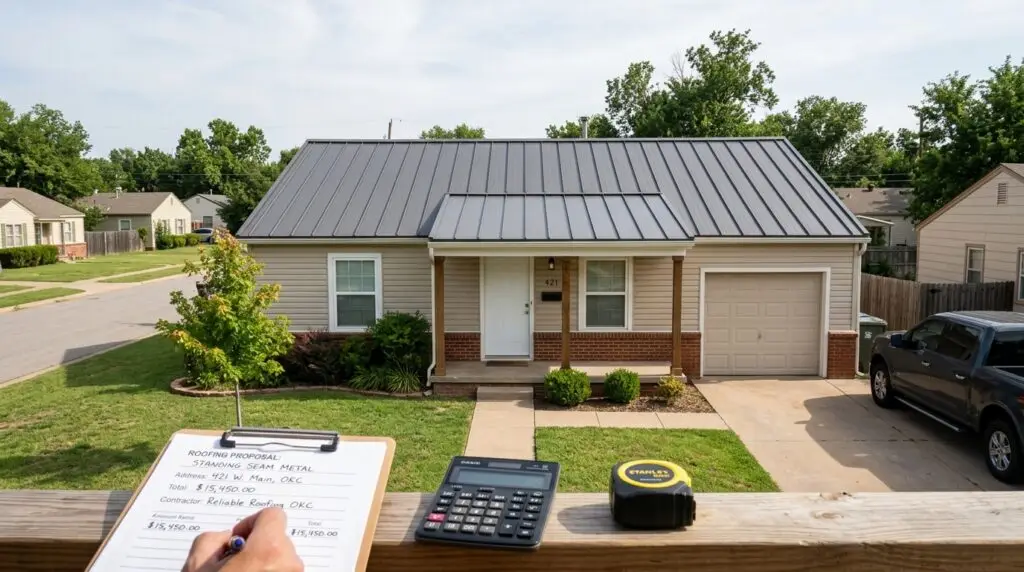
You should receive a written, line-item estimate. Not a ballpark. Not a number scrawled on a business card. A written breakdown covering: tear-off and disposal, deck repair (if needed), underlayment, panels, flashing, and cleanup.
OKC Permit Requirements New Rules in Effect
Here’s something most homeowners don’t know about until it becomes a problem: as of August 2025, Oklahoma City requires permits for any roofing work covering more than 500 square feet. And starting July 2026, all residential roofers in Oklahoma must hold a Residential Roofing Endorsement from the Oklahoma Construction Industries Board (CIB), which requires passing a state exam.
Ask your contractor directly: “Will you pull the permit?” A trustworthy contractor always handles this themselves. If anyone suggests you pull the permit in your own name, walk away. That arrangement transfers liability to you if something goes wrong.
Choosing Your New Metal Roofing System Decisions That Affect Everything Downstream
This is where a lot of homeowners get sold on the wrong thing. Not because contractors are always dishonest but because there are real differences in metal roofing systems that matter significantly in Oklahoma’s climate, and a one-size-fits-all recommendation doesn’t serve you well.
Standing Seam vs. Exposed Fastener: What’s Right for Your OKC Home?
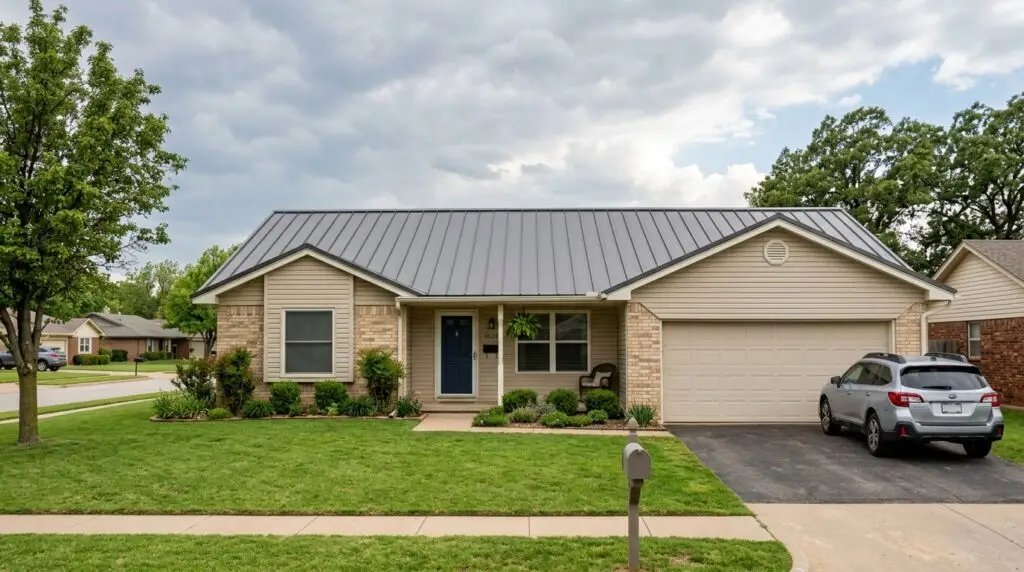
Standing seam metal roofing uses panels that lock together at concealed seams, with no fastener penetrating the face of the panel. This design allows the metal to expand and contract freely with Oklahoma’s temperature swings and that matters more here than in most states. It’s more expensive upfront, but for a primary residence in the OKC metro, it’s the right long-term investment.
Exposed fastener (screw-down) panels are attached with screws driven directly through the face of the metal. They cost less, but because the metal can’t move freely, thermal cycling causes the screw holes to elongate over time which creates leak pathways. In our experience, exposed fastener systems are well-suited for outbuildings, barns, and detached garages, but we generally don’t recommend them for heated living spaces in a climate like Oklahoma’s.
Panel Materials, Gauge, and Coatings The Details That Drive Longevity
Galvalume steel is the most common metal roofing substrate it’s corrosion-resistant, cost-effective, and widely available through quality manufacturers. Aluminum is lighter and naturally rust-resistant, which matters in humid climates.
Panel gauge is a critical spec to pay attention to. Thicker panels (24-gauge) offer meaningfully better hail resistance than thinner ones (26-gauge). Given OKC’s hail exposure, this is not an area to cut corners on. Similarly, PVDF/Kynar coatings hold color and resist chalking far longer than standard polyester finishes worth the modest price difference over a 40-year roof life.
Class 4 Impact Resistance An Oklahoma-Specific Consideration
UL 2218 Class 4 is the highest impact resistance rating available for roofing products. In Oklahoma, where significant hailstorms are a matter of when, not if, choosing a Class 4 rated metal panel is a decision that pays dividends. Many homeowner’s insurance carriers in Oklahoma offer premium discounts for Class 4 rated roofing materials always verify this with your insurer before finalizing your panel selection.
The Actual Replacement Process Day by Day, Step by Step
This is the part most homeowners want to understand before they commit. Here’s what actually happens once your project is scheduled and the crew arrives.
Day 1 Site Preparation and Property Protection
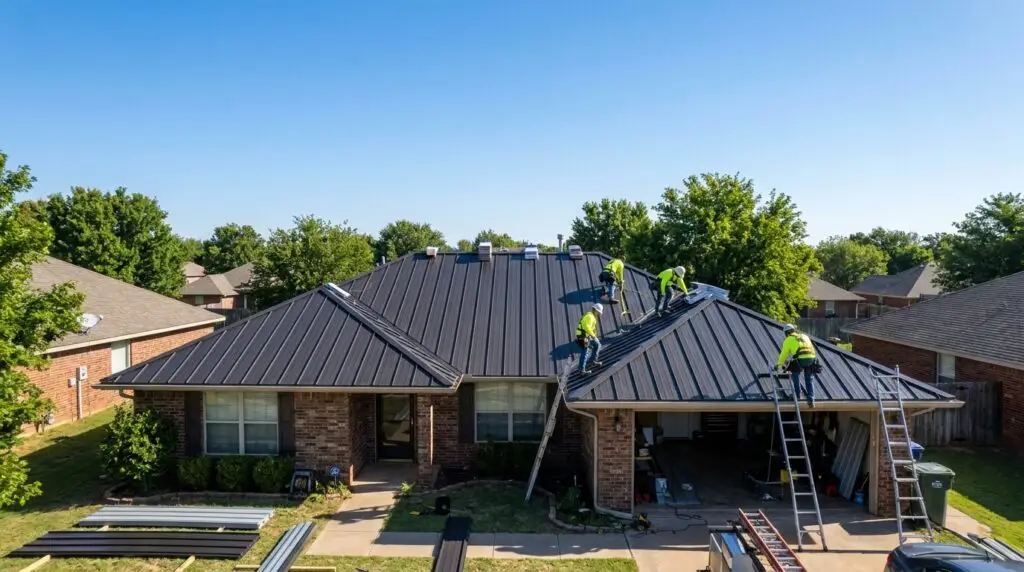
A professional crew arrives, stages ladders, and protects your property before a single panel is touched. This means plywood or tarps over landscaping and A/C units, protection for any vehicles in the driveway, and clear communication about where equipment will be staged.
Before work starts: move vehicles out of the driveway, bring in patio furniture or anything near the foundation, and secure pets indoors. Metal shavings and stray fasteners land on the ground during installation this isn’t theoretical, it’s just the nature of the work.
Tear-Off Removing the Old Roof System
Old metal panels are removed section by section, typically starting at the ridge and working down. Underlayment and any old felt paper come off with it. Once the deck is fully exposed, your contractor can see what they’re actually working with.
This is when hidden problems surface. Deck rot from a slow leak that went unnoticed. Soft sheathing from years of ice damming at the eaves. In Oklahoma City’s climate, moisture-related deck damage is more common than most homeowners expect particularly on roofs that handled years of spring rain and freeze-thaw cycling.
One practical note: ask your contractor how the old metal is handled. Quality metal panels are recyclable, and a responsible crew should have a plan for debris removal that doesn’t leave your driveway buried for three days.
Deck Repair and Underlayment Installation
Any damaged or rotted plywood or OSB sheathing gets replaced at this stage. The entire deck surface is inspected for nailing pattern integrity and re-fastened if needed. This is foundational work a metal roof is only as good as what’s underneath it.
High-quality synthetic underlayment is then applied across the entire deck surface as a secondary waterproofing barrier. In OKC specifically, ice-and-water shield should be installed in all valleys and around every penetration point. Oklahoma’s late-winter ice storms and the heavy rain that follows spring storm systems make this layer non-negotiable.
Slip sheets typically rosin paper go on top of the underlayment. Their job is to let the metal panels move freely without abrading the underlayment as they expand and contract.
Metal Panel and Flashing Installation
Panels go on according to the specific system’s installation specs. Standing seam runs vertically from eave to ridge, with each panel locking to the next. Trim pieces, drip edge, and rake flashings are installed at the perimeter. Then comes the detail work: flashing around every penetration chimneys, pipe boots, HVAC vents, skylights followed by the ridge cap as the final closure piece.
For a typical OKC home in the 1,800–2,800 square foot range, this stage takes 2–3 days on a standard pitch roof. Complex architectural features, steep pitches, or extensive penetrations add time. Weather delays happen crews won’t install metal panels in high wind or rain, both of which are real variables in Oklahoma’s spring and fall.
Final Walk-Through and Cleanup
Before signing anything, your contractor should walk the completed roof with you physically or via drone on steep-pitch applications. Every flashing point should be visible and verified. Gutters should be cleared of debris. Vents and any equipment that was temporarily moved should be confirmed reconnected.
Insist on a magnetic sweep of your yard, driveway, and foundation perimeter. Metal shavings left from panel cutting are a genuine hazard for bare feet, dog paws, and car tires. Any contractor worth hiring does this without being asked but it’s smart to confirm it happened.
How Long Does Metal Roof Replacement Take in Oklahoma City?
Most residential metal roof replacements in OKC take 2–5 days from first day of tear-off to final cleanup. Here’s what affects that timeline:
- Roof size and complexity: larger homes and multi-faceted designs take longer
- Deck damage discovered during tear-off: unexpected rot adds 1–2 days
- Weather delays: wind and rain windows in spring and fall are real scheduling factors in Oklahoma
- Permit approval time: allow 2–5 business days before work begins if permit is required
Between you and me, the best time of year to schedule a replacement in Oklahoma is late September through October. Storm season has typically passed, temperatures are moderate for installation, and contractors aren’t buried under storm claim backlog. Spring (March–early April) is a viable second window if you can beat the hail season. Summer heat and winter ice are both harder on crews and can affect installation quality.
What Does Metal Roof Replacement Cost in Oklahoma City?
It depends on several factors, but here’s a grounded picture of what OKC homeowners are actually paying.
OKC Metal Roofing Cost Ranges (2025–2026)
Metal roofing installed in Oklahoma City generally runs $6–$15 per square foot, depending on the system:
- Exposed fastener panels: lower end of the range
- Standing seam systems: mid-to-upper end of the range
- Tear-off and disposal: typically $1,000–$2,500 added to the project
For a typical OKC home in the 1,800–2,800 square foot range, total project cost generally falls between $10,000 and $30,000+, depending on system selection, deck condition, and roof complexity. Oklahoma labor costs run somewhat below national averages, which partially offsets the premium on quality metal materials.
What Moves Your Price Up or Down
- Roof pitch and accessibility: steep roofs require additional safety equipment and time
- Number of penetrations: each chimney, skylight, and vent adds flashing labor
- Deck damage: discovered mid-project, can’t be fully anticipated upfront
- Panel gauge and coating quality: 24-gauge Kynar-coated panels cost more; they’re worth it here
- Timing: post-storm demand spikes can temporarily push labor rates higher in the OKC market
Navigating Insurance Claims After Oklahoma Storms
Storm-related roof claims in Oklahoma City are among the highest per capita in the country that’s not an exaggeration; it reflects the reality of being in Tornado Alley. If your metal roof replacement is storm-triggered, you may have a legitimate insurance claim that covers a significant portion of the cost.
Document damage with photos immediately after any significant hail or wind event. File promptly insurers have claim windows, and damage worsens with time. Work with a contractor who has real experience coordinating with adjusters in Oklahoma, not just one who showed up after the storm with a flyer on your door.
Two things to understand about Oklahoma insurance claims: whether your policy pays Actual Cash Value (ACV) or Replacement Cost Value (RCV) matters significantly. ACV depreciates the payment based on your roof’s age; RCV pays closer to the actual replacement cost. Know which you have.
What to Do (and Not Do) While the Crew Is Working
Most guides skip this entirely. But installation day creates real decisions and real hazards. Here’s how to handle it well.
- Do: Stay available by phone. If unexpected deck damage appears, your contractor needs a quick decision on how to proceed
- Do: Keep pets indoors for the full duration. Metal scraps and fasteners on the ground are a genuine injury risk
- Do: Confirm the magnetic sweep happens at end-of-day, especially if children use the yard
- Don’t: Park vehicles under the active work zone falling fasteners and debris scratch paint
- Don’t: Expect quiet. Metal panel installation is loud. Plan your workday accordingly
- Don’t: Sign the completion paperwork until you’ve personally confirmed that every penetration is flashed, gutters are cleared, and vents are reconnected
- Don’t: Pay the final balance until your warranty documents both manufacturer and workmanship are in your hands in writing
What Your New Metal Roof Warranty Should Cover
Warranties are where a lot of homeowners find out the hard way that they didn’t ask enough questions upfront. There are two distinct warranties on every metal roof installation, and you need both.
The Two Warranties to Ask About Before Signing Anything
The manufacturer’s material warranty covers the panels themselves coating integrity, structural performance, and paint finish. Quality products carry a 30-year Kynar/PVDF paint warranty as standard, with structural warranties typically running 40–50 years.
The contractor’s workmanship warranty covers the installation itself how the panels were fastened, how the flashings were sealed, how the penetrations were treated. This is where the quality of the contractor shows up. A reputable OKC metal roofing contractor should offer a workmanship warranty of at least 10 years; anything under 5 years is a red flag worth taking seriously.
What Voids a Metal Roof Warranty
- Walking on panels incorrectly metal roofs aren’t all built to be foot-trafficked
- Attaching satellite dishes, solar mounts, or other equipment without proper flashing and sealant
- Pressure washing at high pressure, which strips coatings
- Allowing standing water or gutter overflow to back up against the roof edge consistently
The First Year After Installation What to Watch For
A new metal roof should be nearly maintenance-free out of the gate. But your first year is when you’ll learn how well the installation was done.
After the first significant rain, walk your attic and check every ceiling. Any moisture intrusion in the first few months points directly to an installation issue, not a material failure call your contractor immediately. That’s what the workmanship warranty is for.
After your first OKC hailstorm, do a perimeter walk. Check for displaced ridge cap sections, any panels that have come unseated at the eave, and look for anything that looks off at the flashing points. Light surface denting from small hail on a 24-gauge panel is normal and doesn’t affect performance. Significant denting that displaces seams is worth a professional inspection.
One thing to confirm with your crew at completion: were all metal shavings from panel cutting removed from the roof surface? Leftover shavings hold moisture against the Galvalume coating and will rust in place. It’s a small thing that gets missed on rushed jobs and causes cosmetic and early corrosion issues within a year.
Energy efficiency is one benefit you’ll likely notice during your first Oklahoma summer metal roofs reflect radiant heat rather than absorbing it, which reduces cooling load. Plan your annual inspection for late fall: check fasteners, examine flashings, and clear gutters before winter sets in.
Common Mistakes OKC Homeowners Make During Metal Roof Replacement
These come up repeatedly. Avoid them and you’ll avoid a lot of expensive regret.
- Choosing a contractor based on the lowest bid alone. In OKC’s post-storm environment, low bids often mean thin warranties, thinner panels, and contractors who won’t be around for a callback
- Not verifying permit responsibility. Required in OKC for work over 500 sq ft as of August 2025. Your contractor pulls it not you
- Skipping the deck repair conversation upfront. Ask your contractor how mid-project deck damage is handled and what it typically adds to the cost. Surprises hurt more than honest estimates
- Choosing panel gauge on price alone. In a hail state, 24-gauge is not a luxury it’s appropriate risk management
- Signing off before warranty documents are in hand. Once the crew leaves, getting documentation becomes progressively harder
- Delaying an insurance claim after storm damage. Oklahoma insurers have claim windows. Document and file promptly don’t wait until the next inspection to discover storm damage that happened months ago
Frequently Asked Questions About Metal Roof Replacement in Oklahoma City
How long does metal roof replacement take in Oklahoma City?
Most residential metal roof replacements in OKC take 2–5 days from tear-off to cleanup. Larger homes, complex roof designs, and unexpected deck damage can extend that timeline. Fall scheduling (September–October) typically offers the fewest weather delays.
How much does metal roof replacement cost in Oklahoma City?
Installed metal roofing in OKC generally runs $6–$15 per square foot depending on system type. For a typical 1,800–2,800 sq ft home, expect total project costs in the range of $10,000–$30,000+. Get at least three written, line-item estimates.
Do I need a permit for metal roof replacement in Oklahoma City?
Yes. As of August 2025, Oklahoma City requires permits for any roofing work over 500 square feet. Your contractor should handle the permit application never let a roofer ask you to pull it in your own name.
Should I replace my metal roof after an OKC hailstorm?
Not automatically some hail damage is repairable. But if panel seams are compromised, large surface areas are dented, or the coating is destroyed across multiple sections, replacement is often more cost-effective than ongoing repairs. A professional inspection immediately after a major storm is the right first step.
What is the best time of year to replace a metal roof in Oklahoma?
Late September through October is considered the best window in Oklahoma mild temperatures, lower humidity, and past the peak spring-summer storm season. Early spring (March–April) is a viable second option if you can schedule before hail season ramps up.
Will my homeowner’s insurance cover metal roof replacement in Oklahoma?
If the replacement is due to a covered storm event hail, wind, tornado damage most homeowner’s insurance policies will contribute. Coverage depends on your policy type (ACV vs. RCV), your deductible, and the adjuster’s damage assessment. Work with a contractor experienced in Oklahoma storm claim coordination.
How do I find a trustworthy metal roofing contractor in Oklahoma City?
Look for contractors who: hold current Oklahoma licensing (CIB Residential Roofing Endorsement required from July 2026), pull permits themselves, provide written workmanship and manufacturer warranties, have verifiable OKC-area references, and are not newly arrived storm chasers from out of state.