If you’ve been researching metal roofing in Oklahoma City, you’ve probably run into a wall of conflicting information. One article says metal roofs are deafening in the rain. Another swears they’ll pull lightning right out of the sky. A neighbor tells you hail will turn your new roof into a golf ball. Someone else insists metal roofing costs more than it’s worth.
Here’s the thing, most of what gets repeated about metal roofing was true decades ago, or was never true at all. It just keeps getting passed around because nobody stops to check it against how modern metal roofing systems actually perform, especially in a climate like ours.
Oklahoma City isn’t a gentle testing ground for roofing materials. We get hailstorms that can total a roof in fifteen minutes, straight-line winds that rip off shingles like they’re paper, and summers that push attic temperatures well past what most roofing materials were designed to handle comfortably. If a roofing myth is going to fall apart anywhere, it’s going to fall apart here.
This article walks through the metal roofing myths we hear most often from Oklahoma City homeowners, compares metal roofing honestly against other materials, and gives you a straightforward way to decide whether it’s the right call for your home.
Why Metal Roofing Myths Persist in Oklahoma
Most metal roofing myths trace back to one thing: old memories of tin barns, farm outbuildings, and warehouse roofs. Those structures were often built with thin, uninsulated metal panels fastened directly to open framing, no decking, no underlayment, no insulation. Of course they were loud. Of course they dented easily. That’s a completely different product from what’s installed on residential homes today.
Modern metal roofing is engineered, layered, and tested the way any other roofing system is. In our experience, once homeowners understand that distinction, most of their hesitation clears up fast. The problem is that a lot of online content, especially from companies based in mild-weather regions, doesn’t address what actually matters here: hail frequency, wind exposure, and triple-digit summer heat. Oklahoma homeowners need answers built around Oklahoma conditions, not a generic national take.
Let’s get into the myths.
Myth #1 — “Metal Roofs Are Too Loud in Storms”
This is probably the most common concern we hear, and it’s an understandable one if your only reference point is a metal-roofed barn.
Here’s what’s actually happening on a residential metal roof: the panels sit on solid decking, over underlayment, with attic insulation directly beneath. That combination absorbs and dampens sound significantly. Rain and hail noise on a properly installed metal roof is generally comparable to what you’d hear with asphalt shingles, not identical in every case, since sound perception varies by attic insulation depth, panel type, and roof pitch, but it’s nowhere close to the open-barn sound people picture.
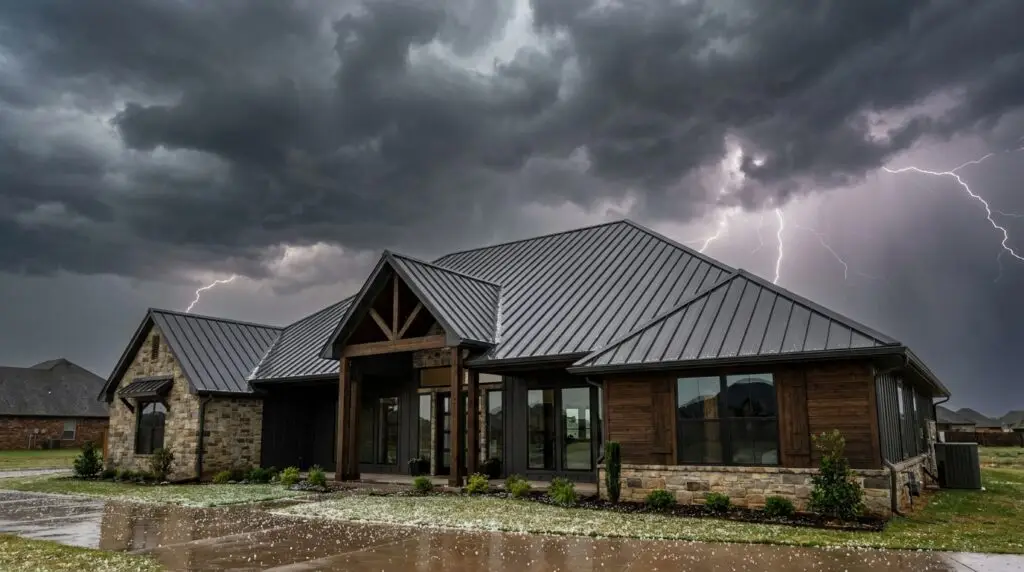
During an Oklahoma hailstorm, you’re going to hear something hitting your roof no matter what material is up there. The difference with metal is that it’s taking that impact without the granule loss and surface damage asphalt shingles experience.
Myth #2 — “Metal Roofs Attract Lightning”
This myth comes from a basic misunderstanding of how lightning works. Lightning doesn’t seek out metal, it seeks out the highest, most exposed point in an area, regardless of what that point is made of. A metal roof on a single-story home surrounded by taller trees or structures isn’t more likely to get struck than a shingle roof in the same spot.
If lightning does strike a home with a metal roof, the material’s conductivity is actually an advantage. Metal is non-combustible and can help disperse electrical energy rather than igniting, which is a real safety consideration during Oklahoma’s spring and summer thunderstorm season, when lightning activity picks up right alongside our severe weather risk.
Myth #3 — “Hail Will Destroy a Metal Roof”
This is the myth that matters most if you live anywhere in the Oklahoma City metro, because hail isn’t a hypothetical here, it’s a near-annual reality.
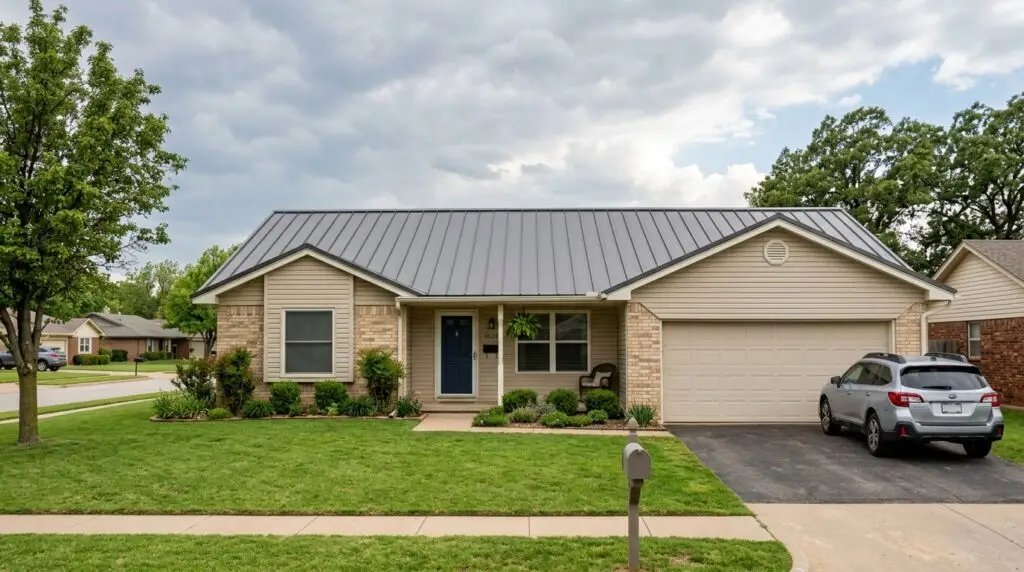
Metal roofing panels are rated using impact resistance classifications, with Class 4 being the highest rating available. Panels with this rating are tested against repeated impacts and are built to resist the kind of hail sizes that would crack, bruise, or strip granules off an asphalt shingle roof. That doesn’t mean a metal roof is indestructible, a large enough hailstone at the right angle can still leave a cosmetic dent. But here’s the distinction that matters: cosmetic denting is not the same as functional failure. A dented panel can still shed water and protect your home exactly the way it’s supposed to.
Between you and me, this is where we see the most confusion during insurance conversations. Homeowners sometimes expect a hail-impacted metal roof to look “brand new” after a storm, and when it doesn’t, they assume something went wrong. In most cases, nothing did, the roof is doing its job, it just shows evidence of the storm.
It’s also worth knowing that some insurance carriers in hail-prone areas, including parts of Oklahoma, offer premium discounts for impact-resistant roofing materials. Coverage details and discount availability vary by carrier and policy, so it’s worth asking your insurance provider directly what applies to your home. If you’re dealing with recent storm impact and aren’t sure whether repair or replacement makes sense, a professional storm damage inspection is the fastest way to get a clear answer.
Myth #4 — “Metal Roofing Costs Too Much to Be Worth It”
It’s true that metal roofing typically carries a higher upfront cost than asphalt shingles. We’re not going to pretend otherwise, that’s a legitimate factor in the decision, and it depends on several factors, including panel type, roof size and pitch, and existing roof condition.
But sticker price only tells part of the story. Asphalt shingle roofs in Oklahoma typically need replacement every couple of decades, sometimes sooner given our storm exposure. Metal roofing systems are built for a much longer service life, often lasting multiple decades longer than asphalt with proper installation and maintenance. When you spread the cost out over the roof’s actual lifespan instead of looking at day-one pricing, the gap narrows considerably, and in many cases, metal comes out ahead.
Local labor and permitting requirements also factor into final project cost, and those can vary depending on your specific municipality within the OKC metro. Getting a detailed, itemized quote from a qualified metal roof installation team is the only reliable way to know what your specific project will actually cost, generic national price ranges rarely account for local labor rates or your home’s specific roof structure.
Myth #5 — “Metal Roofs Make Homes Hotter”
This one seems logical on the surface, metal gets hot to the touch, so it must make your attic hotter, right? In practice, it works the opposite way for most modern systems.
Metal roofing reflects a significant portion of solar radiant heat rather than absorbing and holding it the way asphalt shingles do. Combine that with proper attic ventilation, which matters regardless of roofing material, and metal roofing can actually help reduce heat transfer into your living space during Oklahoma’s brutal summer stretch. Most homeowners don’t realize that the color and finish of the panel also plays a role here; lighter, reflective finishes generally perform better against heat gain than darker ones.
If keeping cooling costs down is a priority for you, it’s worth discussing ventilation setup and finish options with your installer rather than assuming any metal roof will automatically deliver the same results.
Myth #6 — “All Metal Roofs Are Basically the Same”
This is probably the least talked-about myth, and it’s a big one, because the type of metal panel you choose matters just as much as the material itself.
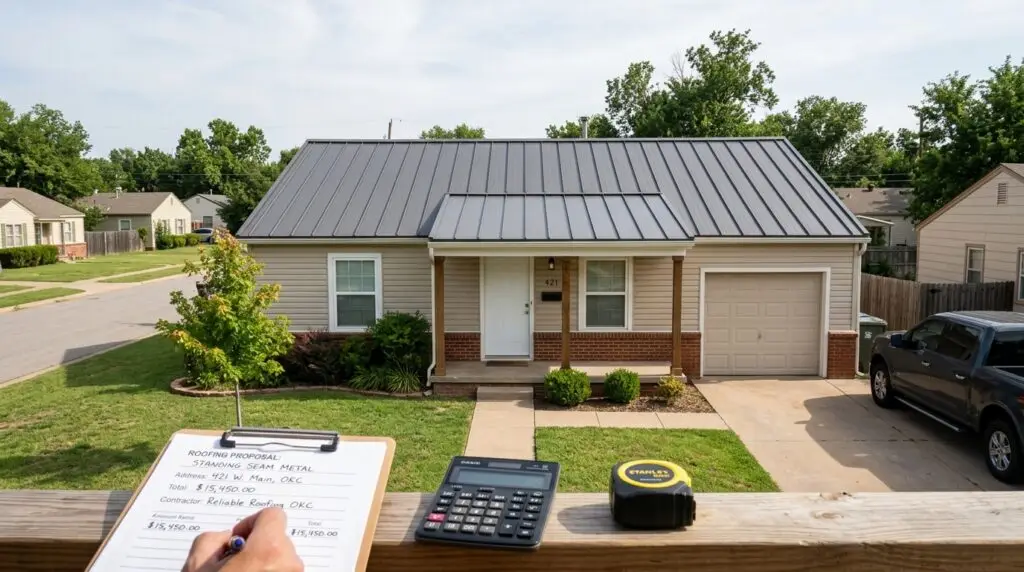
- Standing seam panels feature raised, interlocking seams with no exposed fasteners. They’re a strong choice for wind resistance and long-term weathertightness, which matters given Oklahoma’s exposure to straight-line winds and severe thunderstorm gusts.
- Corrugated or exposed-fastener panels are generally more budget-friendly but rely on fasteners that can loosen over time and may need periodic maintenance.
- Stone-coated steel panels combine a steel base with a textured, granular coating, giving a look closer to traditional shingles or tile while retaining metal’s durability.
- Metal shingles mimic the appearance of asphalt shingles or slate while offering metal’s performance advantages, a good option for homeowners who want the aesthetic of a traditional roof with better storm performance.
In our experience, the right choice depends on your priorities, wind performance, budget, aesthetics, or a blend of all three. A qualified installer should walk you through these options based on your home’s structure and your neighborhood’s typical exposure, not just sell you whatever’s easiest to install.
Metal Roofing vs. Other Roofing Materials — A Side-by-Side Comparison
| Factor | Metal Roofing | Asphalt Shingles | Tile | Stone-Coated Steel |
|---|---|---|---|---|
| Typical Lifespan | 40–70 years | 15–25 years | 40–60+ years | 40–70 years |
| Wind Performance | Strong, especially standing seam | Moderate; vulnerable to uplift in high winds | Strong but brittle under impact | Strong |
| Hail Performance | Very good with Class 4-rated panels | Prone to granule loss and cracking | Prone to cracking/breaking | Very good |
| Upfront Cost | Higher | Lower | Higher | Higher |
| Maintenance | Low | Moderate | Moderate | Low |
| Roof Weight | Lightweight | Moderate | Heavy | Moderate |
Metal vs. Asphalt Shingles — The Most Common OKC Decision
This is the comparison we field the most. Asphalt shingles remain the lower-cost option upfront, and for homeowners planning a short-term stay, that can make sense. But asphalt shingles in Oklahoma tend to show wear faster than in milder climates, given our hail frequency and UV exposure. Metal roofing costs more initially but generally requires far fewer full replacements over the life of your home.
Metal vs. Tile — A Structural Consideration for Older OKC Homes
Tile roofing offers a similar long lifespan to metal, but it’s significantly heavier. That matters for older Oklahoma City homes that weren’t necessarily framed with heavy roofing materials in mind. Metal roofing delivers comparable durability at a fraction of the weight, which can simplify installation and reduce structural concerns on older properties.
How Oklahoma Weather Actually Tests These Myths
Oklahoma City sits in an area that experiences a genuine mix of severe weather threats, and that’s exactly why generic roofing advice falls short here.
Wind exposure is a year-round concern, not just a spring storm season issue. Straight-line winds associated with severe thunderstorms can generate gusts strong enough to lift poorly fastened shingles or damage improperly installed roofing systems of any material. Panel type and installation quality matter enormously here, a well-installed standing seam metal roof is built to resist wind uplift far better than a roof with loose or aging shingles.
Hail is close to an annual event somewhere in the metro. Stone sizes vary widely from storm to storm, from pea-sized hail that causes minimal damage to larger hail capable of significant impact damage to any roofing material. This is precisely why impact resistance ratings matter so much for homeowners here, it’s not a marketing detail, it’s a practical consideration tied directly to your local risk.
Freeze-thaw cycles, while less dramatic than hail or wind, still play a role. Oklahoma’s winters swing between freezing temperatures and warmer spells, and that expansion-and-contraction cycle can be tough on roofing materials over time. Metal roofing generally handles these temperature swings well due to its material properties and installation method.
What Homeowners Actually Ask Before Choosing Metal Roofing
After enough conversations with Oklahoma City homeowners, a few patterns show up consistently.
Common mistakes we see when comparing bids: Homeowners often compare quotes based on total price alone without checking whether they’re comparing the same panel gauge, coating type, and warranty terms. A lower bid using thinner-gauge panels or a lesser coating isn’t actually a better deal, it’s a different product entirely.
Questions worth asking any contractor: What panel gauge are you quoting? What coating or finish system is included, and what’s it rated to resist? What does the warranty actually cover, materials only, or workmanship too? How is the roof fastened, and what’s the wind rating for that installation method?
Red flags to watch for: Be cautious of contractors who show up uninvited after a storm, pressure you into same-day signing, or can’t clearly explain the difference between panel types. Legitimate, established local roofers should be able to walk you through your options without rushing the decision. If you’re ever unsure whether storm damage justifies a repair or a full replacement, a professional inspection is worth the time before committing to either path.
Is Metal Roofing Right for Your Home? A Decision Framework
There’s no single right answer for every homeowner, it genuinely depends on your situation. That said, a few signals tend to point toward metal roofing being a strong fit:
- Your current roof is aging and you’re planning to stay in your home long-term
- You’ve experienced repeated hail or wind damage with a previous asphalt roof
- You’re looking to reduce long-term maintenance and replacement frequency
- Your homeowners insurance offers incentives for impact-resistant roofing materials
- You want a roofing material suited to Oklahoma’s combination of hail, wind, and heat exposure
On the other hand, if your budget is tightly constrained, you’re planning a short-term stay in the home, or your roof structure has specific limitations, another material might make more practical sense for your situation. Being honest about that upfront leads to a better long-term decision than forcing a fit that doesn’t work for your circumstances.
If you’re weighing your options, a roof inspection is the most reliable starting point, it gives you an accurate picture of your current roof’s condition before you decide what comes next.
Frequently Asked Questions
Do metal roofs really attract lightning?
No. Lightning strikes the highest or most exposed point in an area regardless of roofing material. A metal roof does not increase your risk of a lightning strike.
How loud is a metal roof during a hailstorm?
With proper decking, underlayment, and insulation, a residential metal roof’s noise level is generally comparable to asphalt shingles during rain or hail, though it can vary based on attic insulation and panel type.
Will hail dent a metal roof in Oklahoma?
It’s possible with large enough hail, but cosmetic denting doesn’t typically affect the roof’s ability to protect your home. Panels with a Class 4 impact resistance rating are built to withstand significant impact.
How much does a metal roof cost compared to asphalt shingles in Oklahoma City?
Metal roofing generally has a higher upfront cost than asphalt shingles, but its longer lifespan often makes it more cost-effective over time. Actual pricing depends on panel type, roof size, and installation factors, so a personalized quote is the most accurate way to compare.
Do metal roofs lower home insurance premiums in Oklahoma?
Some insurance carriers offer discounts for impact-resistant roofing materials, but this varies by provider and policy. Check directly with your insurance company to see what applies to your home.
How long does a metal roof last in Oklahoma’s climate?
Metal roofing typically lasts several decades longer than asphalt shingles, with many systems rated for 40 to 70 years depending on the material and installation quality.
Can a metal roof be installed over an existing shingle roof?
In some cases, yes, depending on your current roof’s condition and local building codes. A professional inspection can determine whether your home is a candidate for this approach.