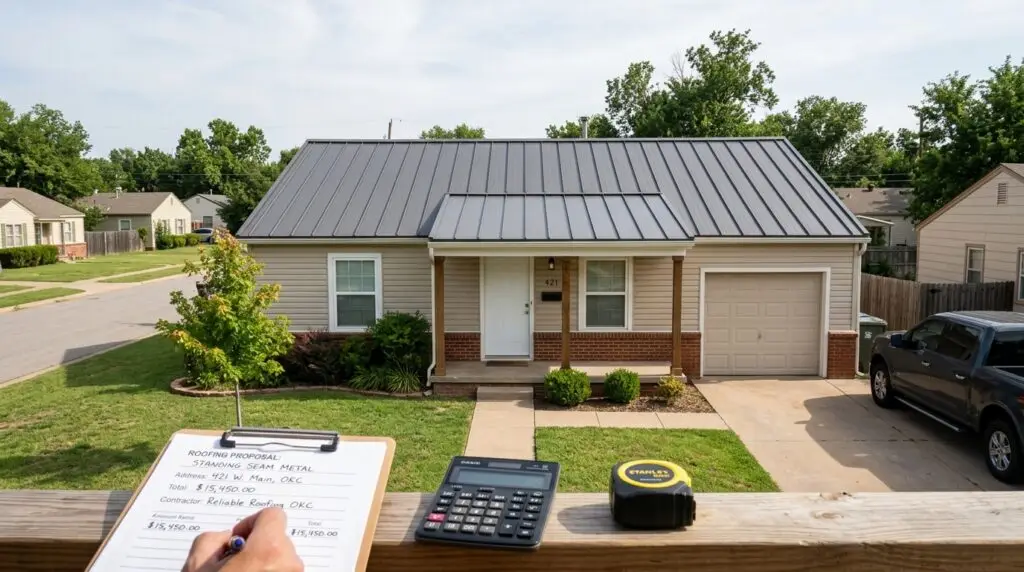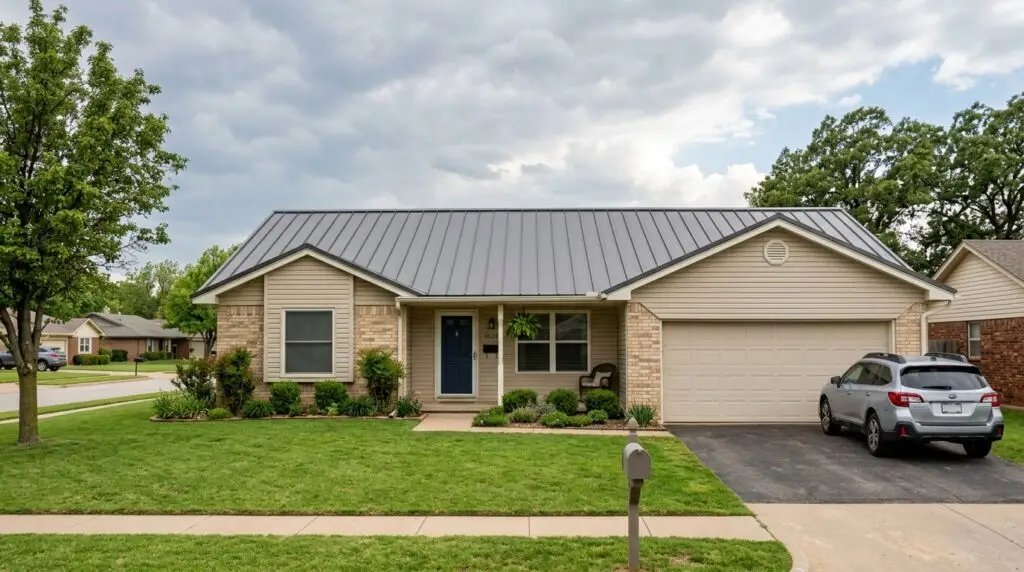
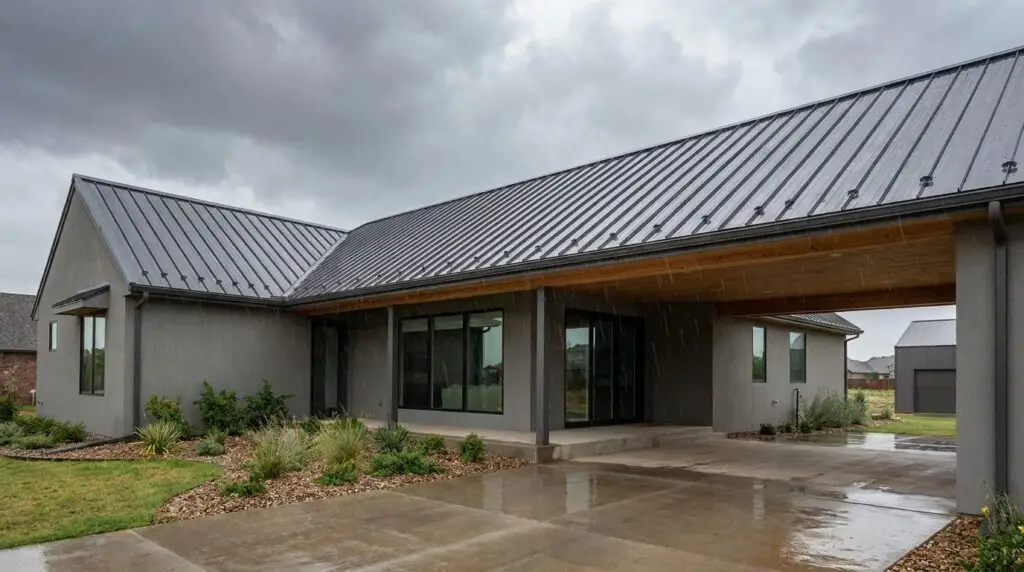
If you’ve been shopping for a new roof in Oklahoma City, you’ve probably asked yourself this question at least once: are metal roofs loud during rain? It’s one of the first things homeowners bring up when we’re out giving estimates, and honestly, it’s a fair question to ask before you spend that kind of money.
Here’s the short answer: no, a properly installed metal roof is not meaningfully louder than an asphalt shingle roof during rain. The noise you’re picturing, that hollow, drumming racket, comes from a specific type of installation, not from metal roofing as a material. Once you understand what actually controls roof noise, the “loud tin roof” fear mostly disappears.
Let’s break down why, and what it actually takes to keep a metal roof quiet on an Oklahoma home.
Where the “Loud Tin Roof” Myth Actually Comes From
Most homeowners don’t realize this fear isn’t really about metal roofing at all. It’s about barns.
Barns, Sheds, and Open-Frame Buildings vs. Modern Homes
For decades, metal roofing was mostly used on agricultural buildings, barns, equipment sheds, pole buildings. Those structures had metal panels screwed directly onto open framing, with nothing underneath. No plywood decking. No underlayment. No insulation. Rain hitting that setup sounds like a snare drum, because the panel is basically acting like one.
If you grew up near a farm or spent time in a metal-roofed shed during a storm, that memory sticks. It’s loud, it’s sudden, and it’s genuinely unpleasant. The problem is that experience has almost nothing to do with how a modern residential metal roof performs.
Why This Myth Persists in Oklahoma Specifically
Between you and me, this comes up more here than in a lot of other markets. Oklahoma City sits in a region where barns, outbuildings, and pole structures are still a normal part of daily life, Edmond, Norman, Yukon, and the rural stretches around the metro all have plenty of them. So when someone hears “metal roof,” their brain jumps straight to that sound. It’s a completely reasonable association. It’s just outdated once you’re talking about a real residential roofing system.
What Actually Determines Roof Noise (The Real Science)
Here’s the thing, roof noise isn’t really about the roofing material on top. It’s about everything underneath it.
Roof Decking
Solid decking, usually plywood or OSB, is the single biggest factor separating a quiet metal roof from a loud one. When metal panels are fastened to a solid deck instead of open framing, the deck absorbs the impact energy from raindrops before it can resonate through the panel. Think of the difference between tapping a table and tapping a drum, same motion, completely different sound, because one has a solid surface behind it and the other doesn’t.
Every residential metal roof we install goes over solid decking. Open-frame installations simply aren’t how homes are built anymore.
Underlayment
Underneath the metal panels sits a layer of underlayment, synthetic felt or a rubberized asphalt membrane, depending on the system. This layer does double duty: it’s a waterproofing barrier, and it’s also a buffer that separates the metal from the deck. That separation matters for sound. It keeps the panel from transferring vibration directly into the wood below.
Attic Insulation
This is the part most homeowners don’t realize is doing most of the actual work. Attic insulation is often the single biggest factor in how much exterior sound reaches your living space, and that’s true whether you have metal, shingles, or tile on top. A well-insulated attic muffles rain noise, traffic noise, and just about everything else. A thin or poorly insulated attic will let more sound through no matter what roofing material sits above it.
If you’re worried about roof noise, checking your attic insulation is honestly just as important as picking the right panel.
Panel Type: Standing Seam vs. Exposed Fastener vs. Stone-Coated
Not all metal roofing is built the same way, and panel type does affect sound to some degree. Standing seam panels use hidden fasteners and interlocking seams, which creates a tighter, more rigid system with fewer loose points for vibration. Exposed fastener panels are more budget-friendly but have more surface contact points, which can allow slightly more sound transfer if the installation isn’t dialed in. Stone-coated steel panels add a textured, granulated surface that helps absorb impact sound rather than reflecting it.
It depends on several factors which option makes sense for your home, budget, roof pitch, and the look you’re going for all play into it.
Metal Roof Noise vs. Asphalt Shingles: A Real Comparison
This is where a lot of the online debate gets murky, because sources disagree on exact numbers. What we can tell you with confidence, from working on roofs across the metro: when a metal roof is installed correctly, solid decking, proper underlayment, adequate attic insulation, the difference in rain noise between metal and asphalt shingles is small enough that most people inside the home can’t reliably tell the difference.
When metal can genuinely be noisier:
- Installed over open framing (barns, carports, detached structures)
- Thin-gauge panels without adequate underlayment
- Poor fastening that allows panel movement or rattling in wind
- Minimal or aging attic insulation
When metal performs essentially the same as shingles:
- Solid plywood or OSB decking
- Proper synthetic or rubberized underlayment
- Adequate attic insulation
- Correctly fastened standing seam or quality exposed fastener panels
So does that mean metal is louder than shingles? Not in any way that matters for a properly built residential roof. The gap that exists on paper mostly closes once you’re talking about real construction, not a barn.
Rain Noise vs. Hail Noise — Two Very Different Sounds
Most of the general articles on this topic lump rain and hail together, and that’s a mistake, especially here in Oklahoma, where hail is the thing people actually worry about.
What Rain Actually Sounds Like on a Modern Metal Roof
On a properly built residential system, rain sounds like a soft, steady patter, closer to what you’d hear on any roof during a rainstorm. Plenty of our customers tell us they find it soothing rather than disruptive once they’ve lived under one for a season.
What Hail Sounds Like — and Why Oklahoma Homeowners Ask This More Than Anyone
Hail is a completely different animal from rain, acoustically speaking. It’s an impact sound, not a patter, sharper, more percussive, and louder in the moment. That’s true on any roofing material, though. Asphalt shingles, tile, and metal all get louder during hail; it’s the nature of the event, not something unique to metal roofing. Larger hailstones will always be audible indoors regardless of what’s on your roof. What changes with a properly installed metal system is that the same decking, underlayment, and insulation that quiet rain noise also take some edge off hail impact.
Oklahoma Weather and What It Means for Your Roof’s Sound
Severe Storm Season, Wind-Driven Rain, and Hail Frequency in Central Oklahoma
Central Oklahoma sits squarely in an active severe weather corridor. Spring and early summer bring the region’s heaviest thunderstorm activity, and with that comes wind-driven rain and hail risk that homeowners in a lot of other states simply don’t have to think about. If you’re weighing roofing materials in the OKC metro, storm resilience and noise both deserve a seat at the table, and the good news is that metal roofing tends to perform well on the durability side while remaining manageable on the noise side, when it’s installed right.
One-Story Ranch Homes vs. Two-Story Homes: Does It Matter?
Yes, somewhat. On a two-story home, upstairs bedrooms sit closer to the roofline, so there’s less structure and insulation between you and the sound source. Single-story ranch homes, common throughout OKC’s older neighborhoods, often have more attic space and insulation buffering the living area below. If your bedroom is directly under a low-pitched roof section, it’s worth asking your contractor about extra insulation in that specific area.
Older OKC Homes (Original Decking/Insulation) vs. New Construction
Here’s something we run into constantly: older Oklahoma City homes sometimes have decking or attic insulation that hasn’t been upgraded in decades. If you’re installing a metal roof on an older home, that’s actually a good moment to evaluate whether your decking is solid and whether your attic insulation meets current standards. New construction typically starts with better baseline insulation, so this is less of an issue there.
How to Make a Metal Roof Even Quieter
If you want extra peace of mind, there are a few upgrades worth discussing with your contractor:
- Upgrade attic insulation. This is usually the highest-value change you can make, and it benefits your energy bills too.
- Confirm solid decking. Make sure your installer isn’t cutting corners with open batten systems on a home.
- Ask about sound-dampening underlayment. Some underlayment products are specifically designed with extra cushioning for noise reduction.
- Consider stone-coated panels. The textured surface absorbs more impact sound than a smooth panel.
None of these are complicated fixes. They’re standard parts of a well-built metal roofing system, which is exactly why noise isn’t the issue people expect it to be.
Standing Seam vs. Exposed Fastener vs. Stone-Coated: Which Is Quietest?
Standing seam panels are generally the top choice for homes. Hidden fasteners, tight interlocking seams, and a rigid overall structure make them both durable and among the quieter metal options.
Exposed fastener panels are a more affordable route and still perform well when installed correctly, but they have more points of contact that can loosen over time if maintenance is neglected, which can eventually introduce rattling.
Stone-coated steel brings a textured, granulated surface into the mix, which does real work absorbing sound rather than reflecting it. It’s also a strong option for homeowners who want a more traditional shingle-like appearance with metal’s durability underneath.
For most Oklahoma City homeowners dealing with hail risk and wanting long-term quiet performance, standing seam or stone-coated systems tend to be the two most requested options.
Metal Roof Recover Projects — A Quieter Option for Storm-Damaged Roofs
If a hailstorm has damaged your asphalt shingle roof, you may be looking at a metal recover project, installing metal panels directly over the existing shingle layer instead of tearing it off completely. This is worth knowing about for two reasons.
Installing Metal Over Existing Shingles After Hail Damage
Recover systems are common after storm damage across the OKC metro, particularly when insurance claims are involved. It’s a faster process than a full tear-off in many cases, and it’s worth discussing with a licensed contractor to see if your roof qualifies.
Why This Can Actually Reduce Noise, Not Increase It
Here’s an underappreciated detail: when metal is installed over an existing shingle layer, that shingle layer acts as an additional buffer between the metal panel and the deck. Rather than adding noise, this extra layer typically helps dampen it further compared to a standard installation on bare decking.
Common Mistakes Homeowners Make When Worrying About Roof Noise
In our experience, a few misconceptions come up again and again:
Assuming all metal roofs are the same. A thin exposed-fastener panel over open framing and a standing seam system over solid decking with proper insulation are two completely different products, acoustically speaking. Lumping them together leads to bad assumptions.
Skipping the underlayment or insulation upgrade to save money. This is the mistake that actually causes noise complaints. Cutting corners on the layers underneath the metal is where problems start, not the metal itself.
Not asking to hear a real installed roof before deciding. You can’t fully judge roof noise from an article or a showroom sample. The best way to know is to experience it firsthand.
How to Test Roof Noise Before You Commit
Ask Your Contractor for a Completed Local Project to Visit
Most established metal roofing contractors have completed projects in the area. Asking to see, and ideally hear, a finished installation during rain is one of the most useful things you can do before making a final decision. A reputable contractor should be comfortable connecting you with a homeowner willing to share their experience.
Questions to Ask an Oklahoma City Metal Roofing Contractor
- What decking and underlayment do you use on residential installations?
- How do you handle attic insulation as part of the project?
- What panel type do you recommend for hail resistance and noise in this climate?
- Do you offer stone-coated or standing seam options?
- Can I see a completed local installation?
Asking these questions upfront tells you a lot about whether you’re working with a contractor who understands the full system, not just the panels.
Is a Metal Roof Right for Your Oklahoma City Home?
Weighing Noise Against Durability, Hail Resistance, and Longevity
Noise is a legitimate factor to weigh, but it shouldn’t be the deciding one on its own. Metal roofing tends to hold up well against Oklahoma’s hail and wind, and it’s built to last considerably longer than asphalt shingles. Once you understand that the noise concern is manageable with correct installation, the conversation usually shifts toward the durability and longevity benefits that make metal roofing appealing in this climate to begin with.
When Noise Concerns Should (and Shouldn’t) Change Your Decision
If you’re building over an open, uninsulated structure, a detached shop, a carport, a workshop, noise is a real consideration and metal will sound different there. But for a primary residence with standard construction, solid decking, and reasonable attic insulation, rain noise shouldn’t be the thing that talks you out of a metal roof. It depends on your specific home’s construction, and a qualified metal roof inspection can tell you exactly what you’re working with before you decide.
If you’re planning a new metal roof installation, dealing with storm damage and considering storm damage services, or just need a metal roof repair after a rough season, it’s worth getting a professional opinion on your specific roof structure rather than going off general assumptions. Check our service areas to see if we cover your part of the metro.
Frequently Asked Questions
Are metal roofs loud when it rains?
Not when installed correctly. A metal roof over solid decking, underlayment, and adequate attic insulation sounds close to an asphalt shingle roof during rain. The loud “tin roof” sound comes from open-frame installations like barns, not modern residential systems.
Is a metal roof louder than an asphalt shingle roof?
On paper there’s a small difference, but in a properly built home, most people can’t reliably tell the difference between rain on metal versus shingles. Installation quality matters far more than the material itself.
Does hail make a metal roof noisier than rain?
Yes, hail is louder than rain on any roofing material because it’s an impact sound rather than a patter. This applies to shingles and tile too, not just metal.
Can you soundproof a metal roof?
You can significantly reduce noise by upgrading attic insulation, ensuring solid decking, using sound-dampening underlayment, and choosing textured panels like stone-coated steel. Complete silence isn’t realistic, but noticeable noise reduction is.
Do metal roofs get noisy in Oklahoma storms?
Central Oklahoma sees frequent severe weather, including hail and wind-driven rain, especially in spring and early summer. A properly installed metal roof handles these conditions well from both a durability and noise standpoint.
Is a standing seam metal roof quieter than exposed fastener panels?
Generally, yes. Standing seam systems use hidden fasteners and tighter seams, which typically results in a more rigid, quieter roof compared to exposed fastener panels.
Will I hear rain more on a two-story home with a metal roof?
Upstairs rooms sit closer to the roofline with less buffering structure, so rain may be slightly more noticeable there than on a single-story home. Extra attic insulation in that area can help.