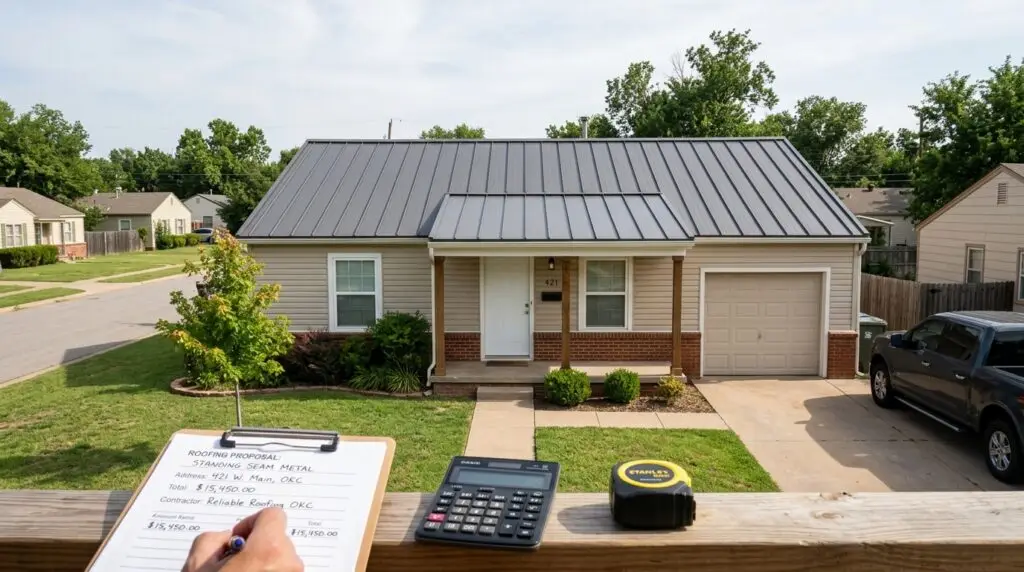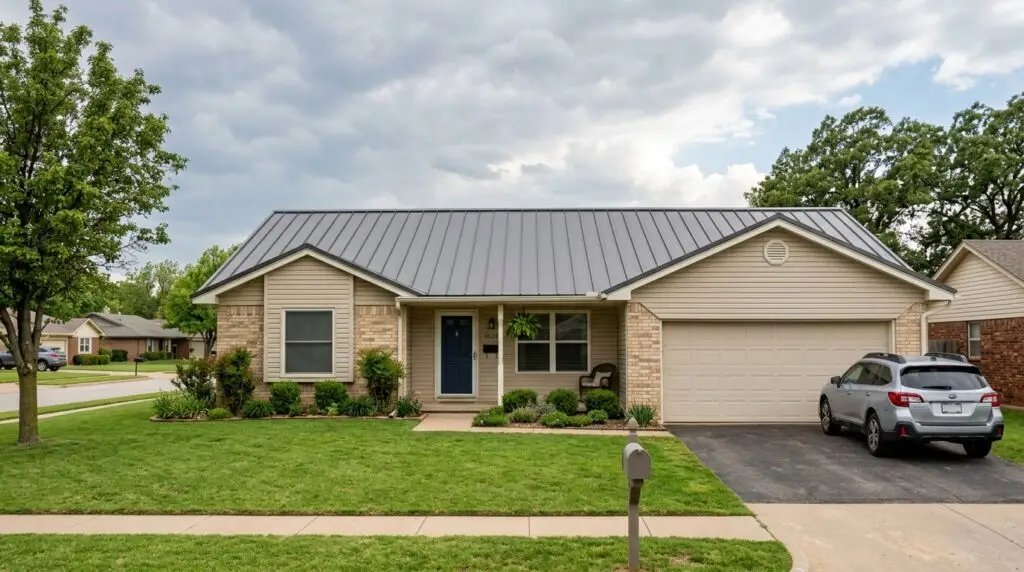
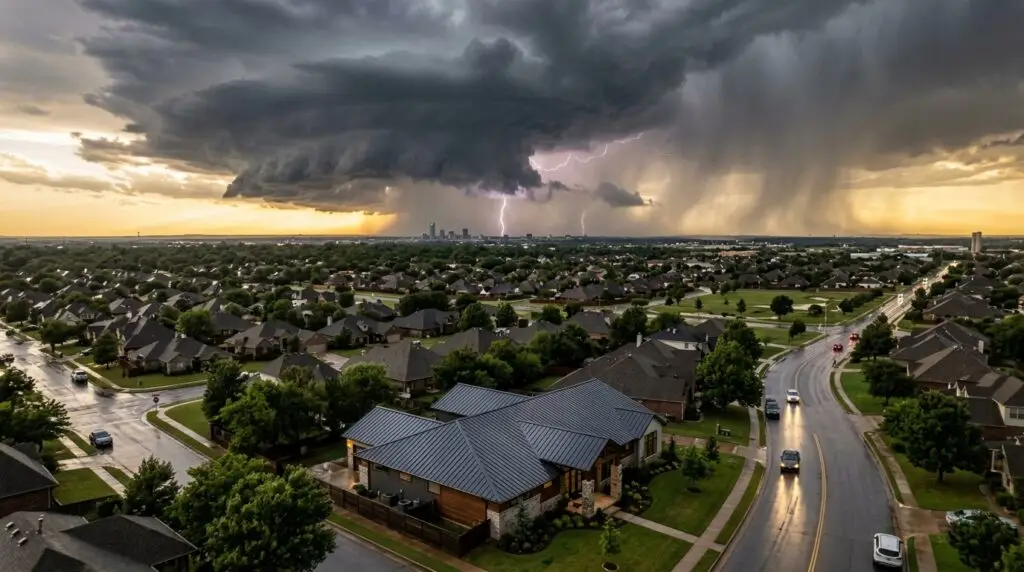
If you’ve lived in Oklahoma City for any length of time, you already know the weather here doesn’t play by the rules. One week it’s 102°F and sunny, the next you’re scraping ice off your windshield. Softball-sized hail arrives with almost no warning. And tornado season? It’s not a season, it’s a way of life.
Here’s the thing most roofing articles won’t tell you: the challenges Oklahoma homes face are genuinely different from what homeowners deal with in other states. A roof that holds up fine in Phoenix or Nashville will deteriorate faster here. That’s not a sales pitch, it’s just the reality of living in Tornado Alley. This guide breaks down every major roofing challenge unique to Oklahoma, explains why each one matters, and gives you real guidance on what to do about it.
Why Oklahoma’s Climate Creates a Perfect Storm for Roof Damage
Oklahoma doesn’t have one harsh season, it has four separate threats, stacked back to back throughout the year.
Summer brings extreme heat, with attic temperatures regularly climbing past 130°F and UV exposure that accelerates material breakdown faster than most manufacturers’ warranties account for. Fall and spring deliver the severe storm season: high winds, large hail, and tornadoes. Winter introduces freeze-thaw cycles that silently damage materials that already took a beating during storm season. And all of it compounds year over year.
Most homes in states like Colorado or Kansas face one or two of these challenges. Oklahoma homes face all of them. That’s why standard roofing solutions, the ones designed for “average” climates, often underperform here.
Oklahoma’s Position in Tornado Alley Changes the Calculation Entirely
Oklahoma sits at the geographic core of Tornado Alley. Communities like Moore, Edmond, Norman, and Midwest City have been struck by significant tornado events multiple times over the past few decades. Wind speeds during severe events regularly exceed 100 mph, and in EF-scale tornadoes, they go far beyond that.
This isn’t background information. It directly affects what your roof needs to do, how it should be installed, and what materials are worth considering. A roof installed to minimum building code standards is not the same as a roof engineered for Tornado Alley. The difference matters.
Hail Damage: Oklahoma’s Most Expensive and Most Misunderstood Roof Threat
In our experience, hail damage is the number one driver of premature roof failure across the OKC metro, and it’s consistently underestimated by homeowners.
Oklahoma ranks among the top five states nationally for hail damage frequency and severity. Hailstones here range from pea-sized to softball-sized, and even quarter-inch hail, falling at speed and driven by high winds, can compromise asphalt shingles in ways that won’t show up as interior leaks for months or even years.
The Hidden Hail Problem: What Looks Fine Isn’t Always Fine
Most homeowners in Bethany, Yukon, or Del City walk outside after a hailstorm, look at the roof from the ground, and think: “Looks okay to me.” That’s a costly assumption.
What hail actually does to asphalt shingles is largely invisible from street level. The granules, those sand-like particles embedded in the surface, protect the asphalt mat beneath from UV exposure. Hail knocks them loose. The damage looks like a small circular bruise on the shingle. Within 6 to 18 months, the exposed asphalt mat dries out, cracks, and begins allowing water intrusion. By the time you see a stain on your ceiling, the roof deck may already have moisture damage.
Metal roofing responds differently. You may see a dent from a significant hail impact, but a dent doesn’t compromise the material’s waterproofing ability. There’s no granule layer to lose, no mat to expose.
Class 4 Impact Resistance: What Every Oklahoma Homeowner Should Know
The UL 2218 Class 4 rating is the highest level of impact resistance available for roofing materials. Many metal roofing products achieve Class 4 certification. This matters for two reasons: protection and cost.
From a protection standpoint, Class 4 rated materials are specifically tested to withstand large hailstone impacts without cracking or breaking. For Oklahoma homeowners in the heart of hail country, that’s not a luxury feature, it’s practical risk management.
From a cost standpoint, many Oklahoma insurance carriers offer premium discounts for homes with Class 4 rated roofing. If you’re replacing a roof anyway, it’s worth verifying with your insurer before choosing a material.
Wind Uplift: The Force That Exposes Every Weakness
High winds don’t need to rip your roof off to cause serious damage. That’s one of the most important, and least talked about, roofing realities in Oklahoma.
Wind uplift works like this: as wind passes over a roof surface, it creates a pressure differential that pulls upward on the roofing materials. Edge zones and corners experience two to three times more uplift pressure than the center of the roof. When asphalt shingles lose their adhesive seal, which happens gradually from heat, age, and repeated storm exposure, wind doesn’t need to be tornado-strength to pull them loose or break their waterproofing bond.
What Happens After the Wind Seal Breaks
Here’s something most homeowners don’t realize: a shingle that’s still physically on your roof can be allowing water intrusion. Once the adhesive tab seal is broken by wind pressure, the shingle lifts slightly in the next storm. Wind-driven rain gets underneath. The underlayment is now working on its own, and underlayment isn’t a permanent waterproofing solution.
Flashings are even more vulnerable. The metal strips around your chimney, skylights, and pipe boots are typically the first points of failure in high-wind events. They’re secured mechanically and sealed with caulk, two materials that Oklahoma’s heat and UV exposure degrade steadily.
Oklahoma Building Code vs. What Your Roof Actually Needs
Minimum code compliance is exactly that, minimum. Enhanced fastening patterns, ring-shank nails, sealed roof decking, and properly designed edge metal go beyond code and meaningfully improve wind performance. A local metal roofing contractor who understands OKC’s storm patterns will know what installation details matter here.
Standing seam metal panels, specifically, offer a structural advantage: they attach to the roof deck via a continuous hidden clip system rather than exposed nail-throughs. That attachment method is significantly more resistant to wind uplift than nailed-down shingles.
Thermal Cycling: The Slow, Silent Roof Killer Between Storms
This one doesn’t get nearly enough attention. And it should, because it affects every Oklahoma roof, not just those that have been through a major storm.
Thermal cycling refers to the repeated expansion and contraction of roofing materials as temperatures rise and fall. Oklahoma is one of the most extreme environments in the country for this phenomenon. Spring and fall frequently bring temperature swings of 30 to 40°F within a single 24-hour period. Summers push surface temperatures well above 100°F. Winters bring hard freezes.
Every time your roof heats up, the materials expand. Every time it cools, they contract. Over thousands of cycles across the life of a roof, this stress fatigues adhesive bonds, cracks sealants, loosens fasteners, and eventually allows water to find entry points.
Between you and me, this is the damage that most homeowners don’t know they have, because there’s no storm to blame it on and no obvious external sign until a leak appears.
Attic Ventilation: The Compounding Factor Nobody Talks About Enough
Poor attic ventilation is one of the most common and most damaging roofing problems across the OKC metro, and it makes thermal cycling significantly worse.
When a roof has inadequate ventilation, insufficient ridge vents, blocked soffit vents, or missing airflow pathways, heat builds up in the attic space during summer. Attic temperatures in poorly ventilated Oklahoma homes can reach 140°F or higher. That heat degrades the underside of the shingles and the roof decking simultaneously, accelerating the same breakdown that UV exposure causes on the surface.
Proper ventilation, a balanced system of ridge vents and soffit intake vents, allows hot air to escape and dramatically reduces attic temperatures. For metal roofing systems, which already have superior thermal emissivity compared to asphalt, proper ventilation creates a measurably longer service life.
Oklahoma’s Freeze-Thaw Cycle: A Winter Problem That Sneaks Up on You
Oklahoma isn’t Minnesota. We don’t get buried in snow. But our winters are, in some ways, more damaging to roofs than a cold northern climate, because we spend a lot of time right around the freezing threshold.
When temperatures hover near 32°F, moisture cycles in and out of a liquid state repeatedly. Water that has worked its way into micro-cracks, seams, or compromised flashing freezes and expands. When it thaws, the gap is slightly wider than before. Repeat that dozens of times across a single winter season, and small imperfections become entry points.
This process is why roofs in Oklahoma can show significant hidden deterioration after a winter without ever experiencing a “major” storm. The damage is cumulative and quiet, until it isn’t.
Ice dams, formations of ice at the roof’s edge that prevent proper drainage, can occur in OKC when attic ventilation is poor. When warm air from the living space heats the roof deck unevenly, snow and ice melt and then refreeze at the colder eaves. The water backs up under shingles. High-quality underlayment, including an ice-and-water barrier extending past the interior wall line, is the defense against this.
Metal roofing handles freeze-thaw significantly better than asphalt. There are no granules to dislodge, no mat layer to crack, and the surface sheds ice load efficiently. Combined with proper attic insulation (target R-30 minimum, R-38 is better for Oklahoma homes), metal roofing dramatically reduces winter roof vulnerability.
Storm Surge and Drainage Failures: When Rain Overwhelms Your Roof System
Oklahoma spring storms, particularly those that hit the southern OKC metro from Moore to Norman, often deliver rainfall in intense, short bursts. When gutters are clogged, undersized, or improperly pitched, water backs up against the fascia and works its way under the edge metal or starter course.
Roof valleys are especially vulnerable. A valley is where two roof planes meet, channeling runoff from both sides into a single drainage path. In a heavy Oklahoma downpour, that valley carries a significant volume of water. If the valley flashing is corroded, improperly lapped, or caulked with deteriorated sealant, water intrusion is almost inevitable.
Pipe boots, the rubber seals around plumbing vent penetrations, are another chronic failure point in Oklahoma homes. UV exposure and heat cause the rubber to crack, often within 10 to 15 years of installation. Most homeowners never notice until a leak appears near a bathroom ceiling.
Insurance Claims After Oklahoma Storms: What You Need to Know Before You Call
This is one area where Oklahoma homeowners consistently lose money, not because of dishonest insurers, but because of avoidable process mistakes.
The Most Common Mistakes Oklahoma Homeowners Make After a Storm
Waiting too long. Most homeowner insurance policies in Oklahoma have a defined window for filing storm damage claims, often one to two years from the date of the storm. If you’re unsure whether your roof was damaged, get a professional inspection quickly rather than waiting until a leak develops.
Not having a contractor present during the adjuster’s visit. Insurance adjusters work for the insurance company. They’re not necessarily looking for damage you haven’t pointed out. Having a qualified local roofing contractor present during the inspection, someone who knows what hail bruising looks like, which slope shows the most wind damage, and how to document mixed-event damage, significantly improves outcomes.
Accepting the first settlement without a reinspection. You have the right to a reinspection if the initial settlement seems low. A knowledgeable OKC roofing contractor can help you identify all documented damage types before you accept any offer.
Hail vs. Wind vs. Tornado Damage, Why the Distinction Matters for Your Claim
Insurance companies categorize storm damage differently depending on the cause. A storm that produces both hail and high winds, common in Oklahoma, can result in mixed-damage scenarios that require complete documentation of both causes. If only wind damage is noted in the adjuster’s report but your roof also shows hail bruising, that gap will reduce your settlement.
This is why knowing the storm event history for your area matters. A contractor who tracks local storm data can pair on-site evidence with event records to build a complete, accurate claim picture.
Why Metal Roofing Addresses Every Oklahoma Roofing Challenge
This isn’t about promoting one product over another. It’s about honestly matching material capabilities to what Oklahoma roofs actually face.
| Challenge | Standard Asphalt Shingles | Metal Roofing |
| Hail (Class 4) | Granule loss, mat bruising | Dent-resistant; no granule layer to lose |
| Wind uplift | Seal failure risk over time | Continuous clip attachment; 130+ mph rated systems |
| Thermal cycling | Adhesive fatigue, cracking | Engineered expansion joints maintain integrity |
| UV / summer heat | Granule loss, curling | Reflective coatings reduce heat absorption |
| Freeze-thaw | Crack propagation in mat | Sheds ice; no permeable surface layer |
| Insurance cost | Standard rates | Class 4 discounts may apply |
The lifespan difference is equally significant. In Oklahoma’s climate, where asphalt shingles age faster than in most of the country due to combined heat, UV, and storm exposure, replacing an asphalt roof every 15 to 20 years is not unusual. Metal roofing, properly installed, can serve the same home for decades beyond that.
Over a full homeownership period, the math often favors the higher upfront investment in metal.
What to Look for in an Oklahoma City Metal Roofing Contractor
It depends on several factors, but the most important ones are local experience and installation knowledge. A contractor who understands OKC’s specific storm patterns, knows which neighborhoods see the most hail frequency, and can document their work for insurance purposes is worth more than a contractor who simply has a low bid.
Ask specifically about fastening patterns, underlayment specifications, and valley treatment. Ask whether they use manufacturer-certified installation methods. And verify they’re licensed and insured for Oklahoma roofing work.
What to Check Before Buying a Home in Oklahoma City
If you’re purchasing a home in the OKC metro, whether in Edmond, Yukon, Moore, or the city itself, the roof deserves serious scrutiny. Here’s a practical pre-purchase checklist:
- Age and material of the roof. Asphalt shingles near the end of their lifespan in Oklahoma’s climate may look acceptable but have limited useful life remaining.
- Granule loss. Check the gutters. Significant granule accumulation suggests the shingles are aging or have sustained hail impact.
- Attic ventilation. Look for ridge vents and soffit vents. Signs of heat damage on the underside of the decking indicate past ventilation failures.
- Flashing condition. Examine chimney, pipe boot, and eave flashings. Caulked-over gaps or rust staining are red flags.
- Insurance claim history. Request prior claims from the seller. Multiple hail claims over 10 years may indicate a roof that has been repeatedly compromised.
- Code compliance. Ask whether the roof meets current OKC wind resistance requirements, especially on older homes that predate updated code cycles.
Year-Round Maintenance Calendar for Oklahoma Homeowners
Protecting your roof in Oklahoma isn’t a once-a-year task. Here’s how to approach it by season.
Spring (March–May): Schedule a professional inspection before tornado season peaks. Check flashing sealants after freeze-thaw season. Clear all gutters and downspouts before spring storm volume begins.
Summer (June–August): Monitor attic temperature if possible, excessive heat indicates ventilation issues. Inspect south- and west-facing slopes for granule loss or curling. Check HVAC pipe boot seals for UV cracking.
Fall (September–November): Reseal any compromised penetrations before freeze season. Verify attic insulation levels. Clear valleys and gutters of leaf debris before ice season begins.
Winter (December–February): Monitor for ice dam formation at eaves after freeze events. Check the attic for moisture or frost accumulation after prolonged cold snaps. Document any storm events with photos and dates.
Frequently Asked Questions
What are the biggest roofing challenges for Oklahoma homeowners?
Oklahoma roofs face hail damage, high wind and tornado exposure, extreme thermal cycling between summer heat and winter freeze-thaw cycles, and intense UV degradation, often all within the same year. No other combination of threats puts more stress on a roofing system in a shorter period.
How often do Oklahoma City roofs need to be replaced?
In Oklahoma’s climate, standard asphalt shingles frequently perform below their rated lifespan due to storm frequency and accelerated thermal aging. Metal roofing systems, properly installed, can serve Oklahoma homes for significantly longer while requiring fewer mid-cycle repairs or emergency service calls.
Does hail damage always show up right away on an Oklahoma roof?
No. Hail damage, especially granule loss and shingle bruising, often doesn’t produce visible interior leaks for 6 to 18 months. This delayed failure pattern is why post-storm inspections matter even when the ceiling looks dry and nothing seems wrong.
Is metal roofing worth it in Oklahoma City?
For most Oklahoma homeowners, metal roofing’s combination of Class 4 impact resistance, wind-uplift performance, thermal cycling tolerance, and potential insurance premium reductions makes it the most cost-effective choice over a full ownership period in this climate.
What should I do immediately after a storm damages my Oklahoma roof?
Document visible damage with photos and note the storm date. Avoid walking on the roof. Contact a licensed local roofing contractor before filing your insurance claim, having a contractor present during the adjuster’s inspection typically produces more complete and accurate claim outcomes.
Does Oklahoma weather damage roofs even between storms?
Yes. Thermal cycling, the daily and seasonal expansion and contraction of roofing materials, silently degrades adhesive bonds, sealants, and fasteners over time. Poor attic ventilation, common in older OKC homes, accelerates this process from the inside while UV exposure attacks from the outside.
Which OKC communities have the highest storm damage risk?
Communities in the southern OKC metro, including Moore, Norman, and Midwest City, have historically experienced the highest frequency of significant tornado events. Edmond and Yukon sit in high hail-frequency corridors as well. In practice, storm-resistant roofing is a baseline requirement across the entire OKC metro, not just specific neighborhoods.