Choosing a metal roofing contractor in Oklahoma City should be straightforward. Find someone licensed, get a few quotes, check the reviews, and move forward. Simple, right?
Not quite.
Oklahoma City isn’t just any roofing market. It sits squarely in what storm meteorologists call “Hail Alley” one of the most hail-active metro areas in the entire United States. After every major storm event, thousands of homeowners are suddenly in the market for roof work at the same time. And that demand surge attracts a specific kind of contractor: one who is far better at generating paperwork than installing a quality roof.
The good news? Knowing how to choose a metal roofing contractor correctly, and knowing what to watch for, puts you in control of one of the biggest investments your home will ever see. This guide gives you the exact framework we use to evaluate contractor quality, so you’re never left guessing.
Why Contractor Selection Is Different in Oklahoma City
Here’s the thing most generic roofing guides won’t tell you: the skills required to install metal roofing correctly are genuinely different from installing asphalt shingles. Metal panels expand and contract with temperature changes. Oklahoma summers regularly push past 100°F. That thermal cycling, the constant expansion and contraction of metal panels across extreme temperature swings, creates long-term performance demands that only a contractor with real metal roofing experience can anticipate and account for.
In our experience, one of the most common failures we see in this market comes from contractors who primarily install asphalt shingles and treat a metal job as a side project. They may use the wrong fastener spacing. They may skip or cut corners on the underlayment system. And sometimes, they’ll subtly steer homeowners back toward asphalt, not because it’s the better choice for the property, but because it’s what they know.
Oklahoma’s Storm Exposure Raises the Stakes
Oklahoma City has logged hundreds of confirmed hail events within a 10-mile radius of downtown over the past decade. The average asphalt roof in Oklahoma lasts far less than its manufacturer-rated lifespan because of this constant storm exposure. Metal roofing changes that equation, but only when it’s installed correctly by someone who understands the local climate demands.
After major storms, like the hailstorm that hit the OKC metro in September 2024, the roofing market floods with out-of-state crews working fast and disappearing faster. These “storm chasers” are rarely licensed in Oklahoma, often carry inadequate insurance, and almost never return when warranty issues surface six months later. Knowing how to filter them out before signing anything is the single most valuable skill an OKC homeowner can develop.
Step One: Verify Oklahoma State Licensing and Insurance — Every Time
This is non-negotiable. Before you spend another minute evaluating anyone’s portfolio or pricing, verify two things: their Oklahoma state contractor license and their current insurance certificates.
Oklahoma requires roofing contractors to hold a valid license through the Oklahoma Construction Industries Board (CIB). You can verify this directly on the CIB’s website by searching the contractor’s name or business. If a contractor tells you they don’t need a license for your specific job, that’s not just a red flag, it’s a disqualifier.
What Insurance Certificates You Need to See
Ask for two specific documents: a certificate of general liability insurance and a certificate of workers’ compensation coverage.
General liability protects your property if something goes wrong during installation, a panel falls and damages your vehicle, a crew member drops equipment through a skylight, that kind of scenario. Workers’ compensation protects you from liability if one of the crew members is injured while working on your roof.
Most homeowners don’t realize that if a contractor’s worker gets hurt on your property and that contractor doesn’t carry workers’ comp, you can be held financially responsible. It happens more than you’d expect.
Get the certificates in hand. Call the insurance provider listed on them to confirm they’re active. Don’t accept verbal assurances, they’re worth nothing if something goes wrong.
Step Two: Confirm Real Metal Roofing Experience — Not Just General Roofing
There’s a meaningful difference between a contractor who has installed metal roofing and one who specializes in it. When you’re vetting candidates, the goal is to find the latter.
Ask direct questions that reveal actual hands-on experience:
- “How many metal roofs have you installed in the last 12 months?” Volume matters. A contractor who has completed a handful of metal jobs is in a different category than one who does them regularly.
- “Do you install standing seam, exposed fastener systems, or both, and which do you recommend for my property and why?” A specialist can explain the trade-offs clearly. A generalist will stumble.
- “What underlayment system do you use beneath metal panels in Oklahoma’s climate?” There’s a right answer to this. Synthetic underlayments designed for high-temperature environments outperform traditional felt significantly in Oklahoma summers. If they don’t know the difference, that tells you something.
- “How do you account for thermal expansion on exposed fastener systems?” This one separates the experienced installers from the rest. Improper fastener torque on an exposed fastener system in Oklahoma’s temperature swings leads to backed-out screws and roof leaks within a few years.
What Manufacturer Certifications Mean in Practice
Some of the leading metal roofing manufacturers offer certified installer programs. These programs require contractors to complete factory training, stay current with installation best practices, and meet quality benchmarks. Certification through these programs often unlocks extended warranty options that aren’t available through uncertified installers.
If a contractor lists manufacturer certifications, verify them directly with the manufacturer, not just by taking the contractor’s word for it. Legitimate certifications are easy to confirm.
Step Three: Understand Both Warranties — The One on the Materials and the One on the Work
Between you and me, warranty language is where a lot of homeowners get surprised down the road. Most people know that metal roofing comes with a long manufacturer warranty. What they don’t always think to ask about is the workmanship warranty, and that’s often where the problems are.
Manufacturer warranty: Covers defects in the metal panels themselves, the finish coating (against fading, chalking, and peeling), and material integrity. These typically run 30–50 years depending on the product line, and many are transferable to future owners, which is a real selling point if you ever list the home.
Workmanship warranty: This is the contractor’s guarantee that the roof was installed correctly. Flashing failures, fastener problems, sealant failures at penetrations, these are installation issues, not material defects. They’re covered by the workmanship warranty, not the manufacturer warranty. And if your contractor only offers a one-year workmanship warranty on a metal roof installation, that’s worth pushing back on.
Both warranties must be in writing. Both must be reviewed before you sign the contract. If a contractor gets vague when you ask about the workmanship warranty, take that seriously.
Step Four: Get Multiple Detailed Written Estimates and Know How to Compare Them
Getting more than one estimate is standard advice. But most guides stop there without explaining the part that actually matters: how to compare estimates accurately.
A lower number on paper is meaningless if it reflects thinner gauge metal, a lower-quality coating, or minimal underlayment. In Oklahoma’s climate, those shortcuts have consequences, and you’ll pay for them in repair costs or premature replacement.
What a Legitimate Metal Roofing Estimate Must Include
A complete, professional estimate should specify:
- Panel profile and gauge (thickness): 26-gauge and 24-gauge are common for residential applications. Thicker gauge provides better dent resistance, relevant in hail-prone OKC.
- Coating type and manufacturer name: Kynar 500 and similar PVDF coatings hold color and resist chalking far longer than polyester coatings. This matters for longevity.
- Underlayment type and specification
- Full labor breakdown: tear-off, disposal, underlayment, panel installation, flashing, trim work, and ridge cap
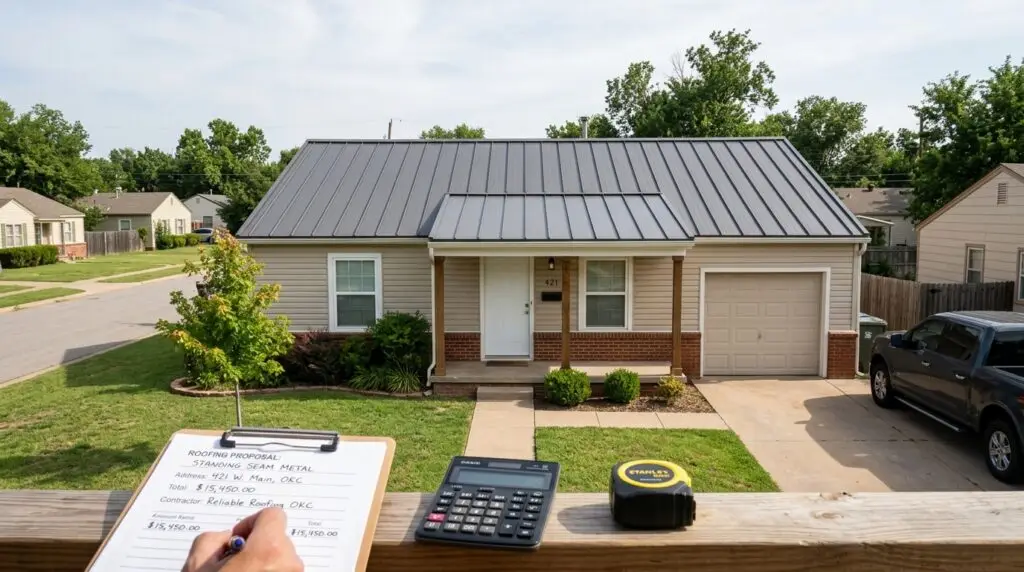
- Permit fees: Oklahoma City requires permits for full roof replacements. Any estimate that doesn’t mention permitting is incomplete.
- Timeline and crew details
When you receive two estimates, compare them line by line against these specifications. If one estimate is lower, find out exactly where the cost reduction is coming from before making a decision.
The Permit Conversation
It depends on several factors, but in most cases a full metal roof replacement in OKC will require a building permit. A contractor who suggests skipping the permit to “save time” is putting you at risk. Unpermitted work can complicate insurance claims and create headaches at the point of sale.
Step Five: Check Local References — Specifically for Completed Metal Jobs
Ask for references from metal roof installations, not shingle replacements. Then actually call them.
Most homeowners ask for references and never follow through. The ones who do call often ask surface-level questions. Here’s what to ask instead:
- “Did the crew clean up metal shavings and scraps every day?” (Metal debris left in gutters or landscaping causes real damage.)
- “Did anything go wrong during the project, and how did the contractor respond?”
- “Have you had any issues with the roof since it was installed, and did the contractor come back to address them?”
If you’re in Edmond, Moore, Yukon, Midwest City, or other OKC suburbs, there’s a good chance neighboring streets have had metal roofs installed post-storm. Ask around. Drive by finished jobs. Referrals from neighbors who’ve seen a roof perform through multiple Oklahoma storm seasons carry real weight.
Step Six: Recognize Storm Chaser Red Flags Before It Costs You
After any significant hailstorm in the OKC metro, you’ll see an influx of out-of-area contractors canvassing neighborhoods. Some are legitimate. Many are not.
Here are the warning signs that should stop a conversation in its tracks:
- Out-of-state plates and a temporary local address. If they have no established local presence, they have nothing local to protect, and no reason to stand behind their work.
- High-pressure same-day signing pressure. “This price is only good today” is a sales tactic, not a business practice. A quality contractor will give you time to review a proposal.
- Large upfront cash deposit requests. Legitimate contractors don’t require full, or near-full, payment before work begins. A reasonable deposit is normal; full payment upfront is not.
- Vague promises about “handling your insurance claim.” You have the legal right to choose your own contractor, regardless of what a storm chaser or even an adjuster suggests. Be cautious of anyone who makes the insurance side of this sound like they’re doing you a favor in exchange for your signature.
Step Seven: Ask About Insurance Claim Experience
In Oklahoma City’s storm-active market, a contractor’s ability to work alongside your insurance adjuster is a meaningful part of what you’re hiring. The best local metal roofing contractors document damage thoroughly, provide detailed scope-of-loss reports, and will attend your adjuster inspection when requested.
This is different from a contractor who “maximizes your claim” language that sometimes signals inflated or fraudulent documentation, which creates legal exposure for the homeowner. What you want is a contractor who helps you get the coverage you’ve already paid for, accurately and professionally.
Ask directly: “Have you handled metal roofing insurance claims with my insurance provider before?” and “Will you provide a written scope of work that aligns with the adjuster’s estimate?”
Experienced local contractors who have worked through OKC storm seasons understand this process well. Out-of-area crews often don’t, and that gap shows up at the worst possible moment.
Step Eight: Know What Happens After the Roof Goes On
Installation day is not the finish line. Here’s what to confirm before you write the final check.
The Post-Installation Walk-Through
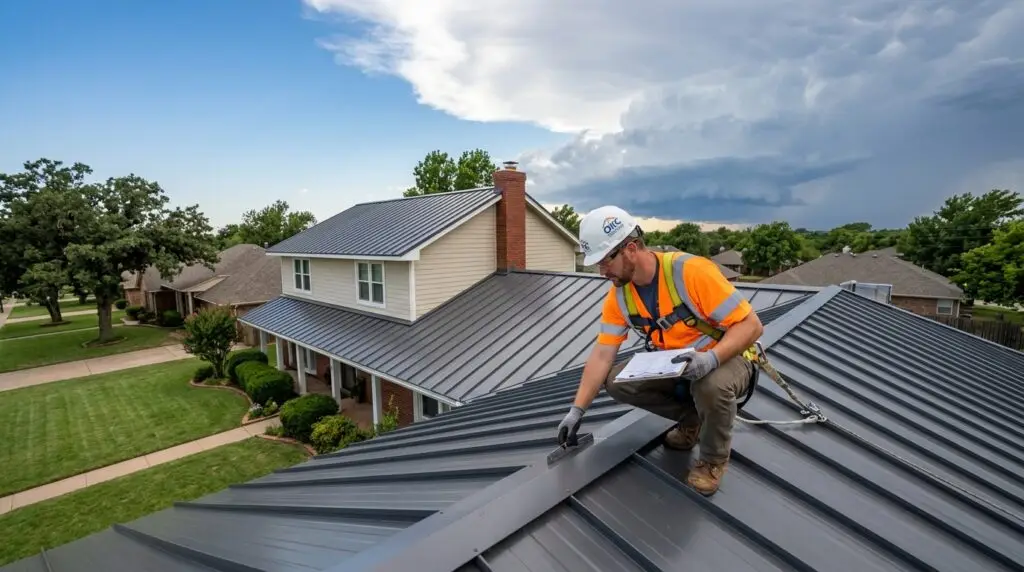
Before the crew leaves, walk the exterior of the property with the foreman. Look for: clean panel alignment, properly finished ridge caps, sealed penetrations (vents, pipes, HVAC curbs), and complete trim work at rakes and eaves. Confirm that the job site is clean, particularly that no metal scraps, shavings, or fasteners remain in the gutters or yard.
Confirm that the building permit final inspection has been completed and that you receive documentation.
Ongoing Maintenance in Oklahoma’s Climate
Metal roofing is genuinely low maintenance. But “low maintenance” is not “no maintenance.” Here’s what to keep an eye on, especially in OKC’s climate:
- Annual inspections after hail or wind events. Even if the roof looks fine from the ground, an experienced eye can identify fastener movement or sealant degradation early.
- Thermal cycling effects. After the first full year, through a complete Oklahoma summer-to-winter cycle, exposed fastener systems should be checked for any backing-out.
- Valley and penetration points. These are where debris accumulates and where sealant ages fastest. Keeping them clean and sealed is straightforward preventive maintenance.
Metal roofs in the OKC area routinely outlast multiple asphalt replacements. That durability is real, but it’s not automatic. It depends on quality installation and basic periodic attention.
Common Mistakes OKC Homeowners Make When Hiring a Metal Roofing Contractor
Before you make your final decision, run through this list. These are the mistakes that show up repeatedly in this market:
- Choosing based on price alone without comparing material specifications across estimates.
- Hiring the first contractor who shows up after a storm without verifying their Oklahoma license.
- Skipping the workmanship warranty conversation and assuming the manufacturer warranty covers everything.
- Not getting permit documentation after the job is complete.
- Accepting verbal estimates instead of written, itemized proposals.
- Hiring a general contractor who subcontracts the metal work to an uncertified crew without disclosing it.
- Not calling references, or calling them and only asking surface-level questions.
Your Final Decision Checklist
When you’re ready to make a hiring decision, run every finalist through this checklist:
- Oklahoma CIB license verified (confirmed active)
- General liability insurance confirmed (certificate in hand)
- Workers’ compensation insurance confirmed (certificate in hand)
- Metal roofing experience confirmed, volume and type of projects
- Manufacturer certifications verified with the manufacturer directly
- Written, itemized estimate with full material specifications
- Manufacturer warranty terms reviewed and in writing
- Workmanship warranty terms reviewed and in writing
- Local references checked, specifically for metal installations
- No storm-chaser red flags present
- Insurance claim process discussed and contractor confirms willingness to attend adjuster inspection
- Permit process confirmed, contractor will pull permits
A contractor who checks every box on this list isn’t cutting corners. That’s who you want on your roof.
Frequently Asked Questions
How do I verify a metal roofing contractor is licensed in Oklahoma City?
Search the contractor’s name or license number through the Oklahoma Construction Industries Board (CIB) website. Confirm the license is active and covers roofing work before signing any agreement. This takes about five minutes and can save you significant headaches later.
How many estimates should I get for a metal roof replacement in OKC?
Get at least three written, itemized estimates. Make sure each one specifies the same materials, panel profile, gauge, coating type, and manufacturer, so you’re comparing equivalent scopes. A lower number that reflects thinner metal or less underlayment isn’t a better deal.
What warranty should a metal roof come with?
You need two warranties in writing: a manufacturer’s material warranty (typically 30–50 years covering the panels and finish coating) and a contractor’s workmanship warranty covering the quality of the installation itself. Both are important. Neither replaces the other.
How can I tell if a post-storm roofing contractor in OKC is legitimate?
Verify their Oklahoma CIB license, require insurance certificates and call to confirm they’re active, ask for verifiable local references from completed metal installations, and avoid anyone who pressures you to sign the same day or requests large upfront cash payments. Established local contractors don’t need high-pressure tactics.
Does a metal roof hold up better to Oklahoma hail than asphalt shingles?
Yes, significantly. Metal roofing, particularly standing seam and stone-coated steel systems, offers considerably better hail resistance than asphalt. Look for panels with a Class 4 impact resistance rating, the highest available. Some Oklahoma homeowners also qualify for insurance premium reductions after installing a Class 4 system.
Should my metal roofing contractor help with my insurance claim?
An experienced local contractor should be willing to attend your adjuster inspection and provide detailed documentation of the damage. What you want is accurate, professional claim support, not promises to “maximize” your payout, which can signal legally problematic practices. Your contractor’s job is to help you get the coverage you’ve already paid for.
How long does a metal roof installation take in Oklahoma City?
Most residential metal roof installations in the OKC area take anywhere from two days to over a week, depending on roof size, complexity, crew size, and weather. Any legitimate contractor will include a projected timeline in your written estimate.