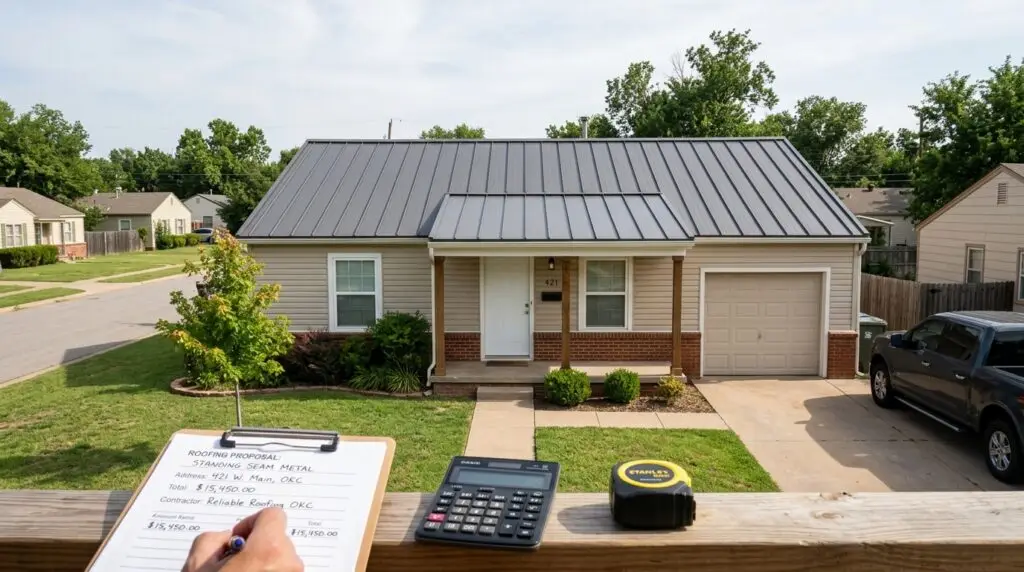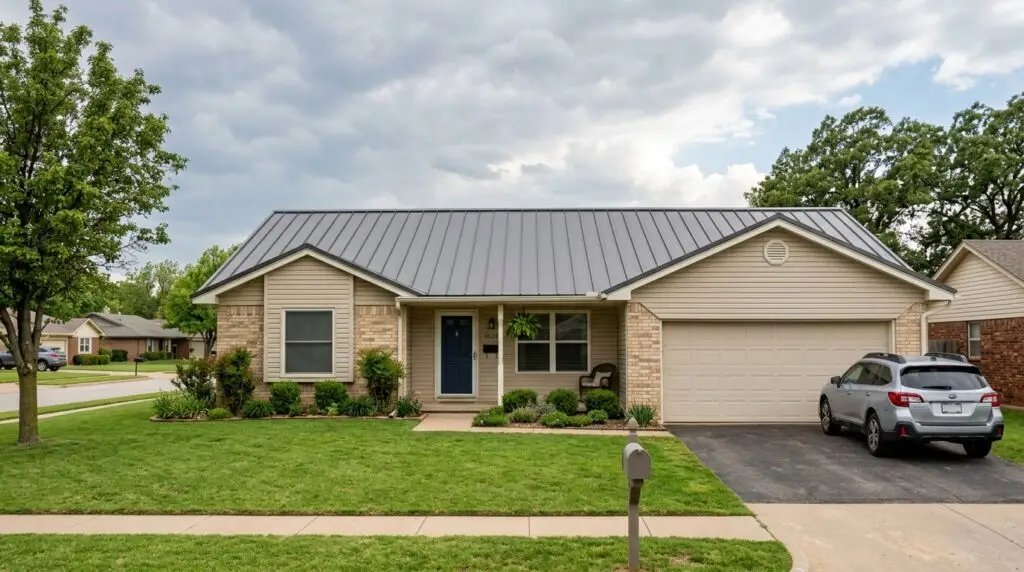
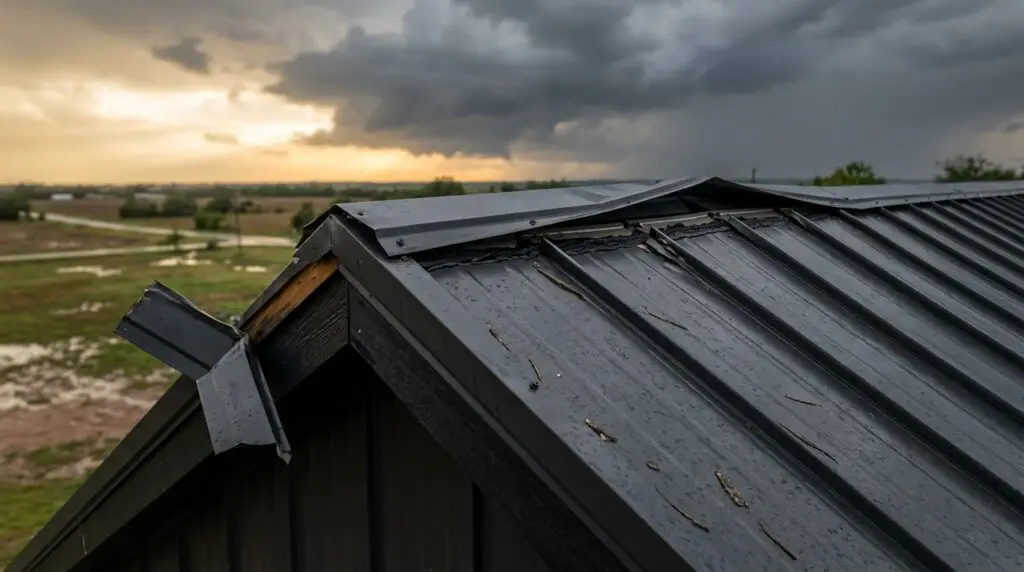
Living in Oklahoma City means accepting one hard truth: severe weather is not a matter of if it’s a matter of when. From spring supercell thunderstorms rolling across Oklahoma County to straight-line winds howling through Edmond, Yukon, and Moore, your roof takes a beating every year. The good news is that metal roofs are built to handle this kind of abuse far better than asphalt shingles. The reality, though, is that even the most durable metal roofing system is not immune to wind damage especially here in the heart of Tornado Alley.
Knowing what wind damage on a metal roof looks like and knowing how to respond can be the difference between a quick repair and a costly interior water disaster. This guide walks you through everything you need to know: the specific signs to look for, how to inspect safely, what repairs cost, and how to prevent it from happening again.
Why Oklahoma City Wind Is Uniquely Dangerous for Any Roof
Most wind damage guides are written for a generic national audience. They do not account for what it actually means to have a roof in central Oklahoma.
Oklahoma City sits squarely inside Tornado Alley, but the tornado threat is just part of the story. The greater day-to-day risk comes from straight-line winds and derechos fast-moving storm systems that can drive sustained winds well above 60 mph across wide areas without any rotation. Neighborhoods like Midwest City, Del City, Norman, and south Edmond regularly see these events during spring storm season, which runs roughly from March through June.
Here is the thing about wind and metal roofs: the damage is not always about peak wind speed. It is about sustained pressure over time, thermal cycling that loosens fasteners, and wind-driven rain finding its way into compromised seams. A metal roof that has seen five or six hard Oklahoma springs without a professional inspection may look perfectly fine from the ground right up until it is not.
How Oklahoma’s storm patterns stress metal roofing systems
Straight-line winds and rotational tornado-force winds cause distinctly different damage signatures. Straight-line winds create uniform uplift pressure along the windward eave and rake edges. Tornado-involved winds create chaotic, multi-directional uplift that stresses panels from unexpected angles, often dislodging components that straight-line winds would leave intact.
Wind uplift works by creating a high-pressure zone below the panel and a low-pressure zone above it, effectively trying to peel the panel off the deck. The eave edge, rake edge, and ridge cap are always the most vulnerable these are the points where wind finds its way underneath. Properly installed standing seam systems with concealed fasteners give wind very little to grab. Older or improperly installed exposed fastener panels, on the other hand, offer more entry points.
OKC homeowner insight: The combination of spring wind events, summer thermal expansion, and fall temperature swings creates a cycle that accelerates fastener fatigue on metal roofs faster than in more temperate climates.
The 7 Most Common Signs of Wind Damage on a Metal Roof
Most homeowners know to look for missing shingles after a storm. Metal roofing is different. The signs are often subtler, and the most damaging problems are sometimes the hardest to see. Here is what you are actually looking for.
1. Loose, backed-out, or missing fasteners
On exposed fastener metal roofs the R-panel and corrugated systems common on many OKC homes and outbuildings wind uplift is most likely to back out or completely dislodge the screws that hold panels to the deck. Walk the perimeter of your home after a major wind event and look for screws on the ground. Scan the eave and rake edges with binoculars and look for irregular spacing in the fastener pattern, which can indicate missing hardware.
Backed-out fasteners may still be partially in place but no longer sealed against the panel. This creates a leak point and reduces wind resistance for the next storm. In our experience, this is one of the most common post-storm findings on OKC metal roofs and one of the easiest to miss without a trained eye.
2. Lifted, bent, or separated panels
Strong wind uplift can cause panel edges to lift away from the substrate or separate at the seam. On standing seam roofs, look for panels that appear to have risen slightly at the ridge or eave. On exposed fastener roofs, watch for panels that have buckled or show a ripple pattern that was not there before. Even a panel that has lifted and settled back into place may have compromised its seal or cracked its fastener holes.
3. Damaged or displaced ridge caps
The ridge cap is the single most wind-vulnerable component on a metal roof. It sits at the highest point of the roof and receives uplift pressure from both sides. After a significant wind event, check the ridge line carefully even binoculars from the ground can reveal gaps, lifted edges, or ridge caps that have shifted out of alignment. A displaced ridge cap is not just cosmetic. It is an open door for water intrusion.
4. Compromised flashing around penetrations
Flashing the metal pieces that seal around pipe boots, HVAC penetrations, skylights, and chimneys is bonded with sealant that degrades over time. Wind can pry flashing loose from the sealant bond, especially at chimney step flashing and around HVAC curbs on flat or low-slope metal roofs. Check every penetration point after a major storm. This is where most post-storm leaks actually originate.
5. Wind-driven debris dents and scratches
Oklahoma storms regularly turn loose branches, gravel, and airborne debris into projectiles. On metal roofs, this creates dents and scratches that range from cosmetic to functional. A small dent in the flat field of a panel is usually cosmetic. A dent at a seam, ridge cap joint, or fastener location is a different story it may compromise the seal or the structural integrity of that connection point.
Most homeowners do not realize: distinguishing hail dents from debris dents matters for insurance claims. Hail leaves consistent circular patterns; debris creates irregular, directional marks. Document everything with photos before you do anything else.
6. Gutter and downspout damage
Gutters that have detached, bent, or pulled away from the fascia board can exert stress on the eave trim of your metal roof system. After a storm, check that your gutters are still properly seated and that the fascia attachment points have not been compromised. Separated gutters also redirect water back toward the fascia and soffit, which can eventually cause rot that undermines the eave trim anchor.
7. Interior water stains the hidden indicator
This one surprises most homeowners. Wind damage often does not produce a visible leak right away. The compromise happens during the storm, but the water does not show up inside until the next rain event sometimes weeks later. Check your attic within 24 to 48 hours of any significant wind event. Look for water staining on the decking, compressed insulation, or rust streaks on any exposed metal. Catching it at this stage is dramatically cheaper than catching it after the water has reached your ceiling drywall.
How to Safely Inspect Your Metal Roof for Wind Damage After a Storm
Here is a rule every Oklahoma City homeowner should know: do not climb on a wet metal roof. It is one of the most slip-prone surfaces in existence. Wait until the roof is completely dry and you have proper footwear and even then, a professional inspection is always the safer choice after significant wind events.
What you can do safely on your own is a thorough ground-level inspection, which will catch the majority of obvious damage and give a roofing professional a useful starting point.
Ground-level inspection checklist
- Walk the entire perimeter of your home and scan the roof surface, ridge line, and eave edges.
- Use binoculars to get a closer look at ridge caps, rakes, and any penetrations you can see.
- Check gutters and downspouts for detachment, bending, or debris accumulation.
- Look for screws, metal fragments, or trim pieces on the ground around the foundation.
- Photograph everything you notice wide shots and close-ups.
- Check the attic within 24 hours for any signs of light penetration or moisture.
Attic inspection: what to look for inside
The attic is your early warning system. Take a flashlight and check the decking on the underside of your roof slope. Daylight visible through the decking means there is an opening that needs immediate attention. Water staining on the wood, wet insulation batts, or a musty smell that was not there before the storm are all signs that moisture has entered the system. Do not wait on these schedule a professional inspection within seven to fourteen days of the event, even if your attic looks dry.
Standing Seam vs. Exposed Fastener Metal Roofs: How Wind Damage Looks Different
Not all metal roofs are the same, and understanding what type of system you have changes how you inspect it after a storm. This distinction is something virtually no other guide covers and it matters a great deal.
Standing seam metal roofs use concealed fasteners and interlocking panels that clip to the deck through a hidden clip system. Wind has very few attachment points to exploit. Damage on a standing seam roof is most likely to appear at the seam connections, the ridge cap, eave trim, and at the clip level beneath the panels meaning visible surface damage often only shows up in extreme events or installation deficiencies.
Exposed fastener roofs R-panel, corrugated, and similar profiles are held to the deck with screws that penetrate through the metal. Wind uplift acts on every one of those fastener points. After a storm, back-out screws, elongated fastener holes, and lifted panel edges are the things to look for. These systems also require more routine inspection because the screws and their neoprene washers degrade over time, and that degradation accelerates under the thermal cycling common in Oklahoma.
OKC contractor perspective: Exposed fastener panels in high-wind-exposure areas of the metro south Edmond, open areas near Yukon and Mustang, and exposed hilltop lots anywhere in Oklahoma County tend to show fastener fatigue faster than those in more sheltered urban settings. If you have an older exposed fastener roof, annual inspections before storm season are not optional; they are genuinely necessary.
What Wind Damage on a Metal Roof Actually Costs to Repair in Oklahoma
It depends on several factors and that is not a dodge. The range between a minor fastener re-seating and a full panel replacement is significant.
- Minor repairs (loose fasteners, small sealant failures, isolated ridge cap re-seating): These are typically the lowest-cost interventions and can often be completed in a half day by an experienced crew.
- Moderate repairs (ridge cap replacement, flashing repair, a section of lifted panels): These require more material and labor but are still well within the scope of a targeted repair versus replacement.
- Significant repairs (multiple panel sections damaged, widespread fastener failure, structural uplift damage): At this level, the repair-versus-replace calculation starts to shift, particularly on older roofs.
Two Oklahoma-specific factors affect cost that most national guides miss. First, post-storm contractor demand in OKC can be intense after a major event. Spring storms that hit large areas of the metro simultaneously the way the April 2023 storm affected over 128,000 housing units in Oklahoma County create booking backlogs that can stretch for weeks. Acting quickly after a storm is not just smart it is financially practical.
Second, if your roof damage is storm-related, your homeowner’s insurance policy likely covers it. Most standard HO-3 policies in Oklahoma include wind and hail coverage. Document everything before any repairs are made. An insurance adjuster will need to see the damage in its post-storm state, and thorough photo documentation can be the difference between full coverage and a disputed claim.
Will homeowner’s insurance cover wind damage to a metal roof in Oklahoma?
Important: The information here is general guidance only. Always review your specific policy and consult your insurance provider for coverage details.
In most cases, yes standard homeowner’s policies in Oklahoma cover wind damage as part of their storm damage provisions. What matters is documentation and timing. Most policies have claim filing windows after a storm event. Do not delay inspection and do not make permanent repairs before your adjuster has had a chance to assess the damage. Temporary repairs emergency tarping, for example are generally acceptable and sometimes required to prevent further damage.
Working with a roofing contractor who has experience navigating Oklahoma insurance claims is genuinely valuable here. An experienced local contractor can document damage in the format adjusters expect and help ensure that hidden or non-obvious damage is included in the claim.
Hidden Wind Damage: What Oklahoma City Homeowners Most Often Miss
Most homeowners think that if there is no visible damage and no active leak, the roof made it through the storm intact. In our experience, this is the most common and most costly assumption in Oklahoma roofing.
Wind can compromise a metal roof’s long-term integrity without leaving a single mark visible from the ground or even from the surface itself. Here is what is actually happening beneath the panels:
Clip failure on standing seam roofs is one example. The clips that hold panels to the deck can bend or fracture under sustained wind uplift pressure while the panel above them looks completely normal. The panel is still in place, but it is now held by fewer clips meaning the next storm event has a better chance of peeling it off entirely.
Underlayment compression and saturation is another. Wind-driven rain that enters a compromised seam, even briefly, can saturate the underlayment beneath the metal panels. That moisture does not just evaporate it sits against the deck, promoting rot and mold growth over weeks and months. By the time a homeowner notices a stain on their ceiling, the wood decking may already be compromised.
Sealant bond failure at penetrations is perhaps the most common hidden issue. Pipe boot sealant, flashing caulk, and ridge cap sealant can be stressed and partially separated by wind pressure without any visible exterior sign. The next hard rain drives water into those micro-gaps and begins a slow leak that may take months to manifest visibly.
The bottom line: Schedule a professional inspection within seven to fourteen days of any wind event that caused visible damage anywhere in your neighborhood, even if your roof looks fine. The cost of a professional inspection is a fraction of the cost of the interior damage it can prevent.
Temporary Repairs vs. Permanent Fixes: What to Do First After Wind Damage
You have identified damage. Now what? The first priority is stopping water intrusion. The second priority is doing it in a way that does not complicate your insurance claim or cause additional damage.
Emergency temporary measures
- Tarping: If you have significant panel loss or a compromised ridge cap, emergency tarping can prevent water intrusion until permanent repairs are made. On metal roofs, do not use roofing nails to secure tarps use sandbags or weighted boards along the edges. Nail holes in metal panels create new penetration points.
- Silicone sealant: For small penetrations or lifted flashing, a temporary application of silicone sealant can buy time. Use a product rated for metal roofing, and be aware that this is a temporary measure. Permanent repair should follow as soon as possible.
- Gutter re-seating: If gutters have pulled away from the fascia, re-seating them promptly prevents ongoing stress on the eave trim.
What NOT to do
- Do not apply asphalt roofing cement or tar-based products to metal roofing. These products are not compatible with metal and can cause accelerated corrosion at the application point.
- Do not ignore loose fasteners because there is no active leak. A backed-out screw on an exposed fastener roof is a leak waiting to happen.
- Do not walk the roof without appropriate footwear and a safety harness. Wet metal, in particular, is extremely dangerous.
- Do not make permanent repairs before your insurance adjuster has assessed the damage.
When damage is significant major panel displacement, ridge cap loss across a large span, or structural concerns call a 24/7 emergency roofing service in Oklahoma City. These are not situations where waiting until Monday is a good idea.
How to Prevent Future Wind Damage to Your Metal Roof in OKC
Between you and me, most metal roof wind damage in Oklahoma is not random bad luck. It is the predictable result of deferred maintenance and skipped inspections. A proactive approach especially given our spring storm season can dramatically reduce both the frequency and severity of storm damage.
Annual metal roof maintenance checklist for Oklahoma homeowners
- Pre-storm season inspection (February to March): Have a qualified roofing contractor inspect fastener condition, ridge cap seating, all flashing penetrations, and sealant integrity before storm season begins.
- Post-event check (after any significant wind event): Perform a ground-level visual inspection and attic check within 48 hours.
- Fastener inspection and re-torquing: On exposed fastener systems, periodic re-torquing of screws is a legitimate maintenance step that most OKC homeowners do not know exists. Screws back out over time from thermal cycling Oklahoma’s temperature swings make this particularly relevant.
- Tree trimming: Overhanging branches are a major source of debris damage during storms. This is especially relevant in older neighborhoods with mature trees Nichols Hills, Crown Heights, areas around Lake Hefner, and many Edmond neighborhoods have significant canopy exposure.
- Attic ventilation: Proper ventilation reduces thermal pressure differentials that compound wind uplift stress on the roof deck assembly. If your attic runs extremely hot in summer, it is worth evaluating your ventilation setup.
Common Mistakes Oklahoma Homeowners Make After Metal Roof Wind Damage
After years of working in Oklahoma roofing, the same mistakes come up again and again after major storm events. Knowing them in advance can save you significant time, money, and frustration.
Mistake No. 1: Waiting too long to inspect because metal roofs are tough. Yes, metal outperforms asphalt in wind events. But ‘it held up’ does not mean ‘nothing happened.’ Hidden damage accumulates, and every subsequent storm stresses an already-compromised system further.
Mistake No. 2: Hiring storm chasers. After major OKC weather events, out-of-state contractors flood the metro area offering fast, cheap repairs. Some are reputable. Many are not. Verify Oklahoma contractor licensing, check references, and be wary of anyone pressuring you to sign a contract on the spot. Local contractors with a track record in the metro are almost always the better choice.
Mistake No. 3: Filing an insurance claim without proper documentation. Go through the claims process with a contractor who understands how Oklahoma insurance adjusters assess metal roof damage. Undocumented damage is frequently underpaid or denied.
Mistake No. 4: Applying the wrong sealants. Roofing cement and asphalt-based products should never touch a metal roof. They are chemically incompatible and create corrosion problems that show up one to three years later.
Mistake No. 5: Assuming no visible leak means no damage. As covered above, wind damage frequently precedes leaks by weeks or months. The absence of an active drip is not clearance it is an opportunity to get ahead of the problem.
When to Repair vs. Replace a Wind-Damaged Metal Roof in Oklahoma City
This is the question every homeowner eventually arrives at after a significant storm, and the honest answer requires looking at the whole picture.
Repair makes sense when damage is localized a section of ridge cap, a few panels near the eave, isolated flashing failures. If the roof is relatively young, properly installed, and the damage is confined to a specific area, targeted repair is almost always the right call.
Replacement starts to make sense when damage is widespread across multiple sections of the roof, when the insurance adjuster determines the roof meets total-loss criteria, when the system is an older exposed fastener design that has accumulated multiple repairs over the years, or when the metal itself is showing widespread corrosion or coating failure in addition to wind damage.
After major spring storms in OKC the kind that simultaneously affects Moore, Edmond, Yukon, Midwest City, and Del City full roof assessments are worth requesting even when damage appears minor. Storms of that magnitude stress the entire roofing assembly, and what looks like a clean roof may have accumulated enough cumulative damage to justify a professional evaluation.
Not sure whether repair or replacement is the right call? Our OKC metal roofing team provides free post-storm inspections. We will give you a straight answer.
Frequently Asked Questions About Wind Damage on Metal Roofs
Can wind damage a metal roof without blowing off any panels?
Yes. Loose or backed-out fasteners, lifted ridge caps, compromised sealant at penetrations, and hidden clip failure can all result from wind events without a single panel leaving the roof. A professional inspection is the only reliable way to find this type of damage.
How soon should I inspect my metal roof after a wind storm in OKC?
Perform a safe ground-level inspection within 24 to 48 hours if conditions allow. Check the attic in that same window. Schedule a professional inspection within seven to fourteen days, even if no obvious damage is visible.
Does homeowner’s insurance cover wind damage to metal roofs in Oklahoma?
Most standard HO-3 homeowner’s policies in Oklahoma include wind damage coverage. Document all damage with photos and video before any repairs are made, and review your policy’s claim filing timeline. Working with an experienced local roofing contractor can help ensure all damage is properly documented for the claim.
What wind speed can damage a metal roof?
Properly installed metal roofing systems are designed to resist winds ranging from approximately 110 to 160 mph depending on the system type and installation method. However, damage can occur at lower wind speeds when fasteners have loosened over time, when installation quality was poor, or when the roof has not been maintained. Oklahoma’s repeated storm cycles make ongoing maintenance essential.
What parts of a metal roof are most vulnerable to wind damage?
The eave edge, rake edge, ridge cap, and any flashing penetrations are the highest-risk zones. These are the areas where wind is most likely to find a gap and create uplift pressure beneath the panel assembly.
Can I walk on my metal roof to inspect it after a storm?
Not recommended without proper footwear and fall protection equipment. Wet metal roofing is extremely slippery. Conduct a thorough ground-level inspection with binoculars first. For any significant damage, wait for a professional who has the right equipment and safety protocols.
What is the difference between repairing and replacing a wind-damaged metal roof?
Repair is appropriate when damage is localized specific panels, ridge caps, or flashing and the overall system is in good condition. Replacement becomes the better option when damage is widespread, when the roof is aging, or when an insurance assessment determines total loss. A qualified Oklahoma City metal roofing contractor can walk you through the decision based on a thorough inspection.