If you own or manage a commercial building in Oklahoma City, you already know the summer cooling bills can get painful. Between the long stretches of triple-digit heat and the humidity that rolls in off the plains, your HVAC system works overtime from June through September. What a lot of building owners don’t realize is that the roof sitting over their heads plays a much bigger role in that energy bill than most people assume.
This article breaks down how commercial metal roofing improves energy efficiency, what actually drives those savings, and how Oklahoma’s climate, heat, hail, and wind included, factors into the decision. No fluff, no invented statistics, just practical guidance from a roofing perspective.
Why Energy Efficiency Matters for Oklahoma City Commercial Buildings
OKC’s Climate Challenge — Long Hot Summers Meet Severe Storm Season
Oklahoma City sits in a tough spot, climate-wise. Summers bring extended heat waves with high humidity, which means roofs absorb and radiate heat for months at a time. Then, almost without a transition period, storm season arrives with hail, straight-line winds, and the occasional tornado risk. Few markets in the country ask this much of a commercial roof.
That combination matters because a roof that performs poorly in heat is often also a roof that’s vulnerable in storms, and vice versa. They’re not separate problems. A building owner thinking about energy efficiency in Oklahoma City has to think about durability in the same breath.
How Roof Performance Affects HVAC Load and Operating Costs
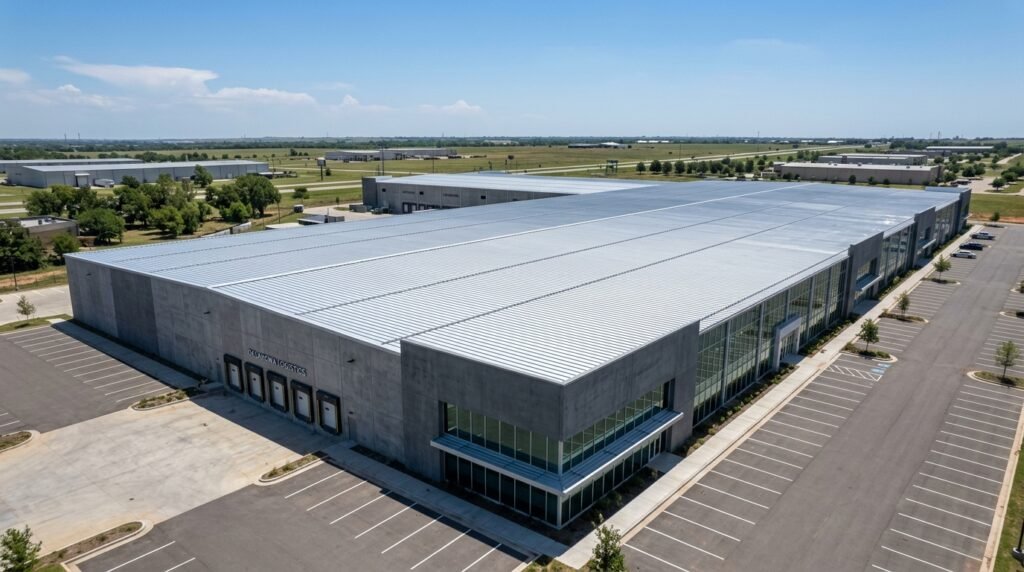
Here’s the thing, your roof is the single largest surface exposed to direct sun on most commercial buildings, especially warehouses, retail centers, and single-story office buildings with low-slope roofs. When that surface absorbs heat instead of reflecting it, your HVAC system has to compensate. That means longer run times, more wear on equipment, and higher utility bills.
A roof that reflects more solar energy and releases absorbed heat faster reduces that burden. It doesn’t eliminate cooling costs, but it takes pressure off the system, which is exactly where metal roofing tends to outperform other materials.
How Metal Roofing Improves Energy Efficiency
Solar Reflectance and Thermal Emittance Explained Simply
Two properties determine how a roof handles heat: solar reflectance and thermal emittance. Solar reflectance is how much of the sun’s energy bounces off the roof instead of being absorbed. Thermal emittance is how quickly the roof releases whatever heat it does absorb, rather than holding onto it and radiating it down into the building.
Metal roofing, particularly when finished with reflective coatings, tends to score well on both. Painted metal panels reflect more solar energy than dark asphalt or built-up roofing, and they shed absorbed heat faster once the sun goes down or cloud cover rolls in.
Cool Roof Coatings vs. Standard Metal Panels
Not all metal roofs perform the same. A standard metal panel without a reflective coating still outperforms many traditional roofing materials, but a metal roof finished with a cool roof rated coating performs noticeably better. These coatings are engineered specifically to maximize reflectance and emittance.
In our experience, building owners who skip the cool coating to save money upfront often end up wishing they hadn’t, the difference shows up on the utility bill within the first full summer.
Insulation Pairing (Above-Deck, Below-Deck, Radiant Barriers)
Energy efficiency isn’t just about the roof surface. The insulation strategy underneath matters just as much. Above-deck insulation, below-deck insulation, and radiant barriers can all be paired with a metal roofing system depending on the building’s structure and budget.
It depends on several factors, the existing roof deck, the building’s current insulation (if any), and how the space is used. A distribution warehouse with minimal climate control needs has different priorities than an office building with tenants who expect consistent comfort year-round.
Metal Roofing vs. Other Commercial Roofing Systems (TPO, EPDM, Built-Up)
Reflectivity and R-Value Comparison
TPO roofing is often marketed as a reflective option, and it can perform well when new. But TPO membranes tend to lose reflectivity over time as they collect dirt and grime, and they’re more prone to punctures from hail and debris, a real concern in Oklahoma. EPDM, the black rubber membrane many buildings still use, absorbs heat rather than reflecting it, which works against energy efficiency goals entirely.
Metal roofing holds its reflective properties longer because the coatings are baked into the panel finish rather than sitting on the surface as a thin membrane.
Lifespan and Long-Term Energy Performance
This is where metal roofing really separates itself. A roof that needs replacement every 15-20 years resets your energy performance investment every time you replace it. Metal roofing systems are built to last considerably longer, which means the energy efficiency benefits compound over a much longer ownership period instead of resetting on a shorter replacement cycle.
Real-World Cost Impact: What Building Owners Can Expect
Factors That Influence Energy Savings (Roof Color, Slope, Building Use)
Most homeowners, and commercial property owners, don’t realize how much roof color affects performance. Lighter colors and reflective coatings generally outperform dark colors for cooling, though the difference is less dramatic on steep-slope roofs that don’t receive direct sun exposure the same way low-slope roofs do.
Building use matters too. A retail space that needs consistent interior temperatures for customer comfort benefits more directly from energy savings than a storage warehouse with minimal climate control.
Why Savings Vary by Building Type — Warehouses, Retail, Office Space
There’s no single number that applies to every building, and we’d be doing you a disservice if we made one up. What we can say is that buildings with larger roof surface area relative to their conditioned space, warehouses and big-box retail, for example, tend to see a more noticeable impact from improved roof reflectivity, simply because the roof represents such a large share of their total exposed surface.
Office buildings and mixed-use properties still benefit, but the impact is proportional to how much of the building’s energy use is tied to HVAC versus other operations.
Storm Resilience and Energy Efficiency Go Hand-in-Hand in Oklahoma
Hail and Wind Resistance of Commercial Metal Panels
Between you and me, this is the part competitors writing about “energy efficient roofing” almost never mention, and it’s one of the most important considerations for Oklahoma City building owners specifically. Metal roofing systems generally hold up better against hail and high wind than membrane or built-up roofing systems, particularly when installed with the correct fastening and panel profile for the local wind zone.
That matters for energy efficiency because storm damage doesn’t just create leaks. Dented panels, compromised seams, and damaged coatings reduce reflectivity and create thermal weak points, which undercuts the very efficiency gains you installed the roof to get.
How Storm Damage Compromises Energy Performance Over Time
A roof that’s taken hail damage but hasn’t failed outright can still be losing efficiency. Compromised coatings absorb more heat. Damaged seams allow air infiltration, which forces your HVAC system to work harder regardless of how reflective the roof surface is. This is why regular inspection after severe weather isn’t just about preventing leaks, it protects the energy performance you paid for.
Insurance and Code Considerations for OKC Commercial Properties
Oklahoma City’s storm exposure means insurance carriers pay close attention to roofing materials and installation quality. Many commercial policies factor in roof type and impact resistance ratings when determining premiums. It’s worth having a conversation with your insurance provider before finalizing a roofing decision, since the right system can affect both your energy costs and your premium.
Installation Considerations for Maximum Energy Performance
Panel Type and Profile Selection
Standing seam panels, exposed fastener panels, and other profiles each have different performance characteristics. Standing seam systems generally offer better wind uplift resistance and a cleaner surface for reflective coatings to perform consistently, which matters in a wind-prone market like Oklahoma City.
Coating Systems (Kynar 500, Cool Roof Certified Finishes)
PVDF coatings, Kynar 500 being a well-known example, are formulated to resist fading and chalking over time, which helps the roof maintain its reflective properties for longer. Cool roof certified finishes go through testing to verify their solar reflectance and thermal emittance values, giving building owners a way to compare options based on actual performance data rather than marketing claims.
Common Installation Mistakes That Reduce Efficiency
In our experience, the most common mistake isn’t choosing the wrong panel, it’s poor installation around penetrations, inadequate insulation integration, and skipping proper ventilation. A great roofing material installed poorly will underperform a good material installed correctly, every time.
Maintenance Practices That Protect Energy Efficiency Over Time
Cleaning, Recoating, and Seam Inspection
Dirt and debris buildup reduces reflectivity over time. Periodic cleaning, along with recoating when a finish starts to degrade, keeps a metal roof performing closer to its original specifications. Seam inspection matters too, especially after wind events, since loosened seams compromise both weather resistance and thermal performance.
Signs Your Commercial Roof Is Losing Efficiency
Rising cooling costs without an obvious cause, visible coating degradation, chalking, or rust at seams and fasteners are all signs worth investigating. Most building owners don’t connect a creeping utility bill to roof condition, but the two are often related.
How to Decide If Metal Roofing Is Right for Your Commercial Building
Questions to Ask Before Choosing a Roofing Contractor
Ask about wind ratings for your specific zone, whether the coating is cool roof certified, what insulation package is recommended for your building type, and how the contractor handles flashing and penetration details. The answers tell you a lot about whether you’re talking to someone who understands both energy performance and Oklahoma’s storm exposure, or just someone selling panels.
When a Retrofit Makes More Sense Than Full Replacement
Not every building needs a full tear-off. In some cases, a metal retrofit system installed over an existing roof can improve energy performance and storm resistance without the cost and disruption of complete replacement. It depends on the condition of the existing deck and roofing system, so this is worth a professional inspection before deciding either way.
Common Mistakes Oklahoma Business Owners Make With Commercial Roofing
The biggest one we see: choosing a roofing system based purely on upfront cost without factoring in long-term energy performance or storm resilience. A cheaper roof that needs replacement in half the time, or that loses reflectivity within a few years, often costs more over the life of the building.
Another common mistake is skipping post-storm inspections. Oklahoma City gets enough hail and wind activity that a “no leaks, no problem” mindset can let efficiency-robbing damage go unaddressed for years.
And finally, some owners assume any reflective-looking roof is a cool roof. Reflective appearance and certified solar reflectance performance aren’t always the same thing, it’s worth asking for documentation, not just taking a sales pitch at face value.
Expert Tips for Maximizing Energy Savings With a Metal Roof
- Pair your metal roofing system with appropriate insulation for your building type, the roof surface alone isn’t the whole equation.
- Choose a coating system rated for cool roof performance if your building has significant cooling demands.
- Schedule inspections after major hail or wind events, not just on a routine annual basis.
- Keep the roof surface reasonably clean, built-up grime reduces reflectivity gradually but measurably.
- Work with a contractor who can explain wind uplift ratings and panel profile choices specific to Oklahoma’s climate, not just general industry talking points.
Frequently Asked Questions
Does a metal roof really lower energy bills on a commercial building?
Yes, generally. Metal roofing reflects more solar energy and releases absorbed heat faster than many traditional roofing materials, which reduces the load on your HVAC system. The exact savings depend on building type, insulation, and coating choice.
What’s the difference between a cool roof and a standard metal roof?
A cool roof has a coating specifically engineered and tested for high solar reflectance and thermal emittance. A standard metal panel without that coating still performs better than many materials but won’t match a certified cool roof finish.
How does Oklahoma’s weather affect commercial roof energy performance?
Long, hot summers increase cooling demand, while frequent hail and wind events can damage roofing materials and reduce their reflectivity over time. A roofing system needs to handle both heat performance and storm durability to maintain energy efficiency long-term.
Is metal roofing worth the upfront cost for commercial properties?
For most commercial buildings, yes, particularly given the longer lifespan, reduced maintenance needs over time, and storm resilience relevant to Oklahoma City. It depends on your specific building, budget, and how long you plan to own the property.
How long does it take to see energy savings after installing a metal roof?
Most building owners notice a difference in cooling performance starting the first full summer after installation, though actual utility bill impact varies based on building type, insulation, and prior roofing material.
Can metal roofing handle Oklahoma hailstorms without losing efficiency?
Properly installed metal roofing with appropriate impact-resistant coatings handles hail considerably better than many membrane roofing systems. However, any roof can sustain damage in severe storms, so post-storm inspection is important to catch issues before they affect performance.
What roof color is best for energy efficiency in Oklahoma City?
Lighter colors and reflective coatings generally perform better for cooling, especially on low-slope commercial roofs with direct sun exposure. Steep-slope roofs see less impact from color choice since they receive less direct overhead sun.