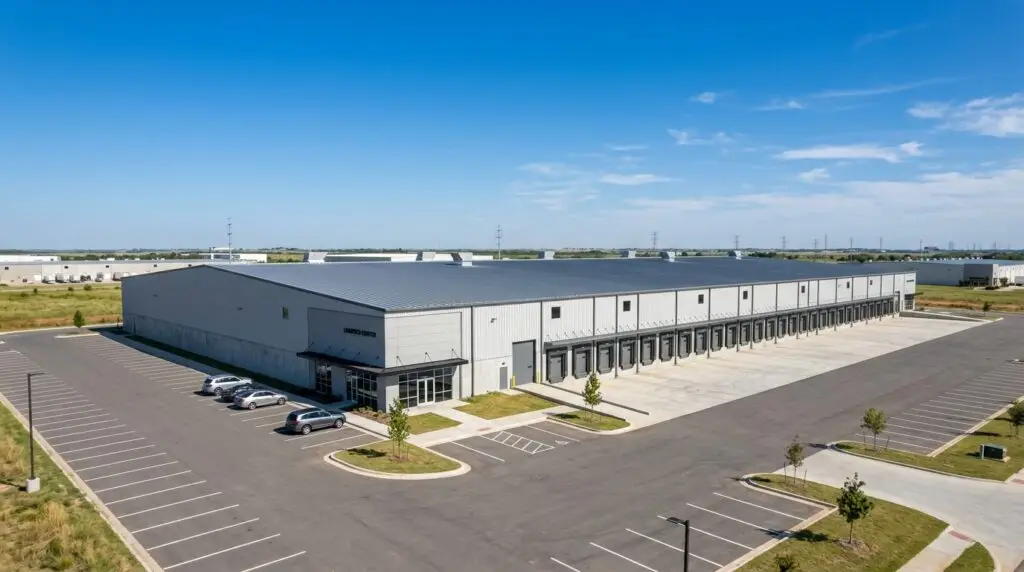
If you manage or own a warehouse, distribution center, or industrial facility in the Oklahoma City area, your roof isn’t just a building component, it’s your first line of defense against some of the most severe weather in the country. One poorly specified roof system on a 50,000-square-foot facility can mean hundreds of thousands of dollars in inventory losses, operational downtime, and premature replacement costs.
This guide covers everything you need to make a smart, informed decision about metal roofing for your commercial or industrial building, from panel selection and cost factors to Oklahoma-specific storm performance and what to look for in a contractor.
Why Oklahoma City Warehouses Require a Different Roofing Standard
Here’s the thing most generic roofing articles completely miss: what works for a warehouse in central Ohio or southern California doesn’t automatically translate to Oklahoma City.
OKC sits squarely in Tornado Alley, the geographic corridor where warm, moisture-laden air from the Gulf of Mexico collides head-on with cold fronts dropping out of the Rockies. The result is some of the most intense severe weather recorded anywhere in the United States. Strong thunderstorms, hail events, and straight-line winds are not rare occurrences here. They’re a predictable, recurring part of doing business.
The Tornado Alley Factor
Oklahoma’s flat terrain is beautiful in its own way, but from a structural engineering standpoint, it’s unforgiving. There are no mountain ranges, no dense forest corridors, nothing to slow a storm system before it reaches your facility. Wind-driven hail doesn’t fall straight down in central Oklahoma. It comes at steep angles, which places stress on panel seams, flashing edges, and attachment points in ways that require a fundamentally different specification than what you’d see in a milder climate.
The spring storm season runs hard from roughly March through June, and major hail events regularly impact the metro and surrounding counties during that window. For an industrial property with a large flat or low-slope roof, every one of those events matters, because cumulative storm damage compounds over time.
The I-40 / I-35 Corridor Context
Oklahoma City’s position as a major logistics hub means thousands of square feet of commercial roofing are concentrated along the I-40 and I-35 corridors, from Yukon and Mustang in the west to Midwest City and Del City in the east, and from Edmond in the north to Moore and Norman in the south. Distribution centers near Will Rogers World Airport, manufacturing facilities in the Tinker Air Force Base support zone, and industrial parks throughout South OKC all face the same structural challenge: large footprint, low-slope roofs that demand high-performance systems.
Metal Roofing vs. Other Commercial Roofing Systems — The Real Comparison
Before we get into panel types and costs, it’s worth answering the comparison question directly, because it comes up on almost every commercial roofing project.
Metal vs. TPO for Oklahoma Warehouses
TPO is widely used on commercial roofs for good reason, it’s cost-effective, reflective, and reasonably durable in moderate climates. In Oklahoma, however, it faces some real challenges. Oklahoma’s thermal cycling, temperatures that swing from over 100°F in summer to hard freezes in winter, sometimes within the same month, places constant stress on single-ply membranes. TPO seams are a known vulnerability in high-wind environments, and in a hail-active region like central Oklahoma, a single large-hail event can cause functional membrane damage that a metal panel would simply absorb as a cosmetic dent.
Over a 20-year window, the maintenance cost differential between metal and TPO on an Oklahoma City industrial building tends to favor metal significantly.
Metal vs. Modified Bitumen
Built-up roofing and modified bitumen systems can perform well with proper drainage and maintenance. The problem is that large warehouse roofs in Oklahoma generate enormous thermal expansion and contraction stress that accelerates membrane fatigue over time. These systems also have shorter service lives than metal, typically 15 to 20 years under favorable conditions, meaning the owner of a large industrial building will face re-roofing cycles that metal simply avoids.
One important note: if your existing warehouse has a built-up or modified bitumen roof, that doesn’t necessarily mean a full tear-off. More on retrofit options below.
When Metal Roofing Is Not the Right Call
In our experience, the honest answer here matters more than the sales pitch. Metal roofing is not always the right choice for every situation. If you’re managing a property with a very short-term ownership horizon, the higher upfront cost of a quality standing seam system may not be recoverable before you sell. Similarly, if your existing structure has structural limitations that can’t support the additional considerations of a new system, your options narrow. A good contractor will tell you this upfront, not after you’ve signed a contract.
Types of Metal Roofing Systems for Warehouses and Industrial Buildings
Not all metal roofing is the same. The system you choose has major implications for performance, longevity, and cost on a large commercial building.
Standing Seam Metal Roofing — The Preferred Choice for Low-Slope Industrial Roofs
Standing seam is the system you’ll see specified most often on serious commercial and industrial buildings for good reason. The defining feature is the concealed fastener: panels interlock through a raised seam, with no exposed screws piercing the panel surface. On a large-footprint, low-slope warehouse roof, which sheds water more slowly than a steep residential pitch, eliminating exposed fastener penetrations is a major leak-prevention advantage.
In the OKC area, where straight-line winds routinely push 60 to 80 mph during severe thunderstorms, standing seam systems also offer better wind uplift performance than exposed fastener alternatives. The panels move independently through thermal expansion without stressing attachment points, which matters a great deal given Oklahoma’s extreme temperature swings.
For low-slope applications at 3:12 pitch or below, mechanically seamed standing seam is the appropriate specification. Snap-lock systems work well at steeper pitches. On longer panel runs, common on large warehouses, on-site roll-forming produces single-piece panels that eliminate end laps entirely, removing one of the most common leak points on industrial metal roofs.
Exposed Fastener Panels — PBR and R-Panel
PBR (Purlin Bearing Rib) panels are the workhorses of the industrial and agricultural metal roofing market. They’re structural panels, meaning they span across purlin framing without needing a solid deck below, which is exactly what most metal building construction requires. They install efficiently on large roofs, cost less per square foot than standing seam, and perform well at steeper pitches where exposed fasteners carry lower leak risk.
The trade-off is fastener exposure. In Oklahoma’s wind environment, exposed fastener systems require periodic inspection for fastener back-out, screws that work loose from repeated wind uplift cycles. This isn’t a dealbreaker, but it’s a real maintenance consideration that exposed-fastener building owners should plan for.
26-gauge steel is common on lighter agricultural applications. For true industrial warehouse use, 24-gauge is the more appropriate specification in Oklahoma’s weather environment.
Insulated Metal Panels — The Energy Efficiency Upgrade
Insulated Metal Panels (IMPs) are a single-assembly system that combines structural metal facing with a factory-installed foam insulation core. For Oklahoma City industrial buildings, where summer cooling costs on a large, sun-exposed roof can be substantial, IMPs offer meaningful long-term energy savings.
They’re particularly well-suited to cold storage facilities, food distribution centers, and any manufacturing facility where interior climate control is critical. The higher upfront cost compared to standard metal panels is often recovered within several years through reduced HVAC load. If you’re building new or doing a full re-roof on a facility where energy efficiency is a priority, IMPs deserve serious consideration.
Oklahoma City Storm Performance — What Your Warehouse Roof Must Withstand
This is where local knowledge matters more than anything you’ll read in a generic commercial roofing guide.
Hail Rating Requirements for OKC Industrial Buildings
Class 4 impact resistance under the UL 2218 standard is the benchmark for hail-prone regions. A Class 4-rated metal panel is tested by dropping a 2-inch steel ball from prescribed heights without the panel cracking or fracturing. In central Oklahoma, where large hail events are a regular occurrence, specifying Class 4 impact-rated metal panels on an industrial building is not optional, it’s basic risk management.
Beyond performance, Class 4 impact-rated roofing can qualify for commercial insurance premium reductions in Oklahoma. Policy terms vary, so confirm with your commercial insurer, but the potential savings over the life of a 40-year roof can be significant. This is a detail many facility managers miss entirely when they’re evaluating roofing bids.
Wind Uplift Engineering
Straight-line winds in OKC severe thunderstorms commonly reach 60 to 80 mph, and that’s a routine storm, not a tornado event. Wind uplift damage concentrates at the eave edge and ridge cap first, then works inward. Panels that aren’t properly attached at those critical transition points can experience lifting that compromises the entire system without the building owner seeing obvious visible damage from the ground.
Between standing seam and exposed fastener systems, standing seam provides meaningfully better wind uplift performance on large flat roofs because attachment points are concealed and panels interlock continuously along their length. If you’re in a high-wind zone, and in Oklahoma City, you are, this difference in system engineering is worth paying for.
Thermal Cycling — Oklahoma’s Hidden Roof Killer
Oklahoma weather produces one of the most demanding thermal cycling environments in the country. A metal roof on an OKC warehouse will expand and contract repeatedly across extreme temperature ranges throughout its service life. Panels installed without proper allowance for thermal movement, through the right clip type, panel length, and fastener specification, can develop stress cracks, loose fasteners, and compromised seams over time.
This is an installation quality issue as much as a material issue. A contractor who doesn’t understand thermal movement on large-footprint commercial metal roofs can install a quality panel incorrectly and produce premature failures. It’s one of the most important questions to ask any contractor bidding your project.
Metal Roofing Cost Factors for Oklahoma City Warehouses
Cost is always a primary consideration on a commercial roofing project. Here’s what actually drives pricing on a large industrial building.
What Drives Cost
- Panel system type. Exposed fastener PBR is the most affordable entry point. Standing seam costs more upfront but delivers better long-term performance and lower maintenance. IMPs represent the premium end of the market.
- Gauge selection. 24-gauge steel costs more than 26-gauge, but on a large Oklahoma warehouse, the structural performance difference is worth the investment.
- Roof pitch and purlin spacing. Wider purlin spacings require heavier gauge panels. Low-slope roofs require standing seam or mechanically seamed systems, which carry higher installed costs.
- Insulation requirements. Oklahoma energy codes and tenant requirements vary. Insulated systems add cost but reduce operational expenses.
- Existing roof condition. Full tear-off and disposal adds cost. A retrofit or recover option can eliminate that line item.
Retrofit and Recover — The Cost-Saving Alternative Most Owners Don’t Know About
In our experience, this is one of the most underutilized options in commercial metal roofing. If your existing warehouse has a built-up or modified bitumen roof that’s structurally sound, it may be possible to install a new metal panel system directly over the existing roof without a tear-off.
Retrofit and recover systems eliminate tear-off labor and disposal costs, which on a large commercial building can be a significant number. They also add R-value through flute fill insulation and immediately improve the roof’s performance profile. A structural assessment is required first to confirm the existing framing can support the additional load, but for many OKC warehouse owners, this option is worth exploring before defaulting to a full replacement.
Cost Ranges
Metal roofing costs vary widely based on system type, building size, insulation requirements, and local labor. Exposed fastener systems are the most affordable; standing seam commands a premium; IMPs are at the top of the range. Always get multiple bids from licensed Oklahoma commercial roofing contractors, and make sure each bid is comparing the same system, gauge, and warranty structure before you make a decision. A low bid that specifies lighter gauge or omits proper insulation isn’t a savings.
What to Expect During Installation on an Oklahoma City Warehouse
Large-scale industrial roofing installations come with unique logistical challenges that smaller residential projects don’t face.
Challenges Unique to Large Industrial Projects
Working around active business operations is one of the most practical issues on a commercial re-roof. A good contractor will work with you to phase the project in sections, protecting open roof areas during work and minimizing disruption to your operations. On large panel runs, on-site roll-forming is often the right call, producing single-piece panels that eliminate end laps and the leak risk that comes with them.
Penetrations for HVAC equipment, skylights, and exhaust systems require careful flashing detail. In Oklahoma’s wind-driven rain environment, flashing is where most metal roof leaks originate on otherwise well-installed systems. This is not the place to cut corners.
Choosing the Right OKC Metal Roofing Contractor
For a commercial or industrial building, your contractor selection matters more than any other single decision. Here’s what to verify before signing:
- Oklahoma contractor licensing and commercial general liability insurance
- Demonstrated experience with industrial or commercial-scale metal roofing, not just residential
- Familiarity with the specific panel system being specified
- Clear warranty documentation: manufacturer warranty on the material, plus a workmanship warranty from the contractor
- Post-storm inspection capability, because in Oklahoma City, you will need this eventually
Red flags include contractors who apply high-pressure tactics following a storm event, those who can’t provide a portfolio of comparable commercial projects, and bids that omit details about gauge, warranty terms, or fastener specification.
Maintenance and Long-Term Care for Oklahoma Industrial Metal Roofs
A properly installed metal roof on an OKC warehouse requires far less maintenance than a membrane system, but it’s not zero maintenance.
Annual Inspection Priorities
Post-storm inspection after any significant OKC hail or wind event is the single highest-value maintenance action for an industrial metal roof. In our experience inspecting commercial properties across central Oklahoma, the damage that causes the most expensive repairs is almost never from one catastrophic event, it’s the accumulated minor damage from multiple storms that goes uninspected and untreated.
Each annual inspection should cover: fastener condition on exposed fastener systems, seam integrity on standing seam systems, ridge cap and eave trim condition, flashing around all penetrations, and drainage function across the full roof surface.
Repair vs. Replace
Repair is the right call for isolated issues: a failed seam, backed-out fasteners in a localized area, damaged flashing around a single penetration. Full replacement becomes the conversation when coating failure is widespread, structural panel distortion is present, or the same leak locations keep recurring despite repairs. Your contractor should give you an honest assessment of which category your roof falls into, not steer you toward replacement when repair is appropriate.
Local Oklahoma City Industrial Zones Most Suited for Metal Roofing
Metal roofing is the dominant choice for industrial properties throughout the OKC metro for practical reasons that map directly to the regional climate and building stock:
- I-40 distribution corridor (Yukon to Midwest City) high-volume logistics facilities with large, low-slope roofs
- Tinker AFB support area (Del City, Midwest City) manufacturing and support facility construction
- South OKC and Moore industrial parks mixed manufacturing and light industrial
- Canadian County and Cleveland County agricultural storage, processing facilities, and rural commercial buildings
- Edmond, Mustang, and Norman self-storage facilities, retail warehousing, and mixed commercial
FAQ — Metal Roofing for Warehouses and Industrial Buildings in Oklahoma City
How long does a metal roof last on a warehouse or industrial building?
A properly installed metal roofing system on a commercial building typically lasts 40 to 60 years, depending on system type, coating quality, and maintenance. In Oklahoma City’s hail-active environment, Class 4 impact-rated panels with quality PVDF coatings consistently outlast lower-grade alternatives.
Is metal roofing a good choice for Oklahoma City warehouses?
Yes. Metal roofing is particularly well-suited to Oklahoma City industrial buildings because it handles the wind uplift, hail impact, and thermal cycling that central Oklahoma regularly produces. Standing seam systems with concealed fasteners perform especially well on large, low-slope warehouse roofs in the OKC area.
What is the best metal roofing system for a low-slope warehouse roof?
Standing seam metal roofing, particularly mechanically seamed or site-roll-formed systems, is the best performer on low-slope warehouse roofs. These systems manage long panel runs, thermal expansion, and Oklahoma’s heavy rain events better than exposed fastener panels.
How much does metal roofing cost for a commercial warehouse in Oklahoma?
Cost varies significantly based on system type, building size, insulation requirements, and existing roof condition. Exposed fastener systems are the most affordable entry point; standing seam and insulated metal panel systems carry higher upfront costs but lower long-term maintenance costs. A licensed Oklahoma City contractor can provide a project-specific estimate after a site assessment.
Can I install metal roofing over my existing warehouse roof?
In many cases, yes. A metal retrofit or recover system can be installed over an existing built-up or modified bitumen roof, eliminating tear-off and disposal costs. A structural assessment is required to confirm the existing framing can support the new system.
Does Class 4 metal roofing qualify for insurance discounts in Oklahoma?
Class 4 impact-rated metal roofing systems can qualify for commercial insurance premium reductions in Oklahoma. Coverage terms vary by insurer and policy type, confirm the specifics with your commercial insurance provider before finalizing your roofing specification.
How often should a metal roof on an Oklahoma City warehouse be inspected?
At minimum, once annually, ideally in early spring before storm season. After any significant hail or wind event in the OKC metro, a post-storm inspection should be conducted regardless of whether visible damage is apparent. Early detection is always less expensive than delayed discovery.